Mystras
A ghost city of the Byzantine twilight - frescoed churches, palaces and monasteries cascading down a Peloponnese mountainside near Sparta.
Updated 18 October 2026

AI illustration
UNESCO World Heritage
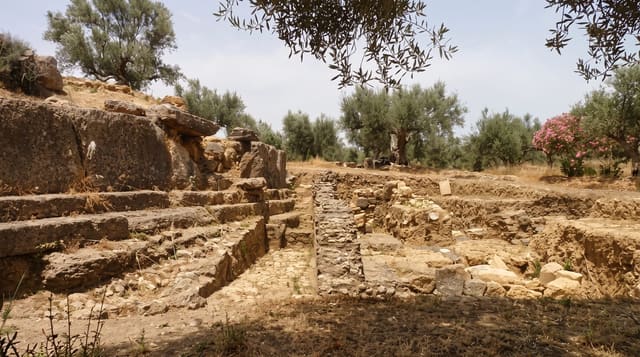
Mystras was Byzantium's brilliant last act: a fortified city spilling down a spur of Mount Taygetos where, as the empire shrank, its art and philosophy burned brightest - the last emperor, Constantine XI, ruled here as despot before taking the throne, and its schools helped carry Greek learning to Renaissance Italy. Abandoned in the nineteenth century for modern Sparti on the plain below, it survives as a complete medieval city without inhabitants: palaces, mansions and lanes climbing between churches whose domes still hold some of the finest late Byzantine frescoes in existence, saints and angels glowing in half-lit interiors, while one convent of nuns keeps the site's original life quietly going.
History
In the winter of 1248-1249 William II of Villehardouin, Frankish prince of Achaea, chose a spur of Mount Taygetos near ancient Sparta for the fortress that became Mystras; captured at the Battle of Pelagonia in 1259, he won his freedom by ceding Mystras, Monemvasia and Grand Magne to the Byzantines in 1262, and the people of Lacedaemon, exposed to raids, moved to a new town below the fortress. In 1349 John VI Kantakouzenos made it the capital of the Despotate of the Morea for his son Manuel, and it flourished in the Palaeologan Renaissance, drawing artists, architects and thinkers such as Gemistos Plethon; the last Byzantine emperor, Constantine XI, was despot here before taking the throne in Constantinople. Mystras surrendered to the Ottomans on 31 May 1460, stayed inhabited through the Ottoman period and was abandoned in the 1830s when new Sparta was built some eight kilometres to the east (Wikipedia, Mystras).
What you'll find
- The frescoed churches - Perivleptos, Pantanassa and the Hodegetria's painted heavens.
- The Palace of the Despots - the restored great hall of the city's rulers.
- The upper castle - the Frankish fortress crown with Taygetos views over the whole site.
- The Pantanassa convent - the living remnant, nuns, cats and offered sweets included.
When to go
Spring is glorious - wildflowers among the ruins and snow lingering on Taygetos above; autumn matches it. Summer afternoons are brutal on the exposed hillside, so start at the top gate at opening. The churches' interiors stay cool and rewarding at any hour.
Before you go
Mystras is steep - the visit is a mountainside descent (or worse, ascent) on cobbles polished by centuries, and good shoes are the difference between wonder and misery. Modest cover is expected in the churches and required at the convent. It absorbs far more time than its ghost-town label suggests; rushing it in ninety minutes wastes the trip. Sparti nearby is pleasant but ordinary - Mystras is the reason you came.
Nearby
Sparti and its museum, the Taygetos villages and, over the dramatic Langada pass, Kalamata and the Mani peninsula.
Key facts
Source: Wikidata, item Q19053, read on 18 October 2026.
What to pack for Mystras
Chosen from what this place is for. Tap a kit for the full checklist.
- Warm base layers - Merino or synthetic against the skin - never cotton, which chills when damp. Find on Amazon
- Comfortable walking shoes - Sightseeing means kilometres of pavement and cobbles daily. Find on Amazon
- Modest clothing - Shoulders and knees covered - the single most common requirement. Find on Amazon
- An insulated + windproof jacket - A down or synthetic layer under a hard shell handles most cold. Find on Amazon
Some links on this page are Amazon affiliate links - if you buy through them we may earn a small commission at no extra cost to you.
All packing kitsPlan your trip
Where to start if Mystras is going on the list.
Booking links on this page are affiliate links - if you book through them we may earn a small commission at no extra cost to you. It never changes what we write about a place.
Opening times, ticket prices and seasonal closures change - check the official source before you go: official site.