Lemnos
A flat volcanic island of wheat fields and sand dunes in the north Aegean, with a huge castle above its harbour town.
Updated 19 October 2026
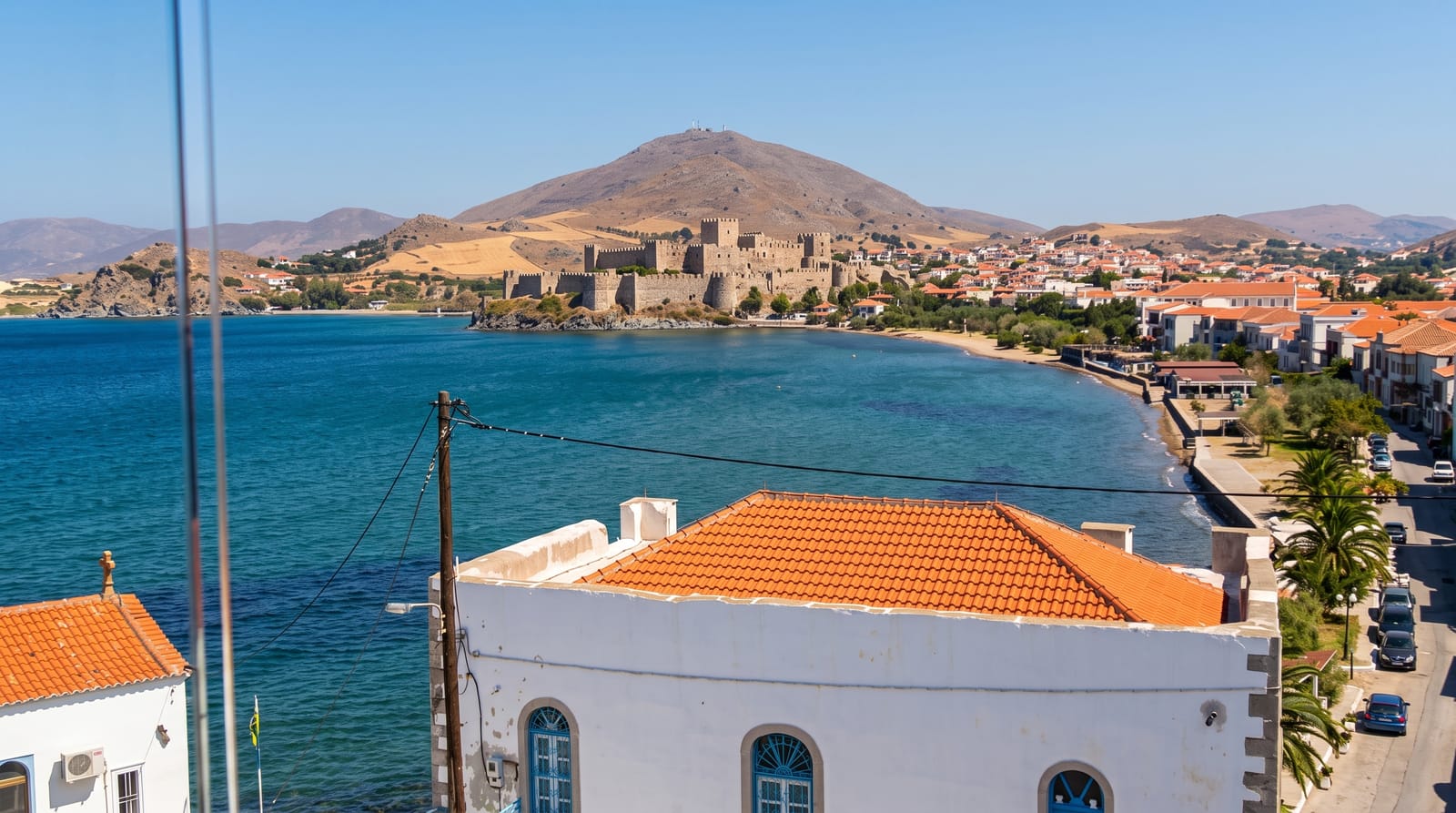
AI illustration
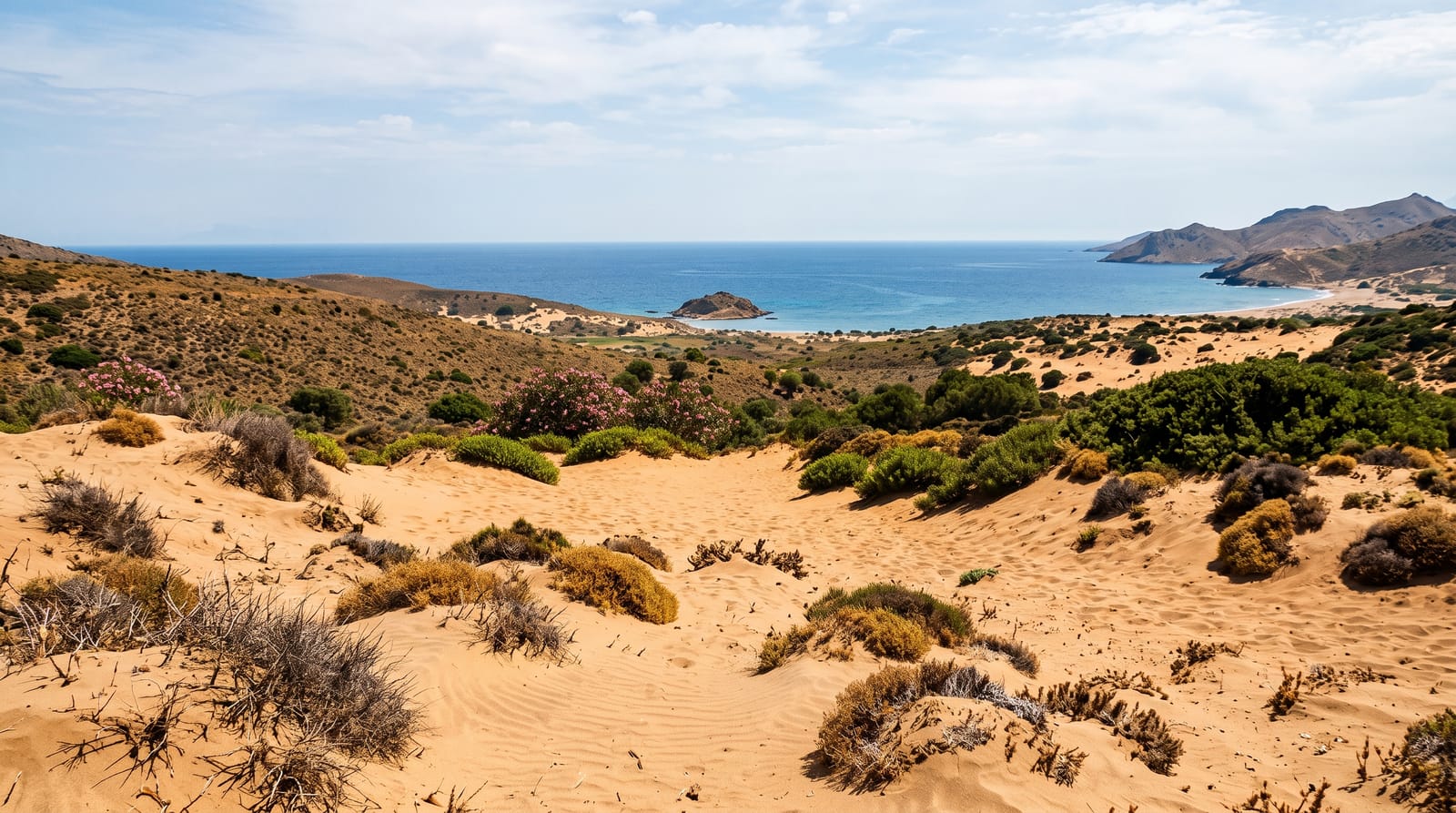
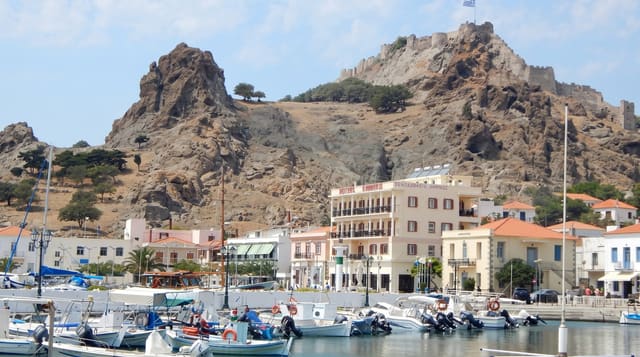
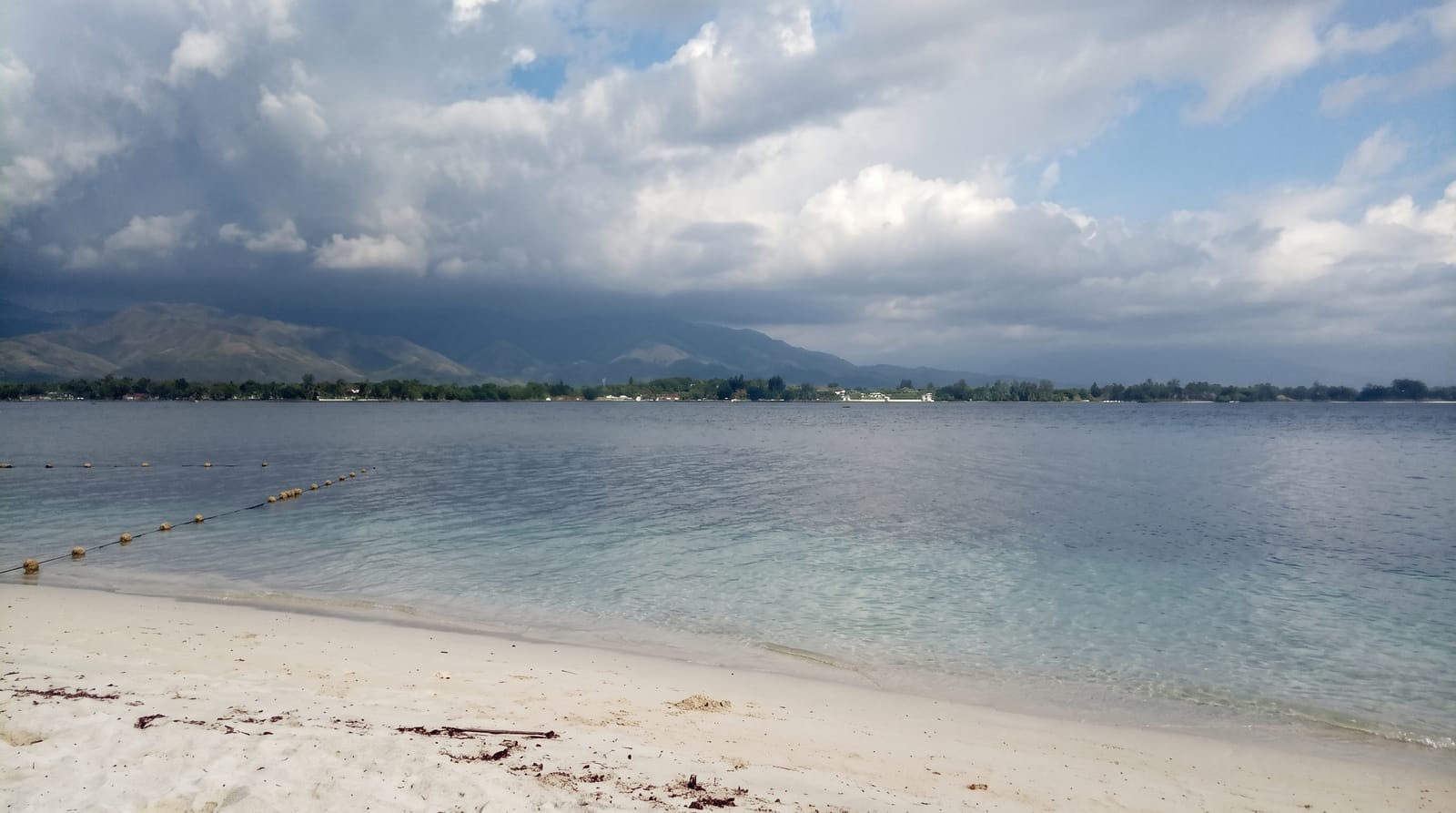
Lemnos is unusual among Aegean islands for being largely flat and fertile, an agricultural place of wheat, vines and grazing rather than terraced slopes, with a coastline of long sandy beaches. Myrina, the capital, sits below one of the largest castles in the Aegean, a Byzantine and Venetian fortress on a rocky headland where deer wander among the walls, with the town's stone houses on either side. Inland, the Pachies Ammoudies near Katalakko form a genuine desert of shifting dunes, unexpected in Greece. The island's archaeology is significant: Poliochni on the east coast has been called one of the earliest urban settlements in Europe, older than Troy across the water, and the sanctuary of the Kabeiroi lies further north. Local products include Kalathaki cheese, flomari pasta and Muscat wine.
History
The oldest human settlement yet found in the Aegean islands was uncovered at Ouriakos on the coast of Fyssini by Greek, Italian and American archaeologists from June 2009, and at Poliochni a building with two rows of stepped seats from the Early Bronze Age may have served as a council house. In August and September 1926 the Italian School at Athens began excavating to learn about the island's pre-Greek civilisation after the discovery of the Lemnos stele, and a necropolis with iron weapons and no bronze was dated to the ninth or eighth century B.C. (Wikipedia, Lemnos).
What you'll find
- Myrina castle - a vast fortress above the town, with resident deer.
- Poliochni - an early Bronze Age town claimed as Europe's oldest.
- The sand dunes - a small desert of shifting sand near Katalakko.
- The beaches - long sandy stretches around the island's coast.
When to go
May, June and September for warm sea and open tavernas; the island is windy, which suits kitesurfers at Keros beach but tests everyone else. Winter is quiet with reduced links.
Good to know
Lemnos gets few international visitors and has limited tourist infrastructure, which is part of its appeal but means fewer options. Distances are real and a car is needed. Wind is a constant factor in summer.
Nearby
Agios Efstratios lies south by ferry; Kavala and Thessaloniki are the mainland connections.
Key facts
Source: Wikidata, item Q192483, read on 18 October 2026.
What to pack for Lemnos
Chosen from what this place is for. Tap a kit for the full checklist.
- Reef-safe sunscreen - High SPF that will not bleach the coral you are swimming over. Find on Amazon
- Quick-dry clothing - Board shorts or synthetics that shrug off spray and dry fast. Find on Amazon
- Loose, light, long clothing - Covering up beats bare skin in the desert - and locals dress this way for a reason. Find on Amazon
- Quick-dry towel - A microfibre towel packs small and dries in minutes. Find on Amazon
Some links on this page are Amazon affiliate links - if you buy through them we may earn a small commission at no extra cost to you.
All packing kitsPlan your trip
Where to start if Lemnos is going on the list.
Booking links on this page are affiliate links - if you book through them we may earn a small commission at no extra cost to you. It never changes what we write about a place.
Opening times, ticket prices and seasonal closures change - check the official source before you go: official site.