Koroni Castle
A Venetian sea fortress above a fishing town, its enclosure still lived in by a convent, gardens and a few houses.
Updated 4 September 2026
AI illustration
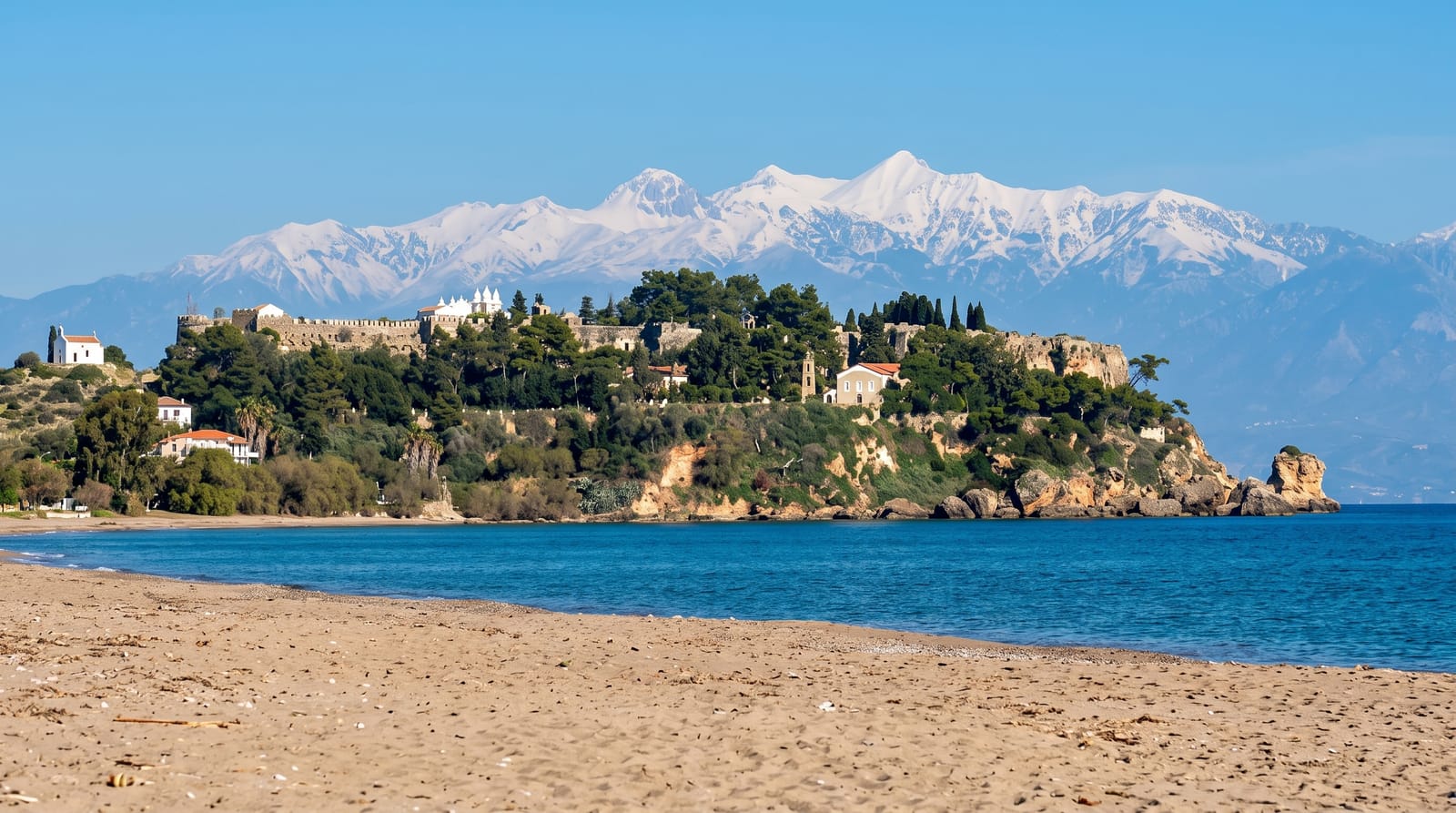
Koroni and Methoni were the eyes of the Republic, the Venetian pair of fortresses that watched the sea route to the East, and Koroni's castle occupies a headland above the town with walls dating from the thirteenth century onward, rebuilt repeatedly by Venetians and Ottomans. Unusually, the enclosure was never abandoned: inside the gates are the working convent of Timiou Prodromou with its gardens and chapels, private houses, olive terraces, a cemetery and the church of Agia Sofia built over an earlier basilica. Walking in feels less like visiting a ruin than entering a walled village. Below, the town's stepped lanes drop to a fishing harbour and the long sandy beach of Zaga, and the whole area is famous for its olives and oil.
Highlights
- The living enclosure - a convent, houses and gardens inside the castle walls.
- The ramparts - Venetian and Ottoman walls above the sea.
- Agia Sofia - a church built over an early Christian basilica.
- Zaga beach - a long sandy beach below the fortress headland.
When to go
Spring and autumn for walking the walls and the town's steep lanes; summer is hot but the beaches are excellent. The convent observes quiet hours and modest dress.
Practical notes
Because people live inside, parts of the castle are private and should be respected. There are no tickets, guides or signage. The town's lanes are steep and parking is awkward in season.
Nearby
Methoni's sea castle lies across the peninsula; Kalamata is under an hour north.
Key facts
Source: Wikidata, item Q19327083, read on 18 October 2026.
What to pack for Koroni Castle
Chosen from what this place is for. Tap a kit for the full checklist.
- Travel rod + reel - A packable multi-piece rod fits in a case and covers most holiday fishing. Find on Amazon
- Reef-safe sunscreen - High SPF that will not bleach the coral you are swimming over. Find on Amazon
- Comfortable walking shoes - Sightseeing means kilometres of pavement and cobbles daily. Find on Amazon
- Modest clothing - Shoulders and knees covered - the single most common requirement. Find on Amazon
Some links on this page are Amazon affiliate links - if you buy through them we may earn a small commission at no extra cost to you.
All packing kitsPlan your trip
Where to start if Koroni Castle is going on the list.
Booking links on this page are affiliate links - if you book through them we may earn a small commission at no extra cost to you. It never changes what we write about a place.
Opening times, ticket prices and seasonal closures change - check the official source before you go: official site.