Mir Castle
A red brick castle of the sixteenth century with a Renaissance palace range inside its walls, restored and open.
Updated 19 October 2026

AI illustration
UNESCO World Heritage
Mir castle was begun around 1520 by the Ilinich family and completed by the Radziwills, who added a three-storey palace range along two inner walls in the Renaissance manner, so the building combines a late Gothic defensive shell of red brick with five towers and decorative plaster banding with a residential block inside it. It was damaged repeatedly, stood abandoned for nearly a century before 1817, and the Sviatopolk-Mirski family, who bought it in 1895 and held it until 1939, began to rebuild it. Restoration finished in 2010 and the castle now holds a museum through the palace floors, with reconstructed interiors, the tower stairs and the cellars. A landscape park, a pond and the Svyatopolk-Mirsky family chapel-tomb stand beside it. It was inscribed as World Heritage in 2000.
History
The Ilinich family began building the castle near the village of Mir after the turn of the 16th century, and when their line died out in 1568 it passed to the Radziwills, who refitted it with a two-winged, three-storey stately residence. It suffered severe damage in the Battle of Mir in 1812 and had by then been abandoned for nearly a century; in 1817 it passed to Stefania, who married Ludwig zu Sayn-Wittgenstein-Berleburg, and in 1895 the castle was sold to Mikalaj Sviatapolk-Mirski, whose son Michail began to rebuild it to plans by the architect Teodor Bursche. The family owned it until 1939; between 1944 and 1956 it was used for housing, and in December 2000 UNESCO listed it as a World Heritage Site (Wikipedia, Mir Castle Complex).
What you'll find
- The brick shell - the five towers and the decorated defensive walls.
- The palace range - the Renaissance residential block inside the courtyard.
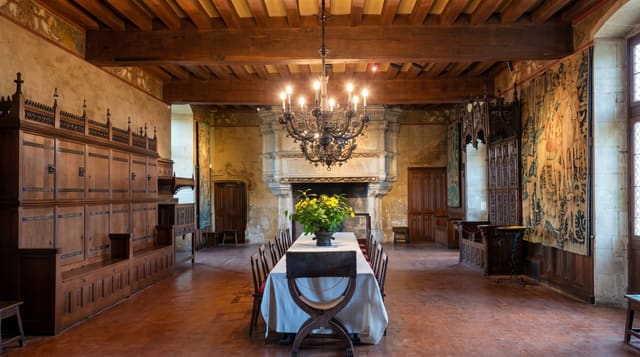
- The museum interiors - the reconstructed rooms through the floors.
- The chapel-tomb - the family mausoleum in the park.
When to go
May to September for the park and the fullest opening; the museum works year round with reduced winter hours and closes on some days. Weekends and holidays bring coach groups. Mornings are quietest.
Before you go
Most interiors are reconstruction rather than surviving decoration. The museum route is fixed and can be crowded with groups. Tower stairs are steep and narrow. The village of Mir is small with limited facilities.
Nearby
Nesvizh lies southeast; Novogrudok is west.
Key facts
Source: Wikidata, item Q209643, read on 18 October 2026.
What to pack for Mir Castle
Chosen from what this place is for. Tap a kit for the full checklist.
- Comfortable walking shoes - Sightseeing means kilometres of pavement and cobbles daily. Find on Amazon
- A slim anti-theft daypack - Zips that close properly; keep it in front in crowds and on transit. Find on Amazon
- A refillable water bottle - Many cities have public fountains; save money and plastic. Find on Amazon
- A light layer + compact umbrella - For museum air-con and a sudden shower. Find on Amazon
Some links on this page are Amazon affiliate links - if you buy through them we may earn a small commission at no extra cost to you.
All packing kitsPlan your trip
Where to start if Mir Castle is going on the list.
Booking links on this page are affiliate links - if you book through them we may earn a small commission at no extra cost to you. It never changes what we write about a place.
Opening times, ticket prices and seasonal closures change - check the official source before you go: official site.