Chateau de Falaise
The castle where William the Conqueror was born, restored with deliberately modern concrete and steel.
Updated 21 October 2026
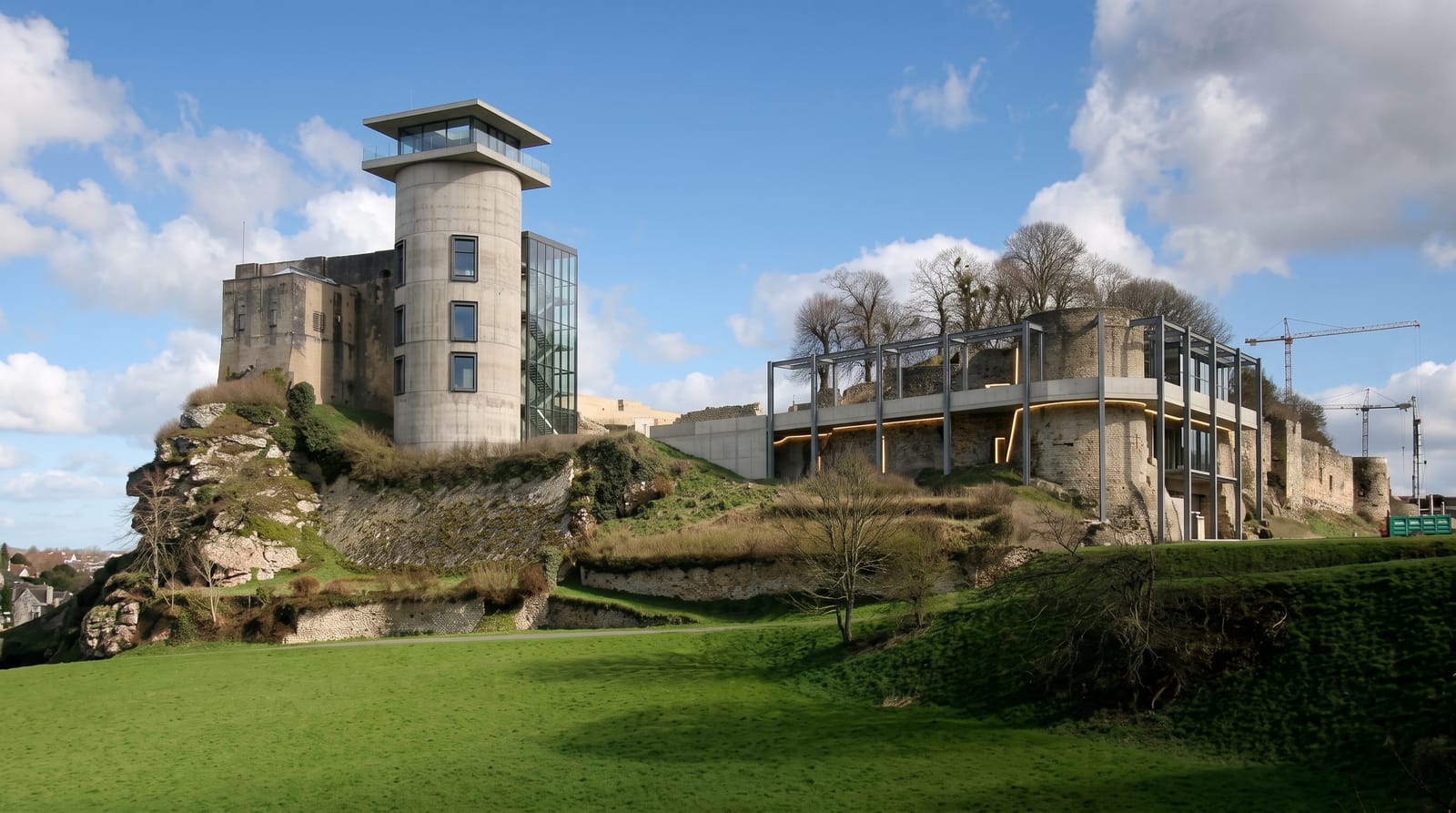
AI illustration
Falaise was the seat of the dukes of Normandy, and William was born here around 1028, the son of Duke Robert and Herleva, a tanner's daughter from the town, which is why he was known for much of his life as William the Bastard. The great stone keep was begun by Henry I in 1123, a smaller keep was added beside it later, and Philip Augustus built a round tower after taking Normandy in 1204. A restoration in the 1990s divided opinion sharply: rather than imitate medieval work, the architect inserted floors, stairs and roofing in visibly modern concrete and steel, so old and new are told apart at a glance. Falaise was largely destroyed in 1944.
History
After the death of Duke Richard II in 1026, his younger son Robert rebelled against his brother Richard III and seized the castle of Falaise, and when Richard died in 1027 Robert became Duke of Normandy; his son by Herleva, a woman of the town, was William, born here about 1028. The present castle, seat of the dukes of Normandy, was begun on the site of the earlier one in 1123 by Henry I of England with the great keep, to which a small keep was later added, and in 1202-1203 King John held his nephew Arthur of Brittany prisoner in it. About 1207, after conquering Normandy, Philip Augustus built a tall round keep, later named the Talbot Tower after the English commander who repaired it during the Hundred Years' War, when the castle changed hands several times. It was abandoned in the 17th century, has been a monument historique since 1840, and was restored between 1870 and 1874 (Wikipedia, Château de Falaise).
What you'll find
- The Norman keep - the twelfth-century tower where the ducal hall stood.
- The modern insertions - concrete and steel deliberately distinguished from old fabric.
- The Talbot tower - the round tower added under Philip Augustus.
- The William statue - the equestrian monument in the town square below.
When to go
April to October; the castle closes in January and has reduced winter hours. The town is quiet. Mornings are best for the keep, which is cold and dim.
Practical notes
The modern restoration is disliked by some visitors expecting a medieval interior. Interiors are largely bare with tablet-based interpretation. The town around was rebuilt after 1944 and is unremarkable.
Nearby
Caen lies north; the Suisse Normande is east.
Key facts
Source: Wikidata, item Q1011692, read on 18 October 2026.
What to pack for Chateau de Falaise
Chosen from what this place is for. Tap a kit for the full checklist.
- Comfortable walking shoes - Sightseeing means kilometres of pavement and cobbles daily. Find on Amazon
- A slim anti-theft daypack - Zips that close properly; keep it in front in crowds and on transit. Find on Amazon
- A refillable water bottle - Many cities have public fountains; save money and plastic. Find on Amazon
- A light layer + compact umbrella - For museum air-con and a sudden shower. Find on Amazon
Some links on this page are Amazon affiliate links - if you buy through them we may earn a small commission at no extra cost to you.
All packing kitsPlan your trip
Where to start if Chateau de Falaise is going on the list.
Booking links on this page are affiliate links - if you book through them we may earn a small commission at no extra cost to you. It never changes what we write about a place.
Opening times, ticket prices and seasonal closures change - check the official source before you go: official site.