Bayeux Tapestry
Seventy metres of embroidered linen telling the Norman conquest, and not a tapestry at all.
Updated 21 October 2026
AI illustration
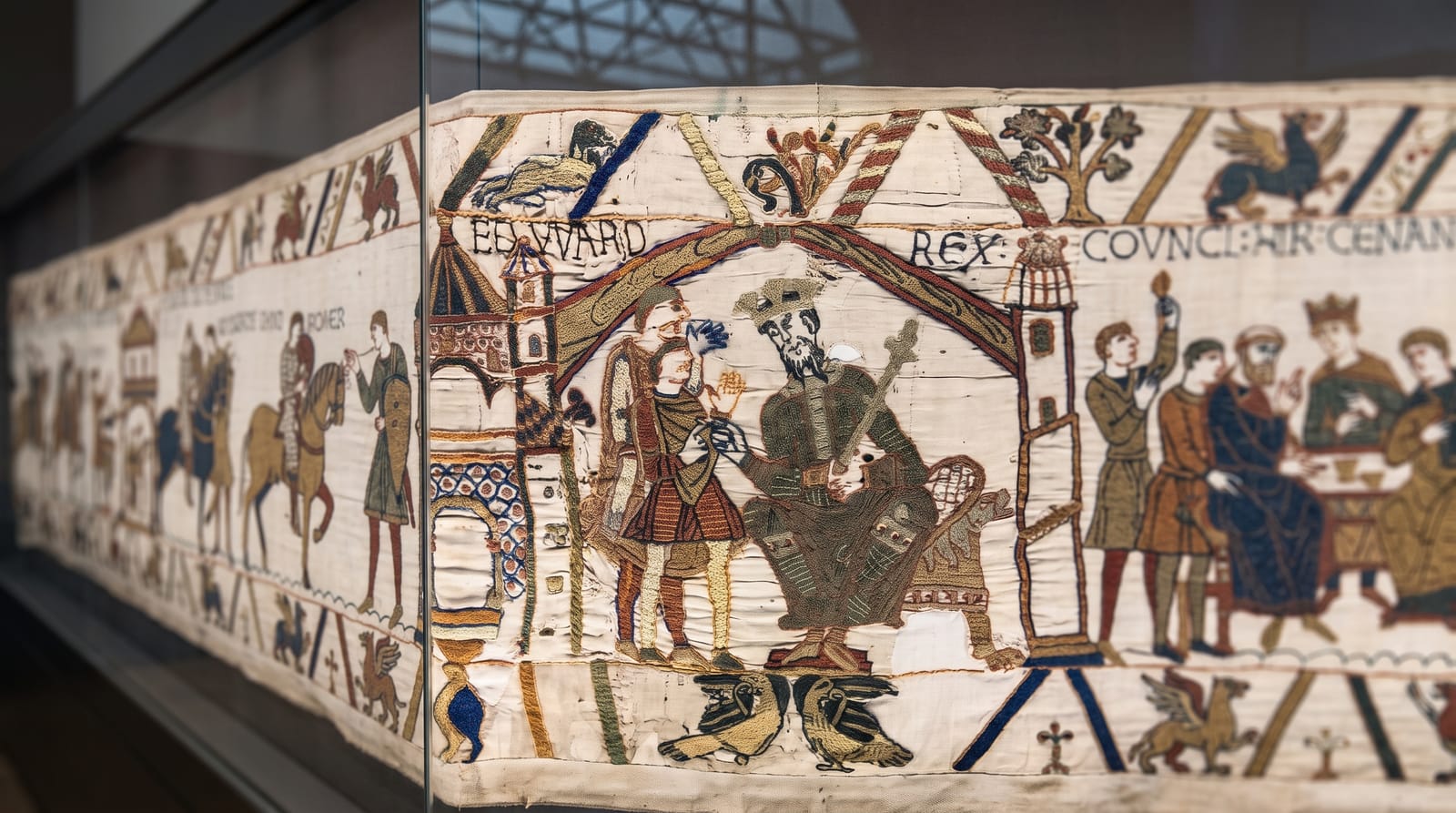
The Bayeux Tapestry is embroidery, not tapestry: wool thread worked onto linen in ten colours, about seventy metres long and half a metre high, made probably in England in the 1070s and telling the events leading to the Norman conquest of 1066 across fifty-eight scenes with Latin captions, ending abruptly with the English in flight, the final section lost. It shows Halley's comet, which appeared in 1066 and was read as an omen. It survived the Revolution, when it was nearly cut up for wagon covers, and the Second World War, when it was moved repeatedly. UNESCO added it to the Memory of the World register.
History
The tapestry is first recorded in a 1476 inventory of Bayeux Cathedral. French legend credited it to Queen Matilda and her ladies, but scholars of the 20th century concluded it was probably commissioned by William's half-brother Bishop Odo of Bayeux, Earl of Kent after the Conquest: three of his followers named in Domesday Book appear on it, Odo himself appears four times, and it may have been made for the dedication of his cathedral in 1077. It was most likely designed and stitched in England, probably around Canterbury, by Anglo-Saxon women needleworkers famed across Europe, and its designer may have been Scolland, abbot of St Augustine's in Canterbury. The embroidery is worked in wool on a linen ground 68.38 m long, sewn from nine panels, in ten natural dye colours; its end has been lost from time immemorial, and the final caption, "and the English retreated", was added shortly before 1814. Since 2007 it has been on UNESCO's Memory of the World Register (Wikipedia, Bayeux Tapestry).
What's there
- The seventy-metre strip - the whole narrative shown in one continuous run.
- The comet scene - Halley's comet recorded as an omen in 1066.
- The border figures - animals, fables and bodies running above and below.
- The lost ending - the final section missing, cutting the story short.
When to go
The museum in Bayeux closed for renovation in August 2025 and is due to stay closed until 2027. The tapestry is on loan to the British Museum in London, where the exhibition is scheduled to run from 10 September 2026 to 11 July 2027, so check where it is on display before travelling.
Good to know
The museum is closed for renovation and until July 2027 the tapestry is in London, not Bayeux; check status before going. Before the closure the viewing route in Bayeux was one-way with an audio guide and moved at a set pace.
Nearby
The D-Day beaches lie north; Caen is southeast.
Key facts
Source: Wikidata, item Q187483, read on 18 October 2026.
What to pack for Bayeux Tapestry
Chosen from what this place is for. Tap a kit for the full checklist.
- Reef-safe sunscreen - High SPF that will not bleach the coral you are swimming over. Find on Amazon
- Comfortable walking shoes - Sightseeing means kilometres of pavement and cobbles daily. Find on Amazon
- Modest clothing - Shoulders and knees covered - the single most common requirement. Find on Amazon
- Quick-dry towel - A microfibre towel packs small and dries in minutes. Find on Amazon
Some links on this page are Amazon affiliate links - if you buy through them we may earn a small commission at no extra cost to you.
All packing kitsPlan your trip
Where to start if Bayeux Tapestry is going on the list.
Booking links on this page are affiliate links - if you book through them we may earn a small commission at no extra cost to you. It never changes what we write about a place.
Opening times, ticket prices and seasonal closures change - check the official source before you go: official site.

