Kalymnos
The sponge divers' island, now one of Europe's great climbing destinations, with thousands of routes on grey limestone.
Updated 19 October 2026

AI illustration
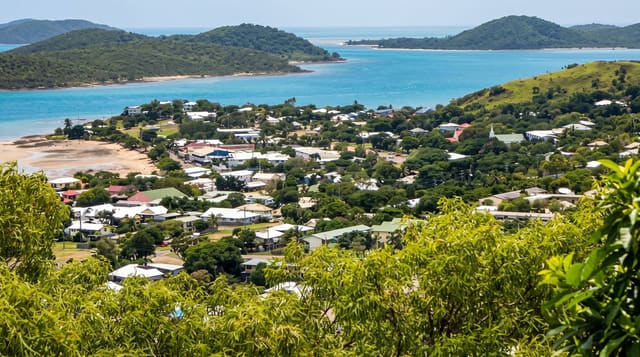
Kalymnos lived by sponge diving for centuries, sending fleets across the eastern Mediterranean, and the trade's memory fills the port town of Pothia: sponge workshops, a museum, and the tall houses of captains along the harbour. Since the late 1990s the island has acquired a second identity as a sport-climbing destination of world rank; the grey and orange limestone walls above Masouri and Armeos hold several thousand bolted routes, many on tufa formations that climbers travel from every continent to try, and the season fills the west coast villages with climbing gear rather than beach umbrellas. Between the two, the island keeps quiet coves, the fjord-like inlet of Vathys with its citrus valley, and the tiny island of Telendos across a strait, a car-free settlement under a mountain.
History
In antiquity Kalymnos depended on Kos and shared its history, and its Hellenistic Temple of Apollo was excavated in the nineteenth century by Charles Newton, many of whose finds, including important inscriptions, are in the British Museum. In the Middle Ages it was under Byzantine influence, and the Ottoman census of 1881/82-1893 counted 9,716 people in the district, 9,482 of them Greek (Wikipedia, Kalymnos).
The landscape
- The climbing crags - thousands of routes on tufa-streaked limestone.
- Pothia harbour - sponge workshops, captains' houses and the museum.
- Vathys - a narrow inlet leading to a valley of citrus groves.
- Telendos - a car-free islet across a strait, reached by small boat.
When to go
Spring and autumn are the climbing seasons, when temperatures suit long days on rock; July and August are too hot for serious climbing but fine for swimming. Winter is quiet with reduced services.
Good to know
Beaches are pebble and modest; this is not a sunbathing island. In peak climbing season accommodation on the west coast books out. Sponge diving today is largely a heritage industry, and much of what is sold is imported.
Nearby
Kos lies south, Leros north; Telendos is a five-minute boat ride from Myrties.
Key facts
Source: Wikidata, item Q527809, read on 18 October 2026.
What to pack for Kalymnos
Chosen from what this place is for. Tap a kit for the full checklist.
- Reef-safe sunscreen - High SPF that will not bleach the coral you are swimming over. Find on Amazon
- Your own mask + snorkel - A well-fitting mask is the single biggest comfort upgrade underwater. Find on Amazon
- Modest clothing - Shoulders and knees covered - the single most common requirement. Find on Amazon
- Quick-dry towel - A microfibre towel packs small and dries in minutes. Find on Amazon
Some links on this page are Amazon affiliate links - if you buy through them we may earn a small commission at no extra cost to you.
All packing kitsPlan your trip
Where to start if Kalymnos is going on the list.
Booking links on this page are affiliate links - if you book through them we may earn a small commission at no extra cost to you. It never changes what we write about a place.
Opening times, ticket prices and seasonal closures change - check the official source before you go: official site.