Kos
A flat, fertile island of long beaches and ancient medicine, where the healing sanctuary of Hippocrates stands above the town.
Updated 19 October 2026
AI illustration
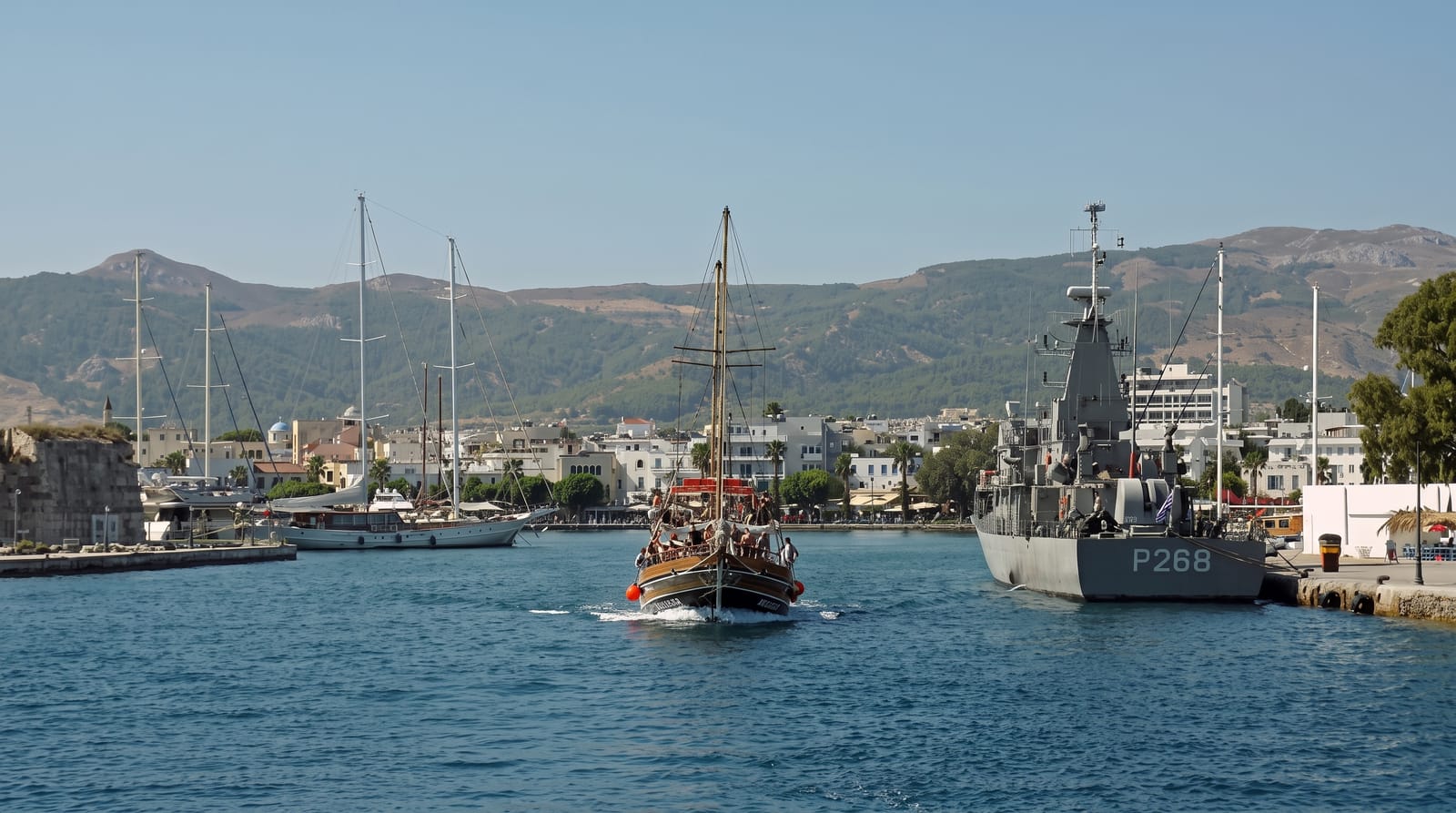
Kos is unusually flat for a Greek island, which makes it the most cycle-friendly in the country, with dedicated paths across the town and out along the coast. Hippocrates was born here around 460 BC, and the Asklepieion above the town, a sanctuary of healing arranged on three terraces with temples, baths and treatment rooms, is the island's principal ancient site; in the town itself are the Roman odeon, the Casa Romana with mosaics, the ancient agora and the Knights' castle guarding the harbour. Beaches run for kilometres along the south and east: Paradise with volcanic bubbles rising through the sand, Tigaki, Kardamena, Agios Stefanos beside a ruined basilica. Inland, the villages of Zia and Asfendiou sit on Mount Dikeos with views to Turkey.
History
In the Iliad a contingent of Koans fought for the Greeks at Troy, and in myth the island's founder-king was Merops, giving "Meropian Kos" a place in the archaic Delian league named in the Homeric hymn to Apollo; Kos was also said to be the birthplace of Leto. The island was supposedly colonised by the Carians, but the Dorians took it in the 11th century BC with settlers from Epidaurus, whose cult of Asclepius made its sanatoria famous, and it belonged to the Doric Hexapolis with Lindos, Kamiros, Ialysos, Knidos and Halicarnassus; at the end of the 6th century it fell under Persian rule (Wikipedia, Kos).
Highlights
- The Asklepieion - a terraced healing sanctuary above the town.
- The Knights' castle - the fortress guarding the harbour entrance.
- The cycle network - flat paths across the town and along the coast.
- The mountain villages - Zia and Asfendiou on the slopes of Dikeos.
When to go
May, June and September for warm sea and quieter beaches; July and August fill with package visitors from northern Europe. Winter is very quiet, with most resorts closed.
Before you go
Kos is heavily developed for mass tourism along parts of its coast, and Kardamena in particular is a nightlife resort. Earthquake damage from 2017 affected some monuments in the town, and restoration continues. The famous plane tree of Hippocrates is far younger than the legend claims.
Nearby
Kalymnos and Nisyros are short ferry hops; Bodrum in Turkey is visible across the strait.
Key facts
Source: Wikidata, item Q187027, read on 18 October 2026.
What to pack for Kos
Chosen from what this place is for. Tap a kit for the full checklist.
- Reef-safe sunscreen - High SPF that will not bleach the coral you are swimming over. Find on Amazon
- Modest clothing - Shoulders and knees covered - the single most common requirement. Find on Amazon
- Quick-dry towel - A microfibre towel packs small and dries in minutes. Find on Amazon
- A scarf or shawl - To cover the head or shoulders on entry; women especially at mosques. Find on Amazon
Some links on this page are Amazon affiliate links - if you buy through them we may earn a small commission at no extra cost to you.
All packing kitsPlan your trip
Where to start if Kos is going on the list.
Booking links on this page are affiliate links - if you book through them we may earn a small commission at no extra cost to you. It never changes what we write about a place.
Opening times, ticket prices and seasonal closures change - check the official source before you go: official site.