Chelmos Observatory
Greece's largest telescope on a 2,340-metre ridge, with occasional open days and some of the darkest skies in the country.
Updated 21 October 2026
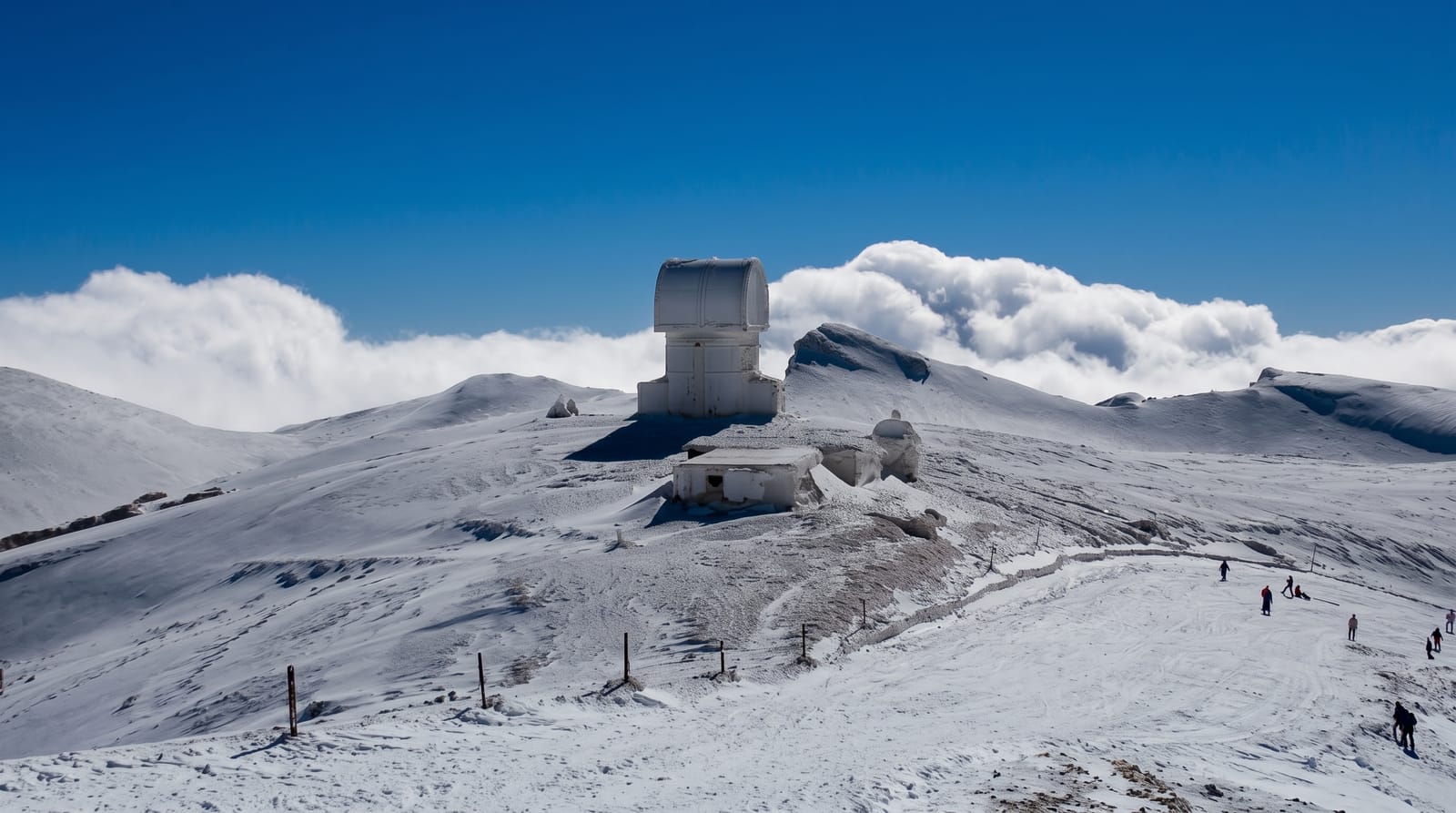
AI illustration
The Aristarchos telescope, a 2.3-metre reflector operated by the National Observatory of Athens, sits at 2,340 metres on the Chelmos massif, chosen for altitude, stable air and distance from city light. It is the largest telescope in Greece and among the larger ones in southeastern Europe, used for professional research on variable stars, exoplanets and transient events. Public access is limited to occasional open days announced by the National Observatory, when visitors can see the dome and the telescope. Getting there is half the experience, a long climb on a mountain road above the tree line with the Peloponnesian ranges spreading out and, in winter, the nearby ski centre.
What to look for
- The Aristarchos telescope - a 2.3-metre reflector under its dome.
- The dome mechanism - the rotating structure and shutter in operation.
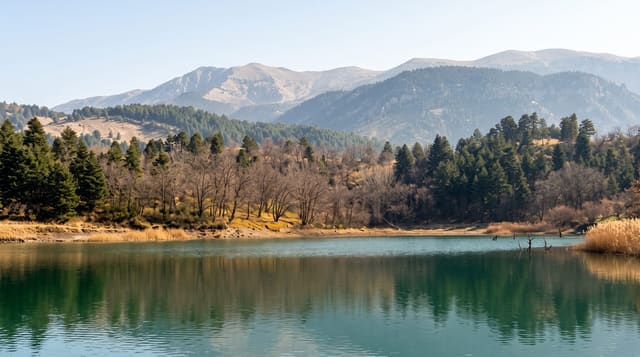
- The high ridge - alpine terrain above 2,300 metres with long views.
- The dark sky - one of the least light-polluted sites in Greece.
When to go
Summer, when the road is clear; the access road is closed or snowbound much of winter. Open days, when there are any, depend on the weather.
Good to know
This is a working research facility, not a visitor centre, so open dates are few and the tour depends on staff availability. Altitude and wind make it cold even in August. The road is long, narrow and unlit.
Nearby
Kalavryta and the Cave of the Lakes are below; the rack railway runs through Vouraikos gorge.
Key facts
Source: Wikidata, item Q3565801, read on 18 October 2026.
What to pack for Chelmos Observatory
Chosen from what this place is for. Tap a kit for the full checklist.
- Head torch + spare batteries - Hands-free light is essential; caves are truly dark. Find on Amazon
- Spare batteries + cards - Cold and long shoots drain power; never run out at the good light. Find on Amazon
- Comfortable walking shoes - Sightseeing means kilometres of pavement and cobbles daily. Find on Amazon
- Grippy closed shoes - Cave floors are wet, muddy and slick with formations. Find on Amazon
Some links on this page are Amazon affiliate links - if you buy through them we may earn a small commission at no extra cost to you.
All packing kitsPlan your trip
Where to start if Chelmos Observatory is going on the list.
Booking links on this page are affiliate links - if you book through them we may earn a small commission at no extra cost to you. It never changes what we write about a place.
Opening times, ticket prices and seasonal closures change - check the official source before you go: official site.