Catacombs of Milos
Rock-cut burial galleries of the first Christian centuries, a community cemetery carved into the volcanic hillside of Milos.
Updated 21 October 2026
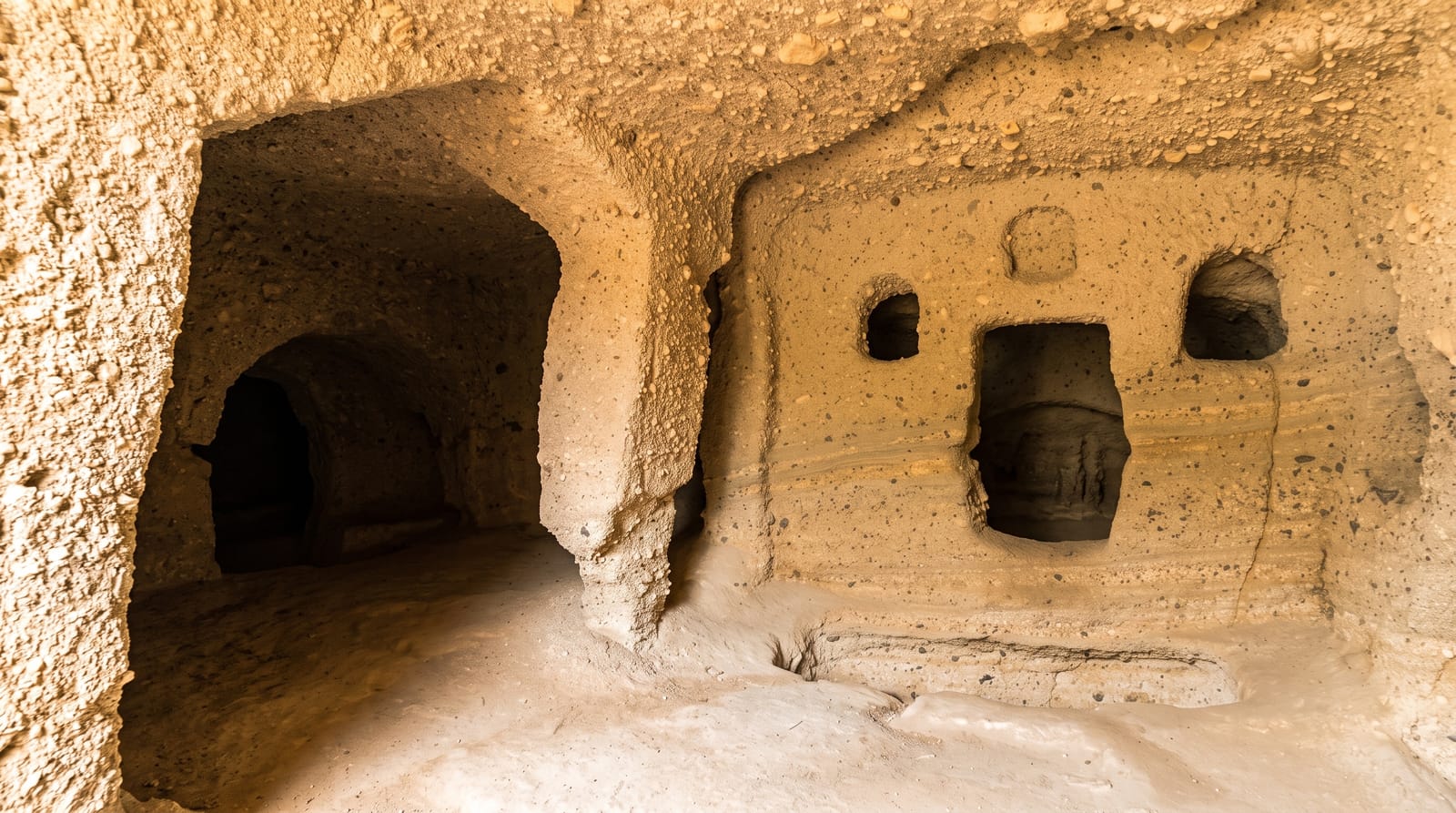
AI illustration
Cut into soft volcanic rock on the hillside below Trypiti, the Milos catacombs were in use from around the first to the fifth century AD and held burials in arched niches, arcosolia, carved into the gallery walls, some large enough for several bodies, and in graves cut into the floor; estimates of their number have ranged from a few hundred tombs to two thousand. They are among the most important early Christian monuments in Greece, evidence of a Christian community on the island in the first centuries AD. The catacombs form three groups with five corridors in all, one to five metres wide, and visitors follow a lit walkway through part of them. Traces of painted decoration and inscriptions remain on some niches. The Roman theatre and the findspot of the Venus de Milo are on the same slope.
The main sights
- The burial galleries - corridors lined with arched rock-cut niches.
- The arcosolia - carved recesses that held multiple burials.
- The inscriptions - faint painted marks and lettering on the walls.
- The hillside context - theatre and Venus findspot on the same slope.
When to go
Year-round; the interior is cool and constant, useful in summer heat. Visits are guided at set times in small groups, and the site closes on some weekdays.
Practical notes
Only a short section is accessible, so the visit lasts around twenty minutes and can feel brief for the ticket. Lighting is low and photography is restricted. The passage is narrow and unsuitable for wheelchairs or anyone uneasy underground.
Nearby
The Roman theatre is a few minutes up the path; Klima lies below and Plaka above.
Key facts
Source: Wikidata, item Q18386664, read on 18 October 2026.
What to pack for Catacombs of Milos
Chosen from what this place is for. Tap a kit for the full checklist.
- Head torch + spare batteries - Hands-free light is essential; caves are truly dark. Find on Amazon
- Comfortable walking shoes - Sightseeing means kilometres of pavement and cobbles daily. Find on Amazon
- Grippy closed shoes - Cave floors are wet, muddy and slick with formations. Find on Amazon
- A slim anti-theft daypack - Zips that close properly; keep it in front in crowds and on transit. Find on Amazon
Some links on this page are Amazon affiliate links - if you buy through them we may earn a small commission at no extra cost to you.
All packing kitsPlan your trip
Where to start if Catacombs of Milos is going on the list.
Booking links on this page are affiliate links - if you book through them we may earn a small commission at no extra cost to you. It never changes what we write about a place.
Opening times, ticket prices and seasonal closures change - check the official source before you go: official site.