Astypalea
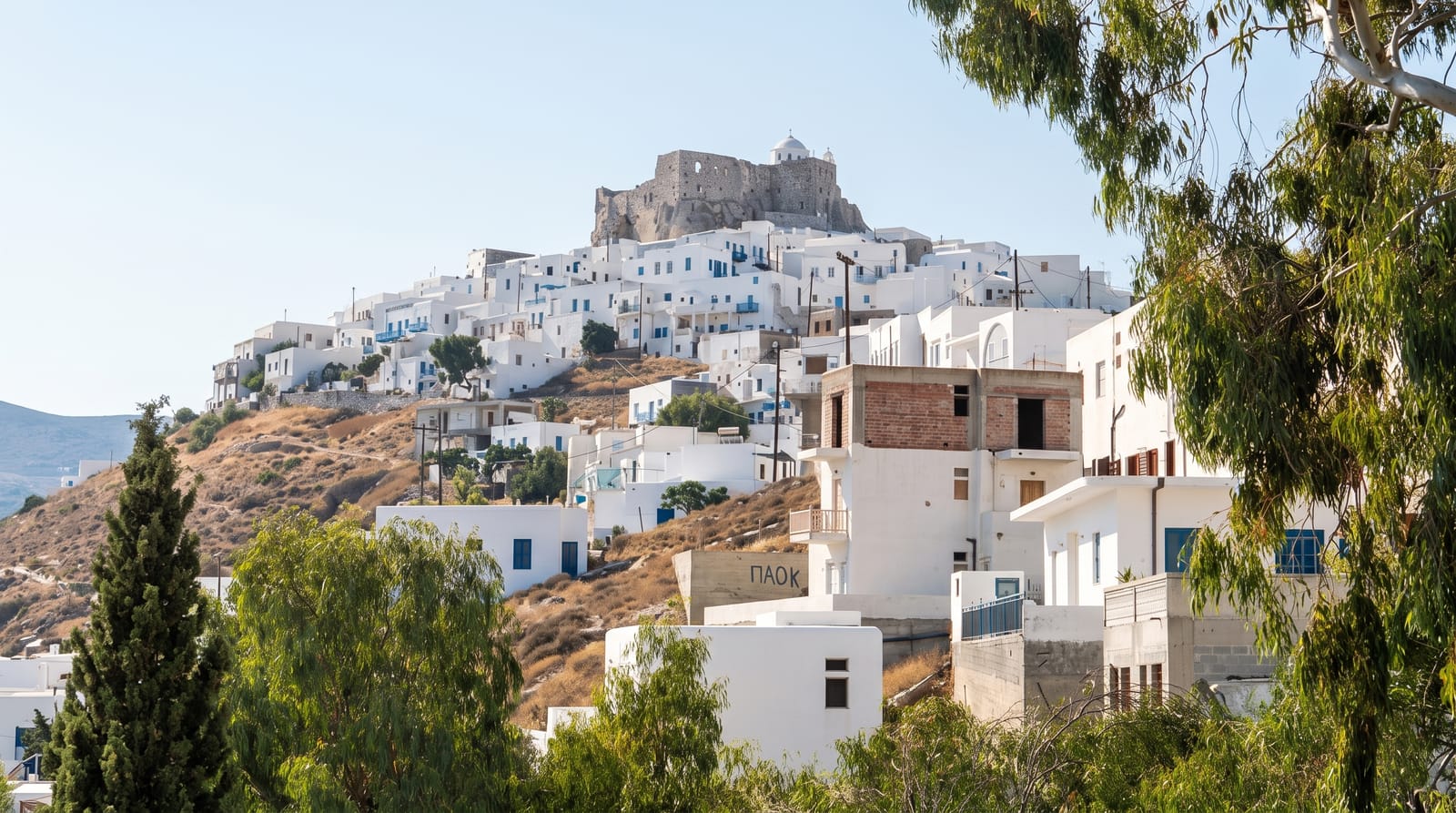
A butterfly-shaped island between the Cyclades and Dodecanese, with a windmill row and Venetian castle above its white Chora.
Updated 19 October 2026
AI illustration
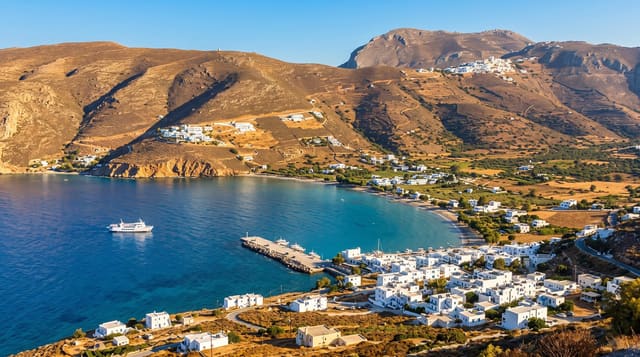
Astypalea belongs administratively to the Dodecanese but looks Cycladic, white cube houses climbing to a ridge where eight restored windmills stand in a row and a Venetian castle of the Querini family crowns the summit; two churches were built into its gatehouse. The island is shaped like a butterfly, two lobes joined by an isthmus 100 metres wide at Steno. The eastern lobe is emptier, with the long beach at Vatses, the cave of Negrou and tracks leading to remote coves; the western holds the Chora, the port at Pera Gialos and the beaches at Livadi and Tzanaki. The island has become a testbed for electric transport and renewable energy, and a Bronze Age children's cemetery excavated at Kylindra is one of the largest known anywhere.
History
In myth Astypalaia was a woman carried off by Poseidon, and the island was colonised by Megara or possibly Epidaurus; Pliny the Elder records that Rome granted it the status of a free state. In the Middle Ages it belonged to Byzantium and probably passed to the Latins after the Fourth Crusade, and as Stampalia it is first mentioned in 1334, during a devastating raid by Umur of Aydin (Wikipedia, Astypalaia).
The landscape
- The Chora and castle - a white town under a Venetian fortress with churches in its gate.
- The windmill row - eight restored mills on the ridge below the castle.
- The isthmus at Steno - the hundred-metre neck joining the island's halves.
- The remote beaches - Vatses, Kaminakia and coves on the eastern lobe.
When to go
May, June and September; the island is far from Athens by boat, so flights or Amorgos connections help. August fills the limited rooms with Greek visitors. Winter is quiet with sparse ferries.
Practical notes
Getting there is the main obstacle: the direct ferry from Piraeus takes most of a day and runs a few times a week. Roads to the eastern beaches are rough and need a sturdy vehicle. Facilities are concentrated around the Chora and port.
Nearby
Amorgos and the Small Cyclades lie west; Kos and the Dodecanese are east.
Key facts
Source: Wikidata, item Q216768, read on 18 October 2026.
What to pack for Astypalea
Chosen from what this place is for. Tap a kit for the full checklist.
- Reef-safe sunscreen - High SPF that will not bleach the coral you are swimming over. Find on Amazon
- Head torch + spare batteries - Hands-free light is essential; caves are truly dark. Find on Amazon
- Quick-dry towel - A microfibre towel packs small and dries in minutes. Find on Amazon
- Grippy closed shoes - Cave floors are wet, muddy and slick with formations. Find on Amazon
Some links on this page are Amazon affiliate links - if you buy through them we may earn a small commission at no extra cost to you.
All packing kitsPlan your trip
Where to start if Astypalea is going on the list.
Booking links on this page are affiliate links - if you book through them we may earn a small commission at no extra cost to you. It never changes what we write about a place.
Opening times, ticket prices and seasonal closures change - check the official source before you go: official site.