Amorgos
A long ridge of an island in the eastern Cyclades, with cliffs on one side, a cliff-face monastery and famous walking paths.
Updated 19 October 2026
AI illustration
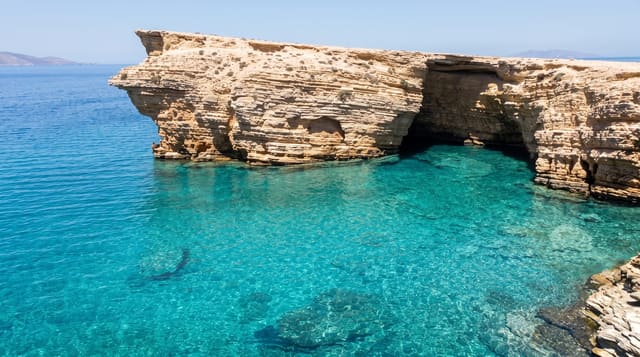
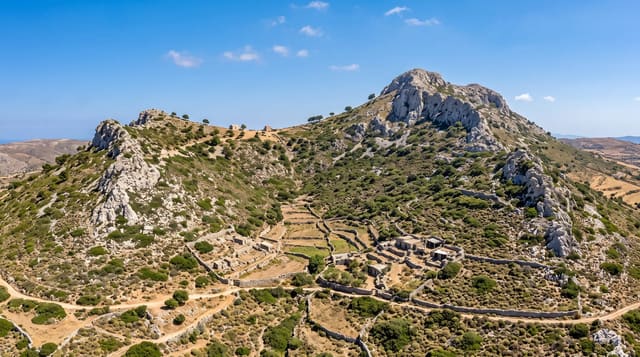
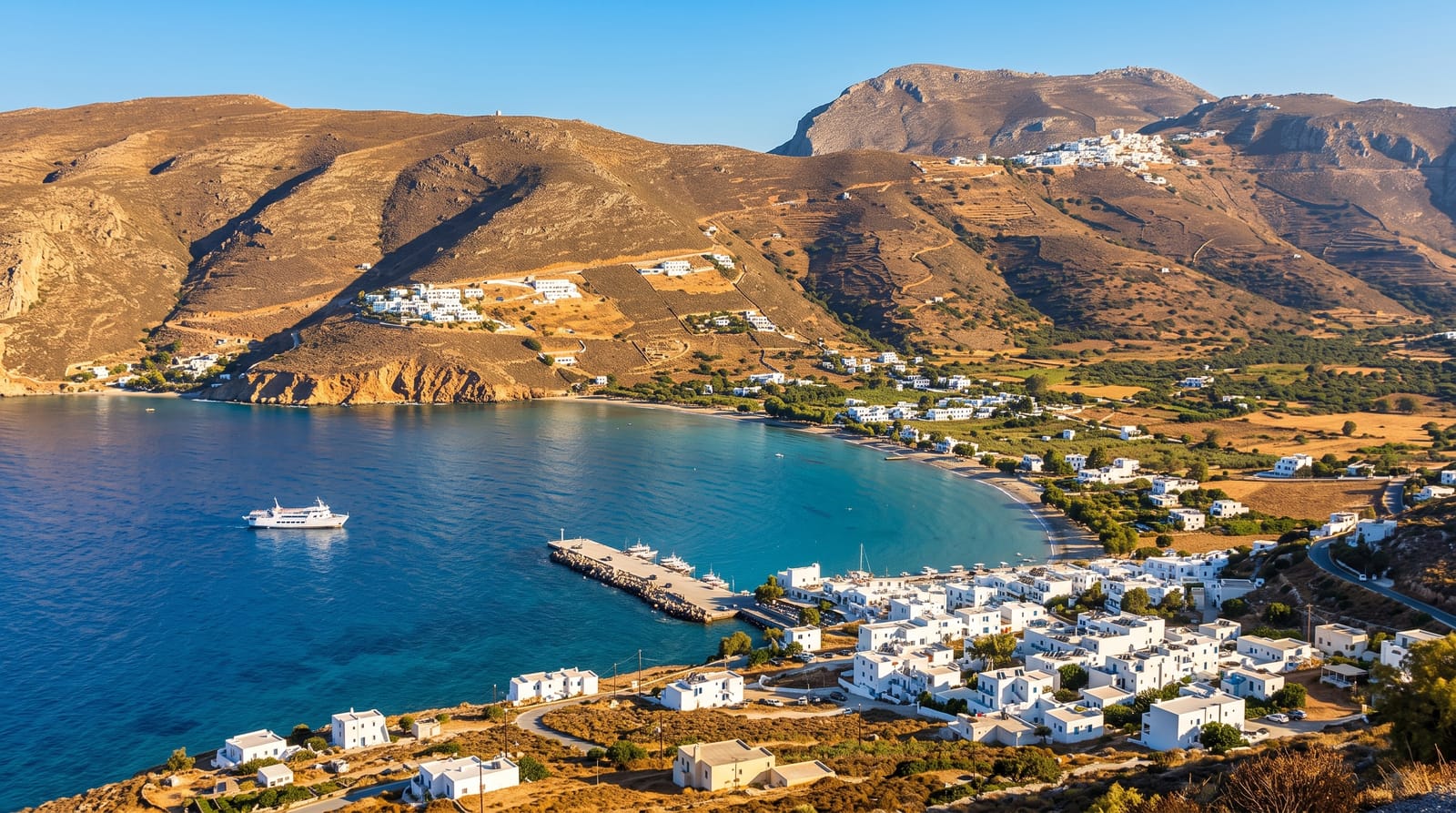
Amorgos is essentially a mountain ridge rising from the sea, 126 square kilometres long and narrow, with an almost unbroken cliff wall on its southeastern side and small harbours on the other. The Chora, inland and high, is one of the finest in the Cyclades: white cube houses, thirty-odd churches, windmills on the ridge above and a Venetian castle rock in the middle. Below it, the monastery of Hozoviotissa is built into the cliff face. Walking is the island's speciality, with a network of restored paths linking villages, chapels and beaches; the route from Chora down to Agia Anna and along the coast is the best known. The island became famous in 1988 as the setting of Luc Besson's film The Big Blue, and the wreck of the Olympia lies on the western shore.
History
Burials show that Amorgos was busy in the first period of Cycladic civilisation, 3200 to 2000 BC, with almost a dozen settlements, and it gave its name to types of Cycladic figurines: the Kapsala type of around 2700 B.C., the earliest canonical reclining female with folded arms, and the slenderer Dokathismata type of 2400-2100 BC. In approximately 630 BC the poet Semonides led a Samian colony here, and in Archaic times the island held three independent cities, Arkesine, Minoa and Aigiali, sharing one currency, Arkesine notable for the size and quality of its walls; the island belonged to the Delian League and the Second Athenian League, and the British explorers Theodore and Mabel Bent visited in 1883/4 (Wikipedia, Amorgos).
The landscape
- The Chora - a hilltop white town with windmills and a castle rock.
- Hozoviotissa - the monastery pressed into the cliff below the Chora.
- The walking network - restored stone paths across the island.
- The Olympia wreck - a beached freighter on the western coast.
When to go
May, June, September and October for walking weather and open tavernas; the meltemi blows hard in high summer and can disrupt ferries. Winter is very quiet with reduced boats.
Good to know
Getting there is a long ferry from Athens, and connections between the two ports need planning. Beaches are small and mostly pebble. In August the Chora and the monastery are busy despite the distance.
Nearby
The Small Cyclades, Koufonisia among them, lie west; Naxos is the main ferry hub.
Key facts
Source: Wikidata, item Q208587, read on 18 October 2026.
What to pack for Amorgos
Chosen from what this place is for. Tap a kit for the full checklist.
- Reef-safe sunscreen - High SPF that will not bleach the coral you are swimming over. Find on Amazon
- Modest clothing - Shoulders and knees covered - the single most common requirement. Find on Amazon
- Quick-dry towel - A microfibre towel packs small and dries in minutes. Find on Amazon
- A scarf or shawl - To cover the head or shoulders on entry; women especially at mosques. Find on Amazon
Some links on this page are Amazon affiliate links - if you buy through them we may earn a small commission at no extra cost to you.
All packing kitsPlan your trip
Where to start if Amorgos is going on the list.
Booking links on this page are affiliate links - if you book through them we may earn a small commission at no extra cost to you. It never changes what we write about a place.
Opening times, ticket prices and seasonal closures change - check the official source before you go: official site.