Amphipolis
An ancient city on the Strymon, guarded by a colossal marble lion and holding the largest burial mound found in Greece.
Updated 19 October 2026
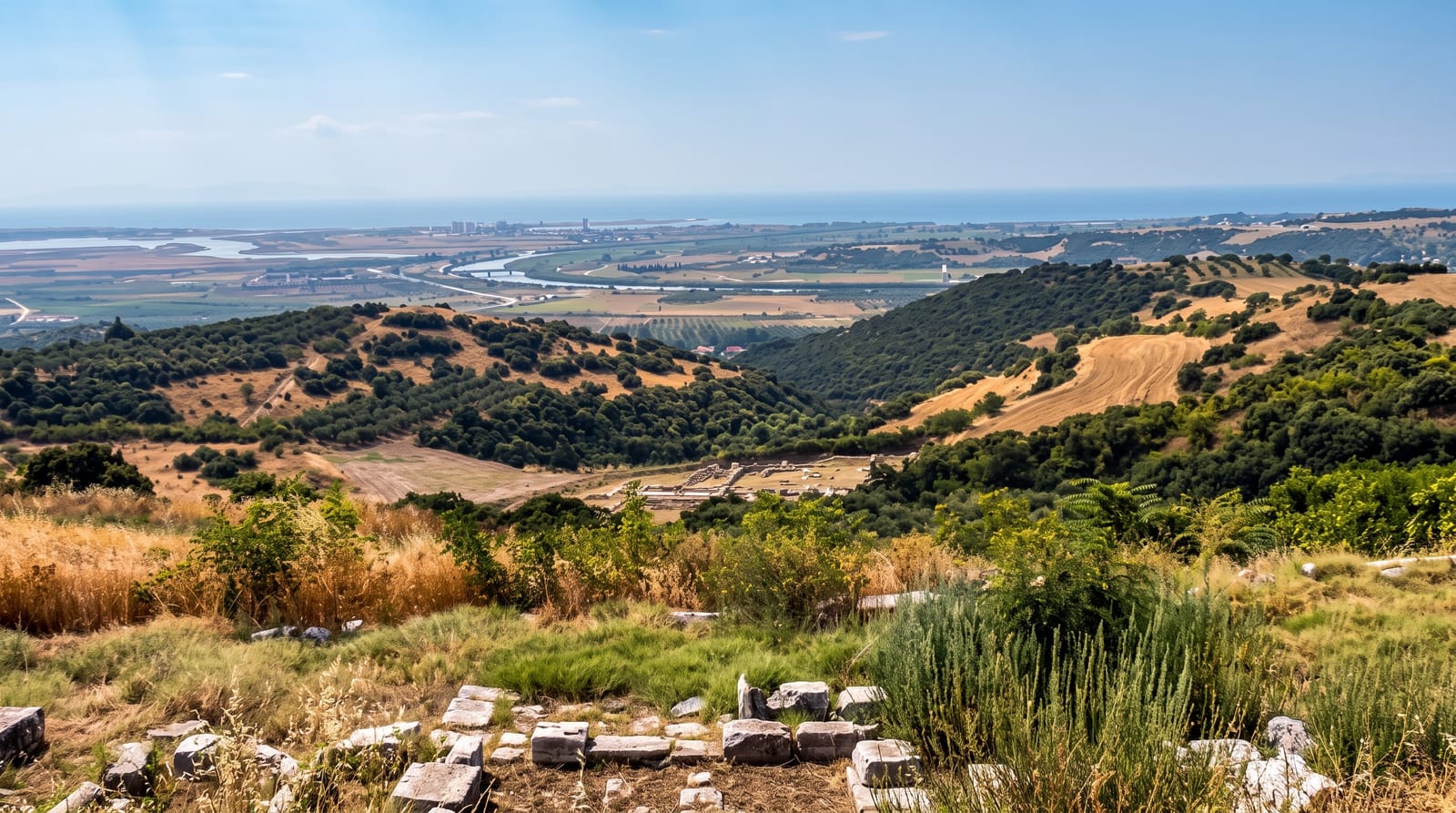
AI illustration
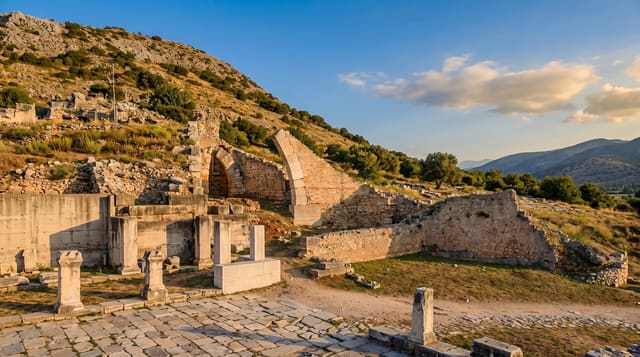
Amphipolis was an Athenian colony that became a major Macedonian city, and its remains spread over a hill above the Strymon: city walls running for kilometres, a gymnasium with its running track and washbasins, houses with mosaics, early Christian basilicas and a small modern museum. Beside the road stands the Lion of Amphipolis, a marble lion of the late fourth century BC reassembled in the 1930s from fragments found in the river, over five metres high on its plinth. Two kilometres away is the Kasta tumulus, the largest burial mound ever found in Greece at 158 metres across, excavated from 2012 with worldwide attention: a chamber tomb entered past sphinxes and caryatids with a mosaic of the abduction of Persephone. The tomb is not open to the public, and the site is enclosed while conservation continues.
History
Athens wanted Thrace for the gold and silver of Mount Pangaion, its timber and the grain route from the Black Sea; after a failed attempt by Histiaeus in 497 BC and the capture of Eion in 476 BC, the Athenians founded a first colony at Ennea Hodoi in 465 BC, and Amphipolis, named, Thucydides says, for the Strymon flowing around it, became their main base in Thrace. The Spartan general Brasidas took it in 424 BC, and in 422 BC both he and the Athenian Cleon died in the battle of Amphipolis, after which Brasidas was honoured as the city's founder; Philip II took it in 357 BC, Alexander the Great prepared his invasion of Asia here, and his widow Roxana and son Alexander IV were killed here in 311. Parts of the lion monument were found during the First World War and more in 1934, and in 2012 archaeologists opened the great tomb in the Kasta mound, its perimeter wall 497 m long, with sphinxes, caryatids and a mosaic of the abduction of Persephone (Wikipedia, Amphipolis).
Highlights
- The Lion of Amphipolis - a five-metre marble lion beside the road.
- The city walls - long stretches of fortification, including the river gate.
- The gymnasium - track, basins and palaestra of the ancient school.
- The Kasta mound - the great tumulus, viewable from outside the enclosure.
When to go
Spring and autumn; the hill is open and hot in midsummer. Check the museum's opening days, as it closes on some weekdays.
What to expect
The famous Kasta tomb cannot be entered and its finds are largely not on public display, which disappoints visitors who come for it. The city remains are scattered across farmland and require driving between points. Signage is uneven.
Nearby
Kavala and its old town lie east; the Aggitis cave and Serres are north.
Key facts
Source: Wikidata, item Q217414, read on 18 October 2026.
What to pack for Amphipolis
Chosen from what this place is for. Tap a kit for the full checklist.
- Head torch + spare batteries - Hands-free light is essential; caves are truly dark. Find on Amazon
- Comfortable walking shoes - Sightseeing means kilometres of pavement and cobbles daily. Find on Amazon
- Modest clothing - Shoulders and knees covered - the single most common requirement. Find on Amazon
- Grippy closed shoes - Cave floors are wet, muddy and slick with formations. Find on Amazon
Some links on this page are Amazon affiliate links - if you buy through them we may earn a small commission at no extra cost to you.
All packing kitsPlan your trip
Where to start if Amphipolis is going on the list.
Booking links on this page are affiliate links - if you book through them we may earn a small commission at no extra cost to you. It never changes what we write about a place.
Opening times, ticket prices and seasonal closures change - check the official source before you go: official site.