Ambracian Gulf
An almost enclosed inland sea of lagoons and fish farms, home to the only resident dolphin population of its kind in Greece.
Updated 19 October 2026
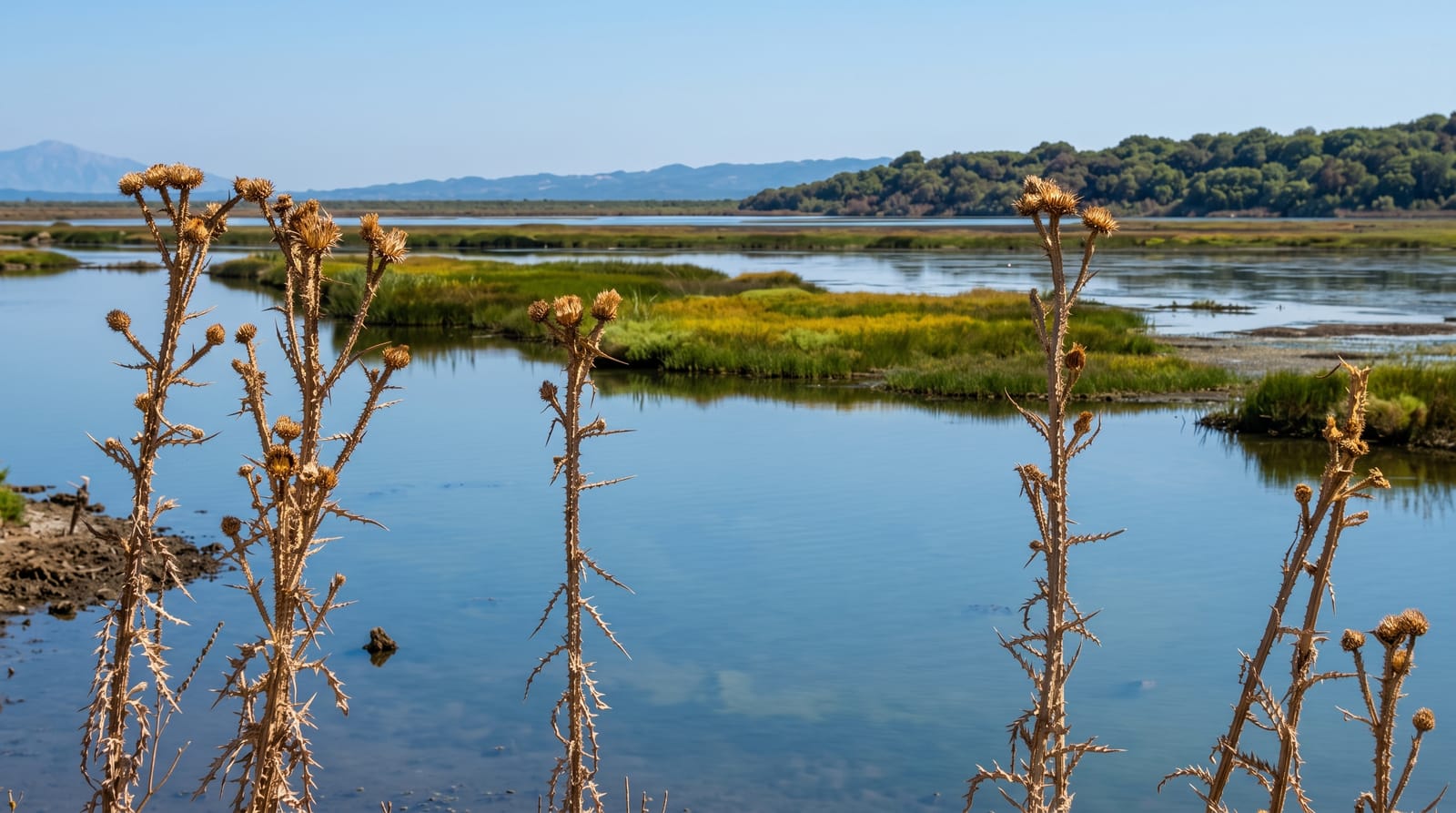
AI illustration
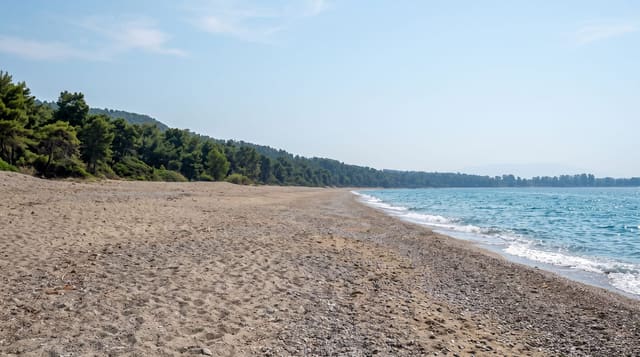
The Ambracian Gulf is a shallow basin about 40 kilometres long joined to the Ionian Sea by a channel only 600 metres wide at Preveza, which makes it almost a lake: brackish, warm and highly productive. Around 150 common bottlenose dolphins live here permanently, a small isolated population studied for decades and unusually easy to see from boats, along with loggerhead turtles and one of the largest concentrations of Dalmatian pelicans in Greece. Lagoons fringe the shore, Rodia, Tsoukalio, Logarou, worked with traditional fish traps for eel and mullet, and reedbeds shelter herons and egrets. An undersea road tunnel now connects Preveza with Aktio beneath the entrance channel, and small boats run wildlife trips from Preveza and Vonitsa.
History
The gulf saw the Battle of Actium, in which Augustus' forces defeated Mark Antony and Cleopatra, and in 1538 the Battle of Preveza, where the Ottoman admiral Hayreddin Barbarossa defeated the Holy League under Andrea Doria; after Greek independence it formed part of the border with the Ottoman Empire. The remains of many ancient cities lie on its shores, among them Nicopolis, Argos Ippatum, Limnaea and Olpae (Wikipedia, Ambracian Gulf).
What's there
- The dolphins - a resident bottlenose population seen on boat trips.
- The lagoons - traditional fish traps and reedbeds around the shore.
- The pelicans - Dalmatian pelicans wintering in large numbers.
- The narrow entrance - the 600-metre channel between gulf and open sea.
When to go
Spring and autumn for birds and calm water; summer is hot and the gulf can be hazy, though dolphin trips run daily. Winter brings the largest pelican gatherings.
What to expect
The gulf suffers from low oxygen and pollution episodes, and fish farming dominates parts of the shore, so the scenery is working rather than pristine. Dolphin sightings are likely but never guaranteed, and trips are weather-dependent.
Nearby
Nikopolis and Preveza lie at the entrance; Arta stands at the head of the gulf.
Key facts
Source: Wikidata, item Q284841, read on 18 October 2026.
What to pack for Ambracian Gulf
Chosen from what this place is for. Tap a kit for the full checklist.
- Broken-in walking shoes or boots - Grip and ankle support matter more than looks; never hike in brand-new boots. Find on Amazon
- Reef-safe sunscreen - High SPF that will not bleach the coral you are swimming over. Find on Amazon
- Binoculars - The single best wildlife tool - even a compact pair transforms a sighting. Find on Amazon
- Layers + a waterproof shell - Mountain weather turns fast; a packable rain jacket saves the day. Find on Amazon
Some links on this page are Amazon affiliate links - if you buy through them we may earn a small commission at no extra cost to you.
All packing kitsPlan your trip
Where to start if Ambracian Gulf is going on the list.
Booking links on this page are affiliate links - if you book through them we may earn a small commission at no extra cost to you. It never changes what we write about a place.
Opening times, ticket prices and seasonal closures change - check the official source before you go: official site.