Akrotiri Archaeological Site
A Bronze Age town buried by the eruption that shaped Santorini, its streets and three-storey houses standing under a modern roof.
Updated 4 September 2026
AI illustration
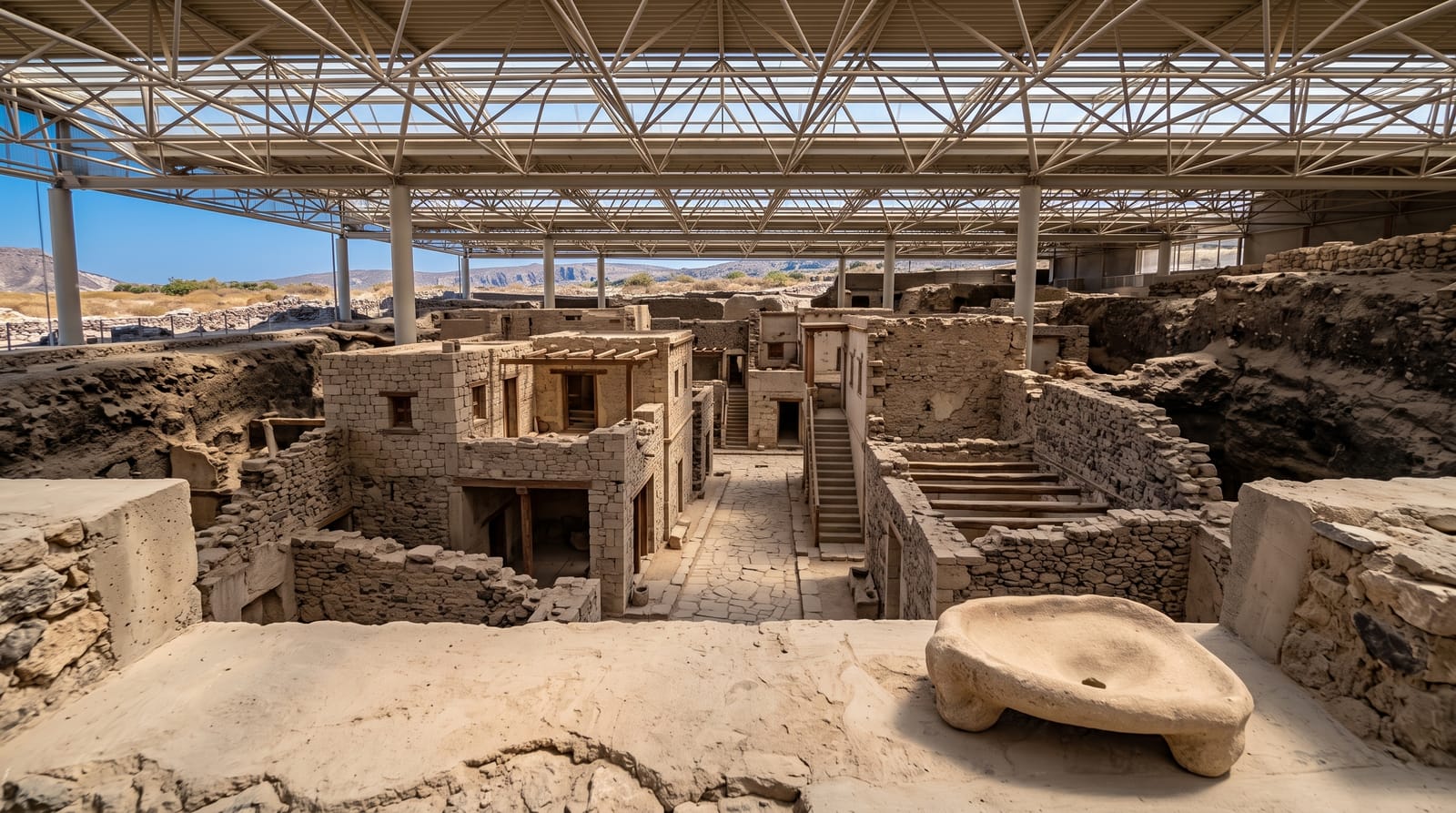
Akrotiri was a prosperous Cycladic town of the second millennium BC, trading across the Aegean, when the volcano buried it in metres of ash, preserving streets, drains, storerooms and houses standing two and three storeys high. Excavation from 1967 revealed an urban settlement with piped water, indoor toilets and walls painted with frescoes of astonishing quality, ships, antelopes, boxing boys, a spring landscape with swallows, now displayed in Athens and in the Museum of Prehistoric Thera in Fira. No human remains have been found, suggesting the population evacuated. The site is covered by a large bioclimatic roof and visited on raised walkways that run above and between the buildings, which lets you look down into rooms and along ancient lanes.
What's there
- The standing houses - Bronze Age buildings preserved to two and three storeys.
- The streets and drains - an urban plan with water supply and sewerage.
- The storage jars - pithoi still standing in their storerooms.
- The walkways - raised routes through and over the excavated town.
When to go
Year-round; the roof makes it comfortable in any weather and it is one of the few Santorini attractions that works at midday in August. Cruise-ship days bring crowds, so early morning is better.
What to expect
The famous frescoes are not here; they are in Athens and in the Fira museum. Visitors stay on walkways and cannot enter buildings. The site is dimly lit under the roof, which makes photography difficult.
Nearby
Red Beach lies below the site; Fira and the caldera villages are north.
What to pack for Akrotiri Archaeological Site
Chosen from what this place is for. Tap a kit for the full checklist.
- Comfortable walking shoes - Sightseeing means kilometres of pavement and cobbles daily. Find on Amazon
- A slim anti-theft daypack - Zips that close properly; keep it in front in crowds and on transit. Find on Amazon
- A refillable water bottle - Many cities have public fountains; save money and plastic. Find on Amazon
- A light layer + compact umbrella - For museum air-con and a sudden shower. Find on Amazon
Some links on this page are Amazon affiliate links - if you buy through them we may earn a small commission at no extra cost to you.
All packing kitsPlan your trip
Where to start if Akrotiri Archaeological Site is going on the list.
Booking links on this page are affiliate links - if you book through them we may earn a small commission at no extra cost to you. It never changes what we write about a place.
Opening times, ticket prices and seasonal closures change - check the official source before you go: official site.