Agiofarago Gorge
A short gorge of hermit caves and climbing walls that opens onto a hidden beach on the Libyan Sea.
Updated 4 September 2026
AI illustration
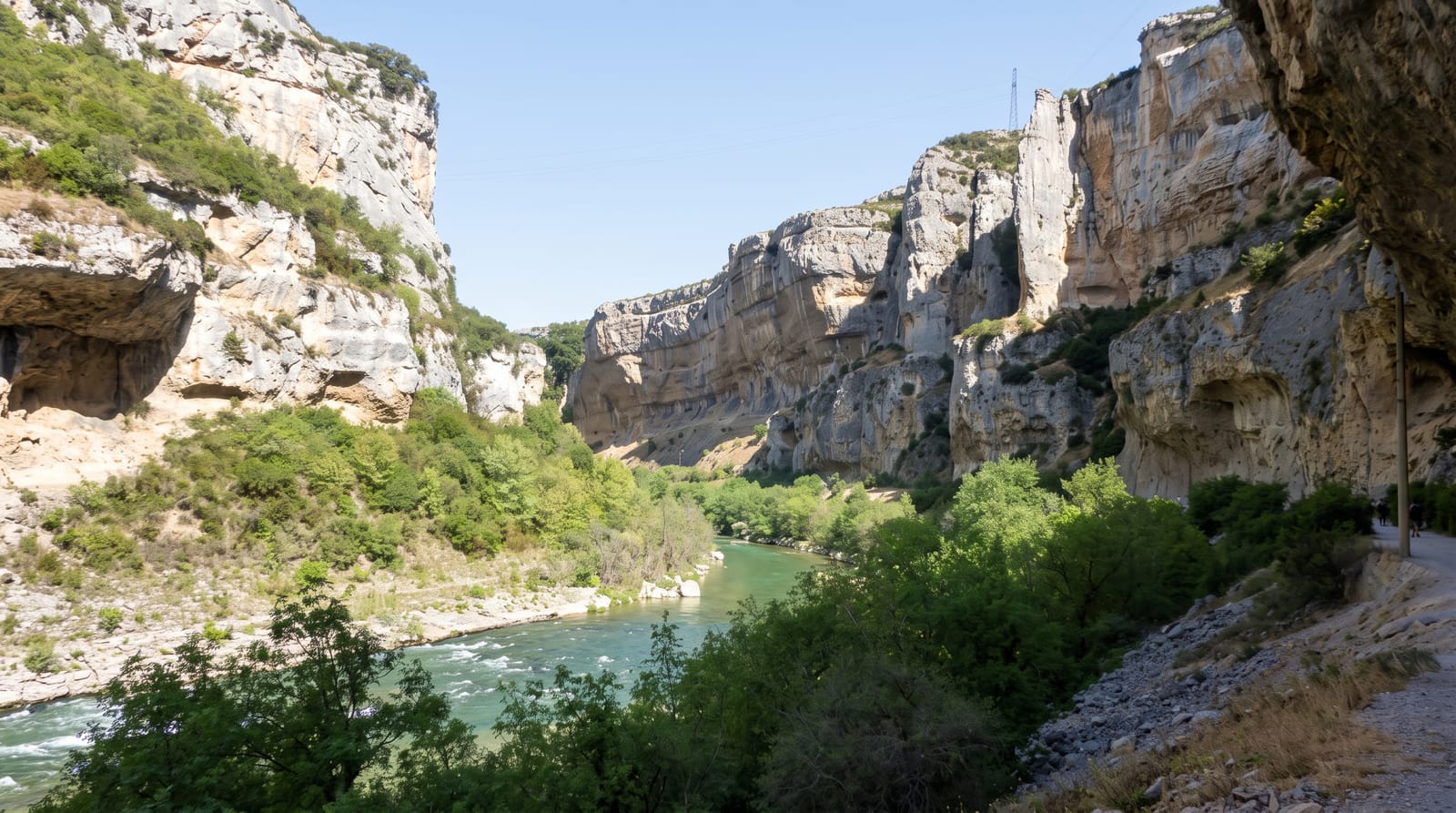
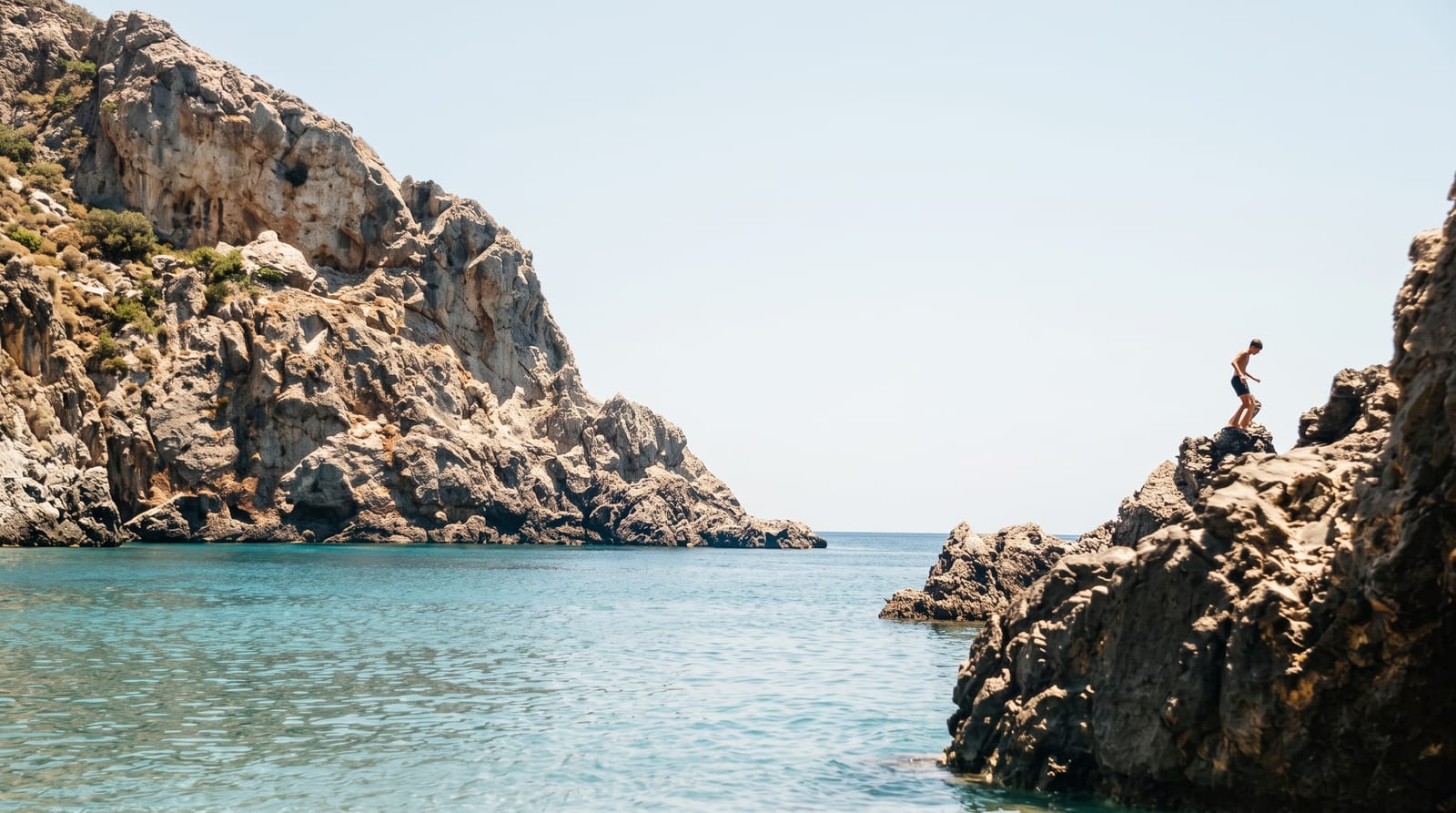
Agiofarago means the gorge of saints, and the name is literal: its walls hold caves used by hermits from the early Christian centuries onward, some with carved crosses and soot from ancient fires, and at the seaward end stands the tiny twelfth-century chapel of Agios Antonios beside a spring and a rock-cut cistern. The walk in takes thirty to forty minutes, level and easy, between cliffs that narrow to a corridor of pale limestone; climbers use the walls, which carry bolted routes. At the end the gorge opens onto a small beach of white pebbles with startlingly clear water. There are no facilities, no shade beyond the cliffs and no lifeguards, and the walk back in the afternoon heat is the hard part.
What's there
- The hermit caves - rock shelters with carved crosses in the gorge walls.
- Agios Antonios chapel - a twelfth-century chapel near the sea.
- The beach - white pebbles and clear water at the gorge mouth.
- The climbing walls - bolted routes on the limestone sides.
When to go
Spring and autumn for comfortable walking; the gorge is hot and shadeless in the middle of summer. Morning visits leave the return before the worst heat.
Good to know
The access track from Odigitria is rough and slow, and a normal car needs care. There is nothing at the beach: no water, no cafe, no toilets. Boats from Kaloi Limenes and Matala offer an easier arrival in season.
Nearby
Odigitria monastery is at the track head; Matala and Kaloi Limenes lie along the coast.
What to pack for Agiofarago Gorge
Chosen from what this place is for. Tap a kit for the full checklist.
- Broken-in walking shoes or boots - Grip and ankle support matter more than looks; never hike in brand-new boots. Find on Amazon
- Head torch + spare batteries - Hands-free light is essential; caves are truly dark. Find on Amazon
- Modest clothing - Shoulders and knees covered - the single most common requirement. Find on Amazon
- Layers + a waterproof shell - Mountain weather turns fast; a packable rain jacket saves the day. Find on Amazon
Some links on this page are Amazon affiliate links - if you buy through them we may earn a small commission at no extra cost to you.
All packing kitsPlan your trip
Where to start if Agiofarago Gorge is going on the list.
Booking links on this page are affiliate links - if you book through them we may earn a small commission at no extra cost to you. It never changes what we write about a place.
Opening times, ticket prices and seasonal closures change - check the official source before you go: official site.