Fort Good Hope
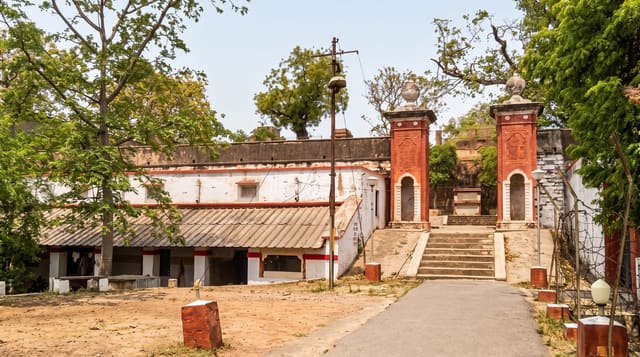
A small Dutch fort standing over the fishing village of Senya Beraku, later used as a rest house.
Updated 18 October 2026
UNESCO World Heritage
Fort Good Hope, Goede Hoop in Dutch, was begun at Senya Beraku after 1704, when the Queen of Agona allowed the Dutch to build a fort there for the gold trade, and by 1715 it had been enlarged into a rectangular fort with a courtyard, four bastions and a slave prison. The Dutch held it until the 1868 exchange with Britain. It sits on rock directly above a working fishing village, with canoes drawn up on the beach beneath the walls, and for a period in the twentieth century it operated as a government rest house, which left it in better repair than some of its neighbours though the accommodation has since lapsed. It is one of the components of the World Heritage inscription on the coastal forts.
History
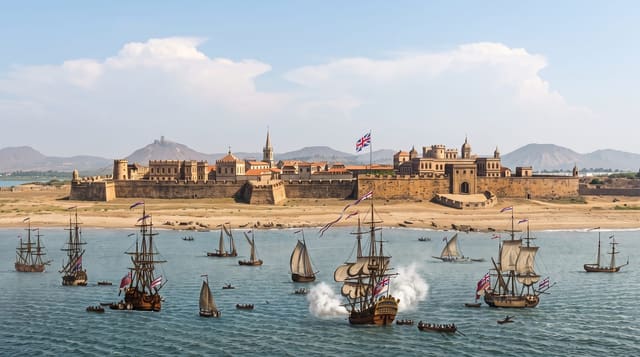
The Dutch first set up a lodge at Senya Beraku in the 1660s but gave it up after the British built a fort at nearby Winneba; in 1704 the Queen of Agona allowed them to build a fort here, mainly for the gold trade with Akim, and the first triangular fort was enlarged by 1715 into a rectangular one with four bastions and a slave prison in the south-west bastion, with an outer wall added in the late 18th century. The British captain Thomas Shirley captured it in 1782 during the Fourth Anglo-Dutch War and held it until 1785, the Akim briefly controlled it between 1811 and 1816, and in 1868 it was ceded to Britain; it is part of the Forts and Castles of Ghana World Heritage Site, inscribed in 1979 (Wikipedia, Fort Goede Hoop, Ghana).
The main sights
- The compact fort - the small bastioned Dutch structure on the rock.
- Holding rooms - the chambers below the courtyard.
- The fishing village - canoes and drying nets on the beach below.
- The courtyard - the enclosed centre of the fort.
When to go
November to March for the dry season. Mornings are when the fishing beach is busiest and coolest for the walk up. Visits are with a caretaker guide.
Things to know
The fort is small and the visit brief. Maintenance has lapsed and parts are decayed. The caretaker may be absent, so arriving unannounced sometimes means waiting. Fees are informal.
Nearby
Winneba lies west, and Fort Patience at Apam is further west along the coast.
Key facts
Source: Wikidata, item Q1963564, read on 18 October 2026.
What to pack for Fort Good Hope
Chosen from what this place is for. Tap a kit for the full checklist.
- Travel rod + reel - A packable multi-piece rod fits in a case and covers most holiday fishing. Find on Amazon
- Quick-dry clothing - Board shorts or synthetics that shrug off spray and dry fast. Find on Amazon
- Comfortable walking shoes - Sightseeing means kilometres of pavement and cobbles daily. Find on Amazon
- A small tackle selection - Hooks, weights, line and a few lures or flies suited to local waters. Find on Amazon
Some links on this page are Amazon affiliate links - if you buy through them we may earn a small commission at no extra cost to you.
All packing kitsPlan your trip
Where to start if Fort Good Hope is going on the list.
Booking links on this page are affiliate links - if you book through them we may earn a small commission at no extra cost to you. It never changes what we write about a place.
Opening times, ticket prices and seasonal closures change - check the official source before you go: official site.