Wismar
A Hanseatic port that belonged to Sweden for over a century and a half, with a market square of ten thousand square metres.
Updated 19 October 2026
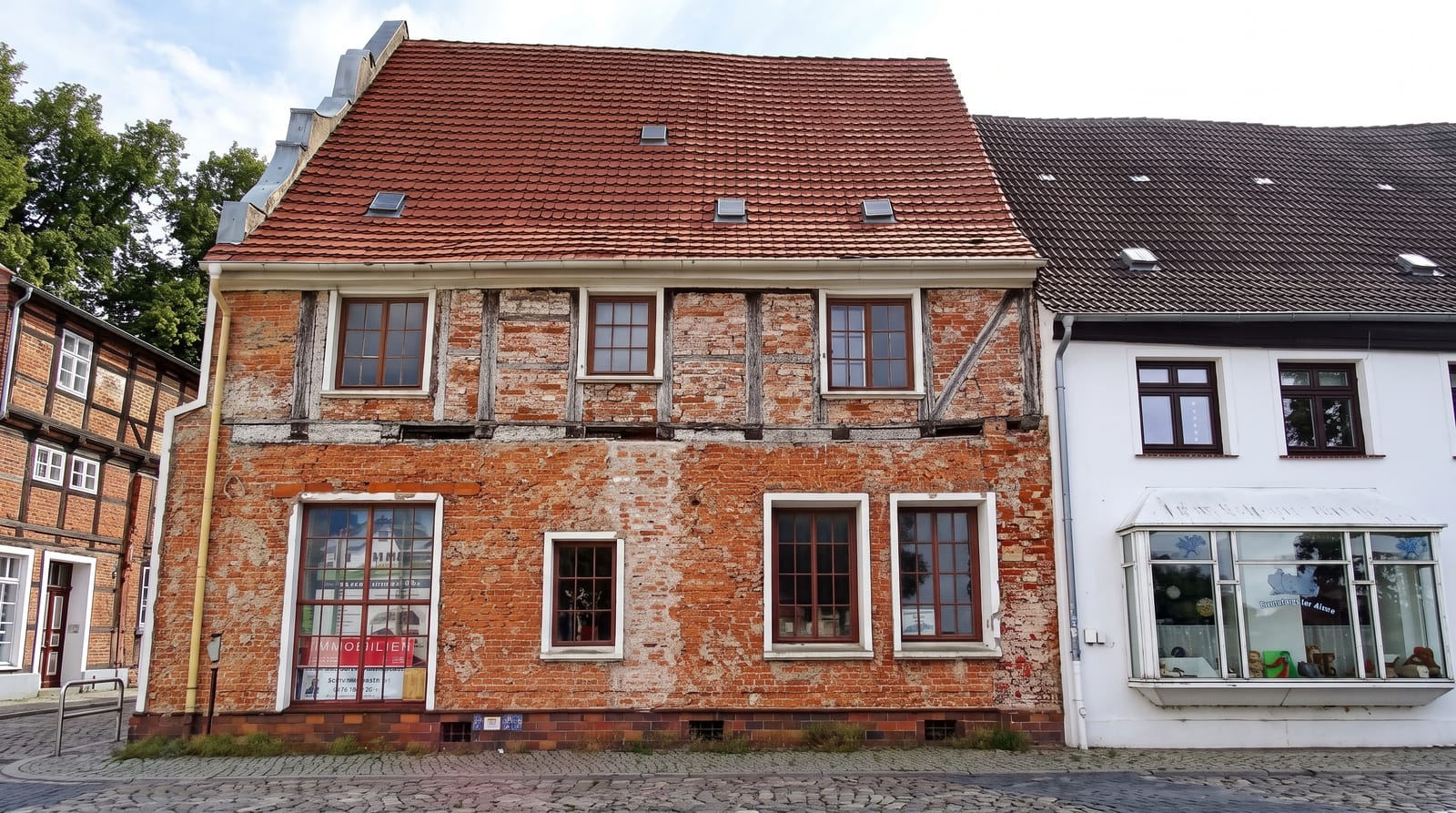
AI illustration
Wismar was a leading Hanseatic port, and its market square covers about ten thousand square metres, one of the largest in northern Germany, with a waterworks pavilion of 1602 at its centre that supplied the town's fountains. Sweden held the town from 1648 until it was pledged to Mecklenburg in 1803, and the pledge was only formally renounced in 1903, so Wismar was technically Swedish for over two and a half centuries. Brick Gothic churches dominate: St Nikolai stands complete, St Georgen was rebuilt after wartime destruction, and of St Marien only the tower remains. UNESCO listed Wismar with Stralsund in 2002.
History
The name is recorded from the 12th century, as Wismar in 1147 and 1167, probably of Slavic origin, in the land of the Obotrites; by the oldest town document, of 1229, its civic rights were already established, in 1259 it joined Lübeck and Rostock in a pact against Baltic pirates, the start of the later Hanseatic cooperation, and in 1301 it came under the House of Mecklenburg. By the Peace of Westphalia of 1648 it passed to Sweden, and from 1653 the Fürstenhof housed the supreme court for all Swedish lands in the Empire; in 1803 Sweden pledged the town to Mecklenburg-Schwerin for 1,258,000 riksdalers with the right to redeem it after 100 years, renouncing it only in 1903, and Wismar still keeps the right to fly its own flag (Wikipedia, Wismar).
What you'll find
- The market square - ten thousand square metres with a 1602 waterworks.
- The Swedish period - a town formally Swedish into the twentieth century.
- The brick churches - St Nikolai complete, St Marien reduced to its tower.
- The old harbour - a working basin with the Wassertor gate beside it.
When to go
May to September; the harbour and squares are the focus in summer. The Swedish festival is held in August. Winter on the Baltic is cold and quiet.
What to expect
St Marien is only a tower; the church was demolished in 1960. Some quarters are still being restored. The town is small.
Nearby
Schwerin lies south; Bad Doberan is east.
Key facts
Source: Wikidata, item Q7030, read on 18 October 2026.
What to pack for Wismar
Chosen from what this place is for. Tap a kit for the full checklist.
- Comfortable walking shoes - Sightseeing means kilometres of pavement and cobbles daily. Find on Amazon
- A slim anti-theft daypack - Zips that close properly; keep it in front in crowds and on transit. Find on Amazon
- A refillable water bottle - Many cities have public fountains; save money and plastic. Find on Amazon
- A light layer + compact umbrella - For museum air-con and a sudden shower. Find on Amazon
Some links on this page are Amazon affiliate links - if you buy through them we may earn a small commission at no extra cost to you.
All packing kitsPlan your trip
Where to start if Wismar is going on the list.
Booking links on this page are affiliate links - if you book through them we may earn a small commission at no extra cost to you. It never changes what we write about a place.
Opening times, ticket prices and seasonal closures change - check the official source before you go: official site.


