Viktualienmarkt
Munich's permanent food market of roughly a hundred and forty stalls, moved off Marienplatz in 1807 and still trading six days a week.
Updated 31 October 2026
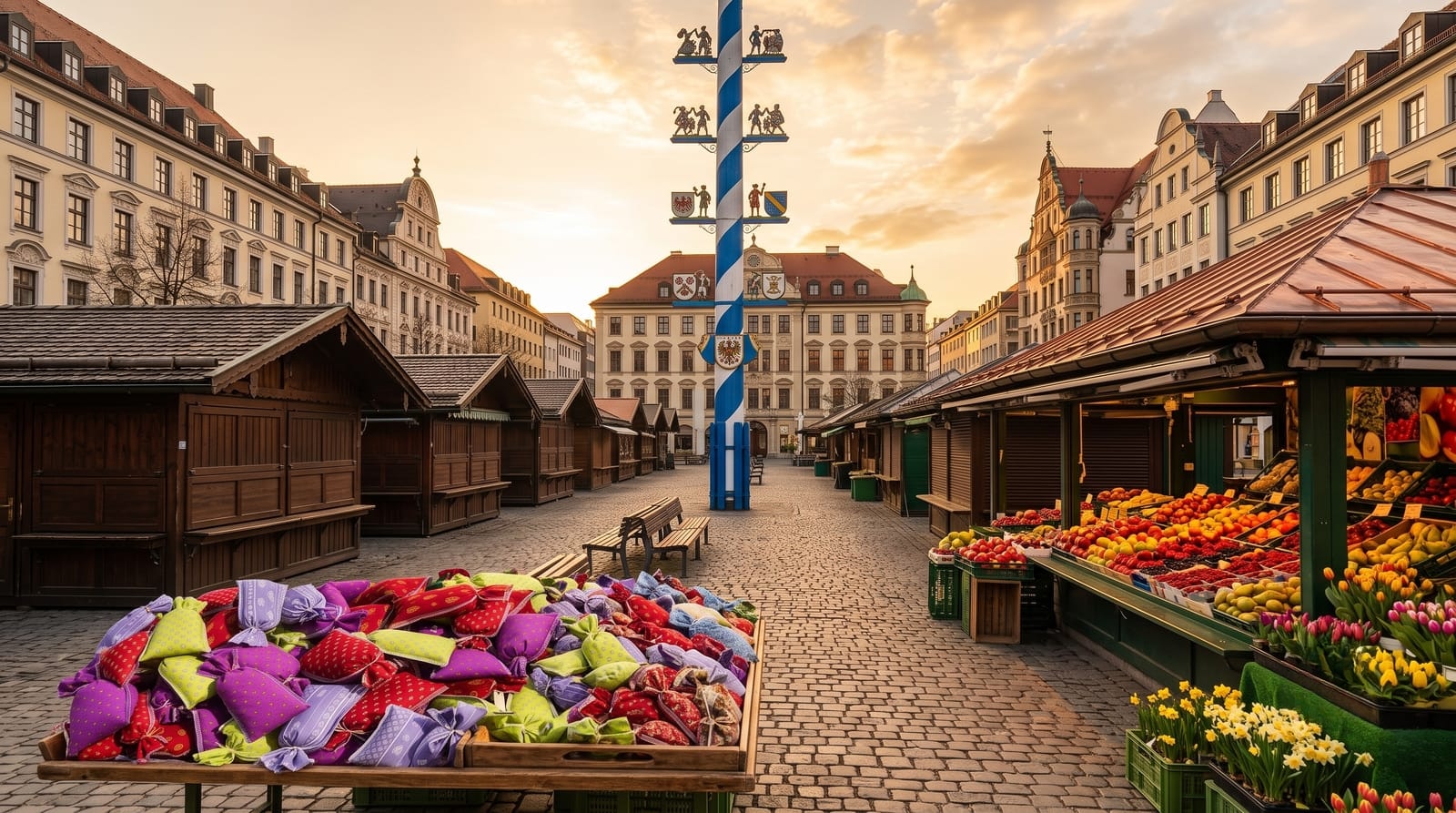
AI illustration
In 1807 the food market outgrew Marienplatz and was pushed one block south, where it has stayed ever since. It is not a hall but an open square of fixed stalls, around a hundred and forty of them, many held by the same families across generations. What they sell is narrow and deep: one stall for honey, another only for herbs, a butcher for veal sausage, cheesemongers, game and poultry dealers, flower growers, and a stand that does nothing but potatoes. The maypole in the middle carries painted figures of the trades that supplied the city. It is a working market that also feeds office workers at lunchtime, and like everything else in Bavaria it closes on Sundays.
History
When the grain market on today's Marienplatz grew too small, a decree of King Maximilian I on 2 May, 1807 moved part of it to the present site, clearing buildings of the Heiliggeist hospice; the market was much enlarged from 1823 to 1829, the old Heiliggeist infirmary was pulled down in 1885, and the fish market moved to Westenriederstrasse in 1855. Over time butchers' and tripe halls, bakery and fruit pavilions and a fish hall were added, and after 1945 the city chose to restore the market rather than build over it, adding fountains to the folk singers and comedians Karl Valentin, Weiss Ferdl and Liesl Karlstadt (Wikipedia, Viktualienmarkt).
The main sights
- The maypole - blue and white, hung with painted figures of the city's old trades.
- The specialist stalls - single-product traders for honey, herbs, game or potatoes.
- Weisswurst - the white veal sausage, sold to a strictly morning convention.
- Seasonal produce - white asparagus in spring, chanterelles, game and pumpkins in autumn.
When to go
Monday to Saturday, with stalls closing in the late afternoon and the whole square shut on Sundays and public holidays. Mornings are for shopping, midday for eating standing up, and it empties by early evening. White asparagus arrives in April and May; chanterelles, game and pumpkins run from late summer into October.
What to expect
It is central and priced accordingly. This is not where Munich shops for value, and some stalls charge visitors whatever the location allows. Seating is limited and shared, benches fill at lunchtime, and the aisles are tight when tour groups come through. Sunday arrivals find everything closed, which catches out a lot of weekend visitors.
Nearby
Marienplatz and the old town, the Asamkirche and the delicatessens of the surrounding streets.
Key facts
Source: Wikidata, item Q686629, read on 18 October 2026.
What to pack for Viktualienmarkt
Chosen from what this place is for. Tap a kit for the full checklist.
- A reusable bag or container - For market produce and cutting down on packaging. Find on Amazon
- Wet wipes + hand sanitiser - Street food and washbasins do not always go together. Find on Amazon
Some links on this page are Amazon affiliate links - if you buy through them we may earn a small commission at no extra cost to you.
All packing kitsPlan your trip
Where to start if Viktualienmarkt is going on the list.
Booking links on this page are affiliate links - if you book through them we may earn a small commission at no extra cost to you. It never changes what we write about a place.
Opening times, ticket prices and seasonal closures change - check the official source before you go: official site.