Vierzehnheiligen Basilica
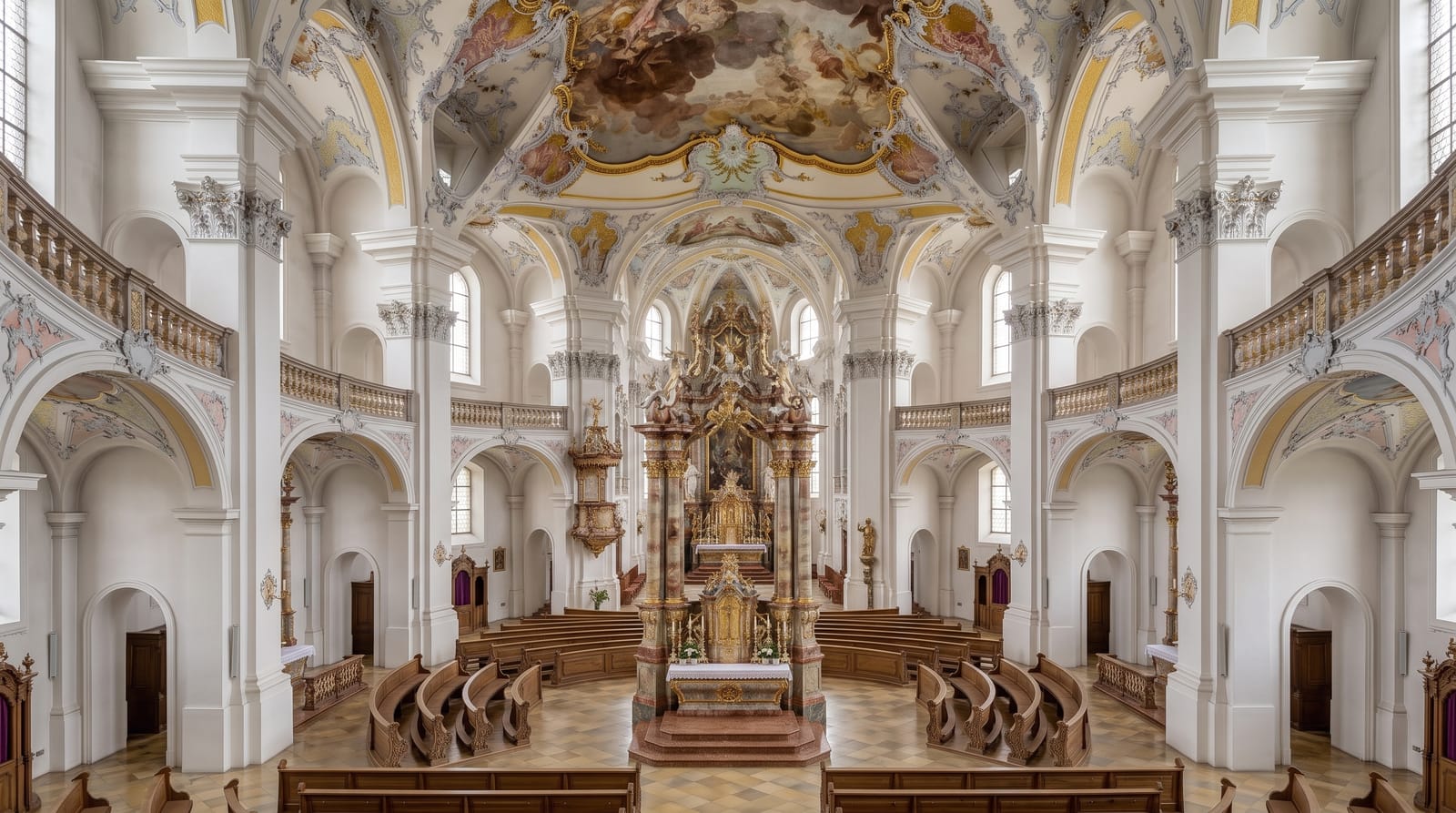
A rococo church built on ovals that do not line up with its own walls, with the altar in the middle of the nave.
Updated 19 October 2026
AI illustration
A shepherd reported visions of a child and then of fourteen children at this spot in 1445 and 1446, identified as the Fourteen Holy Helpers, and a pilgrimage grew. Balthasar Neumann built the present church from 1743, and its interior is a system of interlocking ovals whose centres deliberately do not coincide with the exterior walls, so the space appears to move as you walk through it. The altar of the Holy Helpers stands not in the chancel but in the middle of the nave, on the spot of the visions, which forced the whole geometry. The basilica looks across the Main valley to Banz abbey on the opposite ridge.
History
The present church was built from 1743 to 1772. Langheim Abbey, wanting to cut costs, changed the plans after the foundation stone had been laid, and by the time Balthasar Neumann found out, the walls of the three apses were already up; since the Altar of Grace, on the site of the apparitions, could not be moved, Neumann redesigned the interior so that it stands in the nave, the origin of its unusual Rococo plan (Wikipedia, Basilica of the Fourteen Holy Helpers).
Highlights
- The offset ovals - an interior geometry that does not match the shell.
- The central altar - the Gnadenaltar standing in the middle of the nave.
- The white and gold interior - stucco and fresco in a very light scheme.
- The valley view - Banz abbey facing it across the Main.
When to go
April to October; the church closes to visitors during services and pilgrimages. Coach groups arrive at midday. Winter access is limited by weather on the hill.
Things to know
It is one building with no other facilities nearby. Services interrupt visits. Access without a car is awkward from Bad Staffelstein.
Nearby
Banz abbey faces it; Bamberg lies south.
What to pack for Vierzehnheiligen Basilica
Chosen from what this place is for. Tap a kit for the full checklist.
- Comfortable walking shoes - Sightseeing means kilometres of pavement and cobbles daily. Find on Amazon
- Modest clothing - Shoulders and knees covered - the single most common requirement. Find on Amazon
- A slim anti-theft daypack - Zips that close properly; keep it in front in crowds and on transit. Find on Amazon
- A scarf or shawl - To cover the head or shoulders on entry; women especially at mosques. Find on Amazon
Some links on this page are Amazon affiliate links - if you buy through them we may earn a small commission at no extra cost to you.
All packing kitsPlan your trip
Where to start if Vierzehnheiligen Basilica is going on the list.
Booking links on this page are affiliate links - if you book through them we may earn a small commission at no extra cost to you. It never changes what we write about a place.
Opening times, ticket prices and seasonal closures change - check the official source before you go: official site.