Loreto
A basilica built around a small brick house, encased in a marble screen designed by Bramante.
Updated 4 September 2026
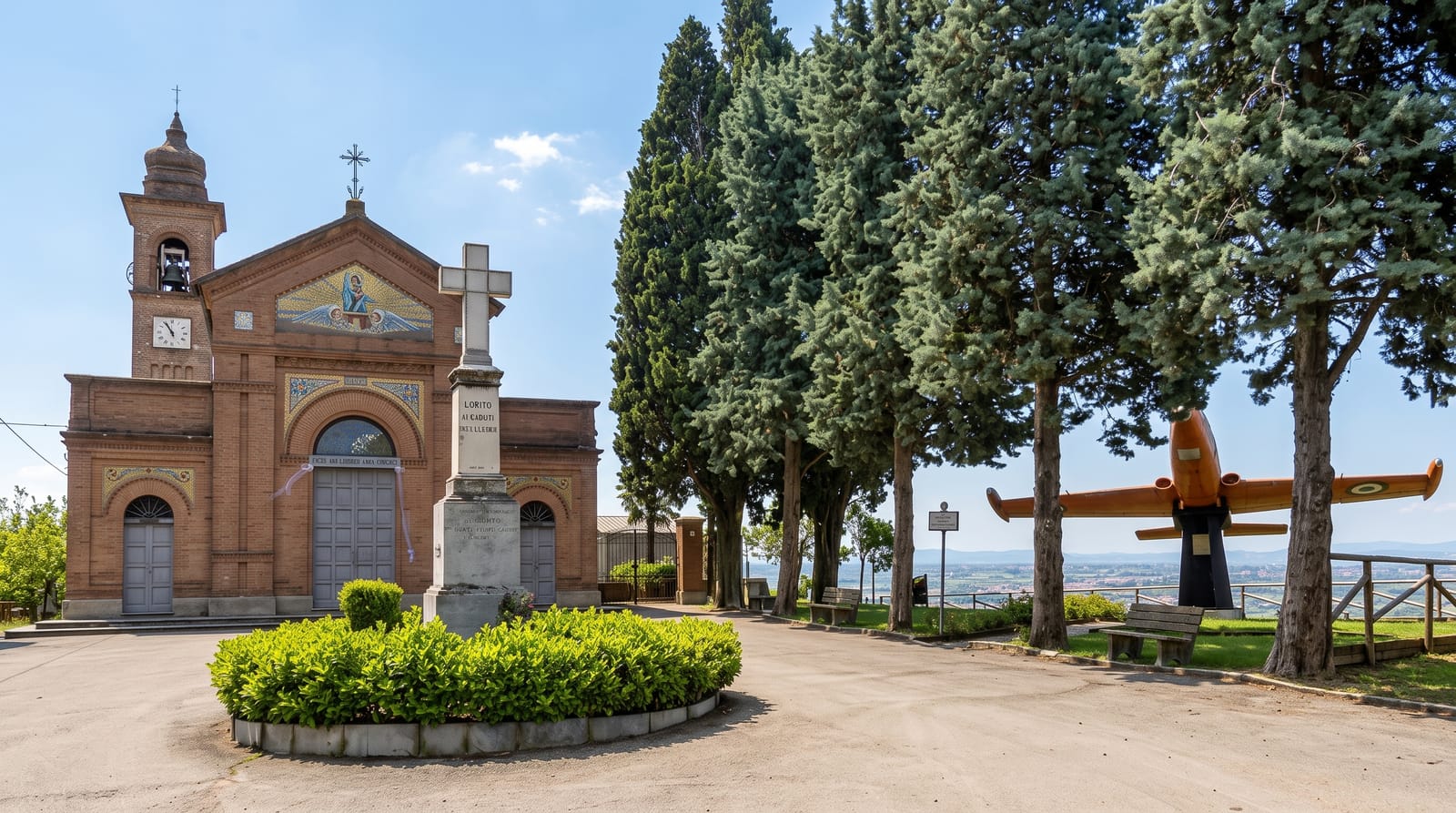
AI illustration
The Santa Casa is a small stone and brick room, about nine metres by four, which arrived here in 1294 and which tradition holds is the house of the Virgin from Nazareth, carried by angels; a documented alternative is that the Angeli family of Epirus transported the stones. Whatever the route, the structure is enclosed inside a marble screen carved with prophets and sibyls, designed by Bramante and executed by Sansovino and others, itself inside a large basilica begun in 1468 with a dome by Giuliano da Sangallo. Pilgrims have come for centuries, and Loreto became the patron shrine of aviators in 1920 for the flight legend.
Highlights
- The Santa Casa - a small brick house standing inside the basilica.
- The Bramante screen - a carved marble casing around the house.
- The Sangallo dome - one of the earliest large Renaissance domes.
- The Signorelli frescoes - a sacristy ceiling by Luca Signorelli.
When to go
April to October; the shrine is busiest on Marian feast days and in the December anniversary week. Services run through the day and access pauses during them.
Good to know
It is an active pilgrimage site, crowded and devotional rather than a museum. Dress code is enforced. Access to the Santa Casa queues during services.
Nearby
Recanati lies south; the Conero coast is north.
What to pack for Loreto
Chosen from what this place is for. Tap a kit for the full checklist.
- Comfortable walking shoes - Sightseeing means kilometres of pavement and cobbles daily. Find on Amazon
- Modest clothing - Shoulders and knees covered - the single most common requirement. Find on Amazon
- A slim anti-theft daypack - Zips that close properly; keep it in front in crowds and on transit. Find on Amazon
- A scarf or shawl - To cover the head or shoulders on entry; women especially at mosques. Find on Amazon
Some links on this page are Amazon affiliate links - if you buy through them we may earn a small commission at no extra cost to you.
All packing kitsPlan your trip
Where to start if Loreto is going on the list.
Booking links on this page are affiliate links - if you book through them we may earn a small commission at no extra cost to you. It never changes what we write about a place.
Opening times, ticket prices and seasonal closures change - check the official source before you go: official site.