Margravial Opera House
A baroque court theatre with its original wooden interior intact, and the deep stage that brought Wagner here.
Updated 18 October 2026
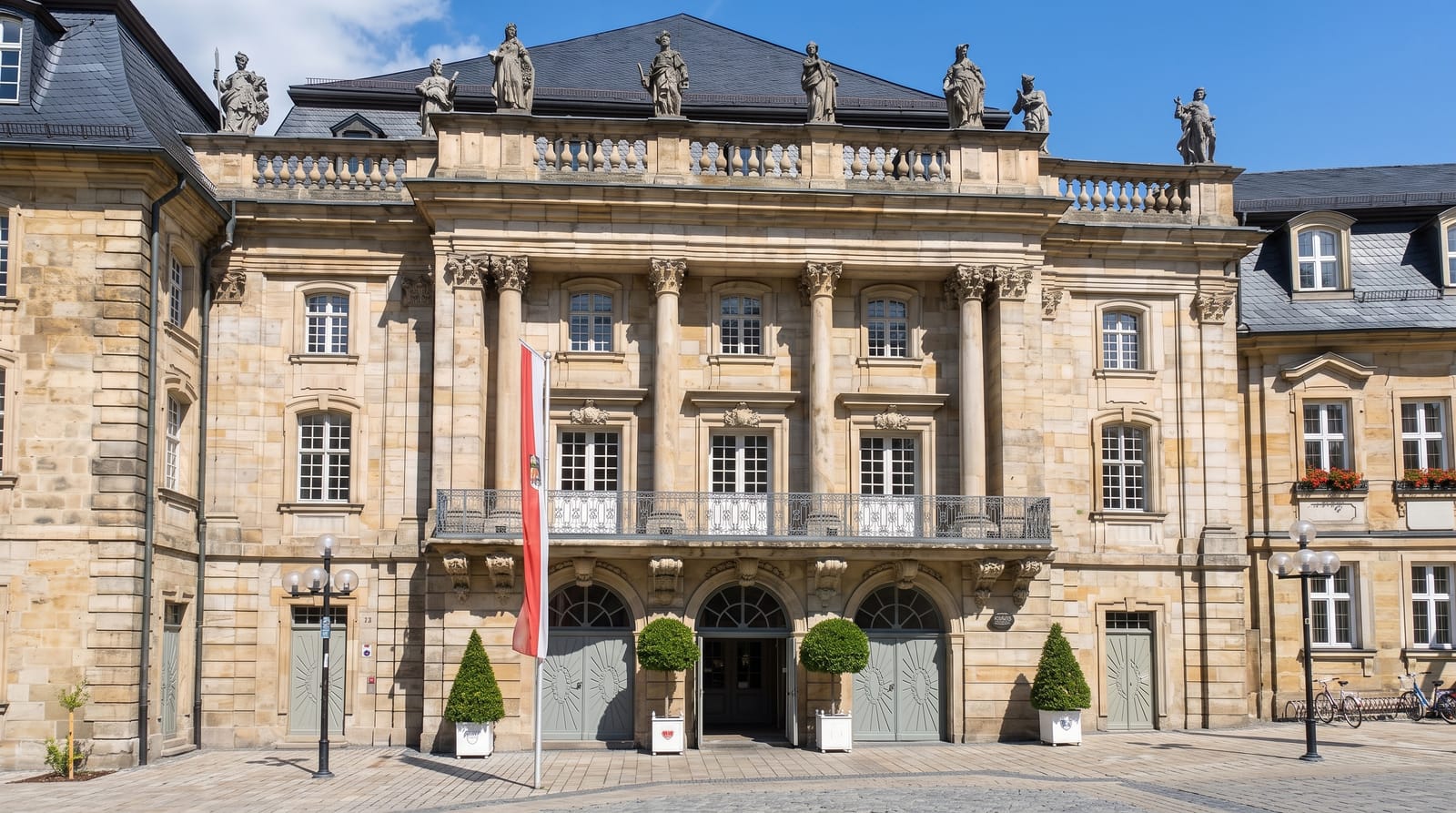
AI illustration
UNESCO World Heritage
Margravine Wilhelmine, sister of Frederick the Great, had this built between 1745 and 1750 by Giuseppe Galli Bibiena and his son Carlo, and its interior of painted canvas over wood survives essentially unaltered, which almost no other baroque court theatre does; it was UNESCO-listed in 2012 and reopened in 2018 after six years of restoration. Richard Wagner came to Bayreuth in 1871 specifically because he had read that this theatre had the deepest stage in Germany, then found the auditorium unsuitable for his work and built his own Festspielhaus on a hill outside the town instead.
History
Margravine Wilhelmine, elder sister of Frederick the Great, set up the court theatre company in 1737, and the opera house, built between 1745 and 1750, opened for the wedding of her daughter Elisabeth Fredericka Sophie to Duke Charles Eugene of Württemberg; she wrote operas for it and acted and directed in it. After her death in 1758 performances stopped and the building fell out of use, one reason it survived so well, and more than a century later its 27-metre-deep stage drew Richard Wagner, who in 1872 chose Bayreuth for his festival and built his Festspielhaus north of the town. The opera house was added to the World Heritage List on 30 June 2012, shut for refurbishment that October and reopened on 12 April 2018 (Wikipedia, Margravial Opera House).
The main sights
- The original interior - painted wood and canvas surviving from 1750.
- The Bibiena design - illusionistic boxes by a family of theatre architects.
- The deep stage - the feature that first brought Wagner to Bayreuth.
- The restoration - a six-year project completed in 2018.
When to go
Year-round; visits are on timed entries with a short sound and light presentation, and the theatre closes for performances and rehearsals. Booking is sensible.
What to expect
It closes for performances without much notice. The visit is short, around forty-five minutes. This is not the Wagner Festspielhaus, which is a separate building.
Nearby
The Festspielhaus stands outside the town; the Hermitage lies east.
Key facts
Source: Wikidata, item Q278908, read on 18 October 2026.
What to pack for Margravial Opera House
Chosen from what this place is for. Tap a kit for the full checklist.
- Comfortable walking shoes - Sightseeing means kilometres of pavement and cobbles daily. Find on Amazon
- A slim anti-theft daypack - Zips that close properly; keep it in front in crowds and on transit. Find on Amazon
- A refillable water bottle - Many cities have public fountains; save money and plastic. Find on Amazon
- A light layer + compact umbrella - For museum air-con and a sudden shower. Find on Amazon
Some links on this page are Amazon affiliate links - if you buy through them we may earn a small commission at no extra cost to you.
All packing kitsPlan your trip
Where to start if Margravial Opera House is going on the list.
Booking links on this page are affiliate links - if you book through them we may earn a small commission at no extra cost to you. It never changes what we write about a place.
Opening times, ticket prices and seasonal closures change - check the official source before you go: official site.