Steinhuder Meer
A large lake nowhere deeper than three metres, with an artificial island fortress built on sunken stone.
Updated 19 October 2026
AI illustration
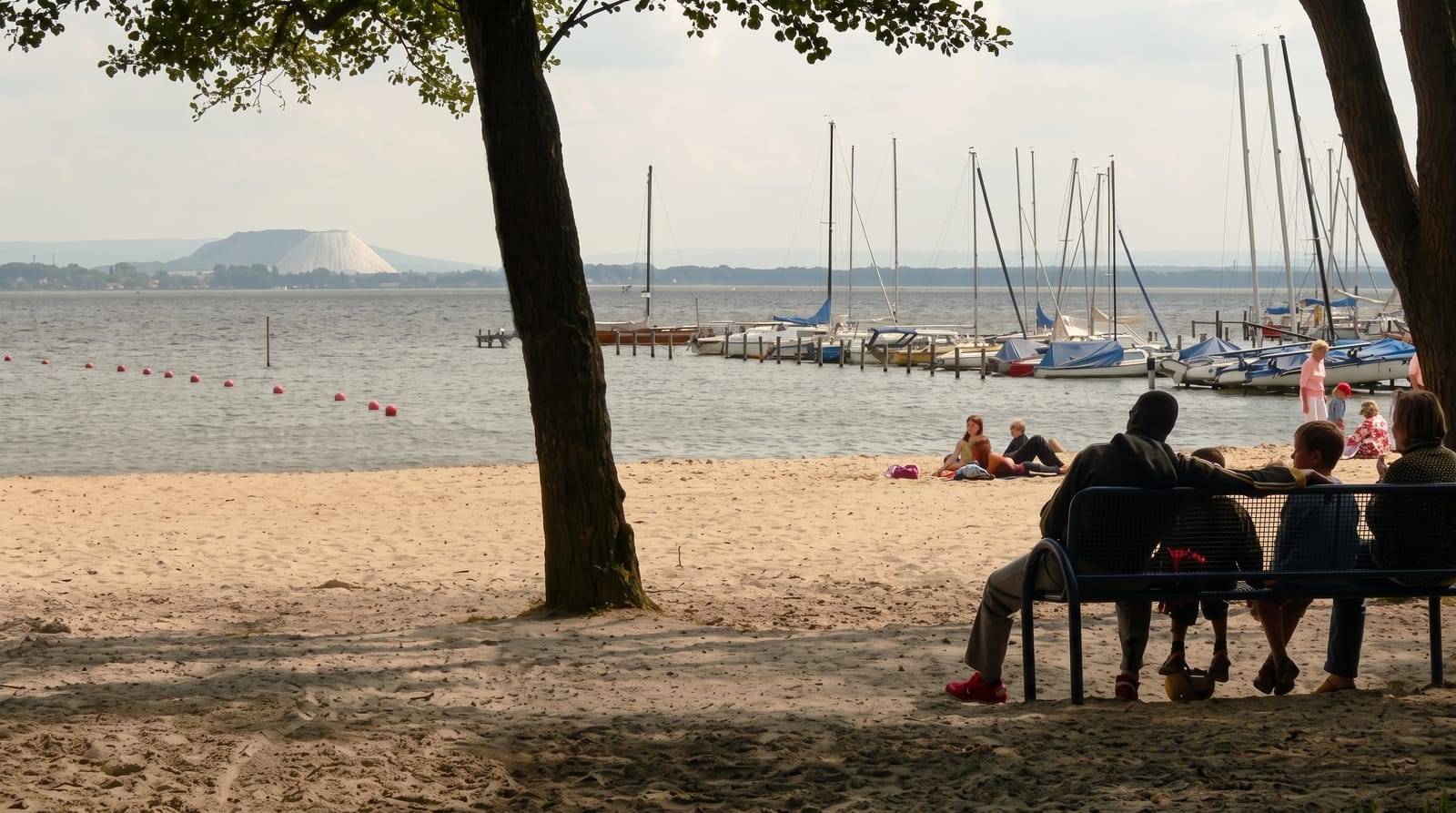
The Steinhuder Meer covers about twenty-nine square kilometres, the largest lake in northwestern Germany, but averages only about one and a half metres deep and reaches under three, a shallow basin left by glacial and peat processes. In the 1760s Count Wilhelm of Schaumburg-Lippe had an artificial island built by sinking stone in the lake and constructed the Wilhelmstein, a star fortress, on it as a refuge and a military academy; Gerhard von Scharnhorst studied there. A second artificial island, the Badeinsel at Steinhude, was built up from lake sand in 1974-75 as a bathing island with a beach, reached by a footbridge. Flat-bottomed sailing boats called Auswanderer carry visitors across.
Highlights
- The Wilhelmstein - an island fortress on ground made by sinking stone.
- The shallow water - a large lake under three metres deep throughout.
- The flat-bottomed boats - traditional craft built for the shallow lake.
- The bathing island - an artificial island of lake sand with a beach.
When to go
May to September; ferries to the island run in season and stop in winter. The shallow water warms early, and the lake is used for sailing and windsurfing.
Things to know
The lake is too shallow for most boats and freezes readily. Island ferries are seasonal and weather dependent. The shore is busy on summer weekends.
Nearby
Hanover lies southeast; Bremen is northwest.
Key facts
Source: Wikidata, item Q165782, read on 18 October 2026.
What to pack for Steinhuder Meer
Chosen from what this place is for. Tap a kit for the full checklist.
- Reef-safe sunscreen - High SPF that will not bleach the coral you are swimming over. Find on Amazon
- Quick-dry clothing - Board shorts or synthetics that shrug off spray and dry fast. Find on Amazon
- Quick-dry towel - A microfibre towel packs small and dries in minutes. Find on Amazon
- Secure water shoes or reef boots - Grip on slippery launches and protection on rocky shores. Find on Amazon
Some links on this page are Amazon affiliate links - if you buy through them we may earn a small commission at no extra cost to you.
All packing kitsPlan your trip
Where to start if Steinhuder Meer is going on the list.
Booking links on this page are affiliate links - if you book through them we may earn a small commission at no extra cost to you. It never changes what we write about a place.
Opening times, ticket prices and seasonal closures change - check the official source before you go: official site.