Hameln
The town of the Pied Piper story, whose earliest record says a hundred and thirty children were lost in 1284.
Updated 19 October 2026
AI illustration
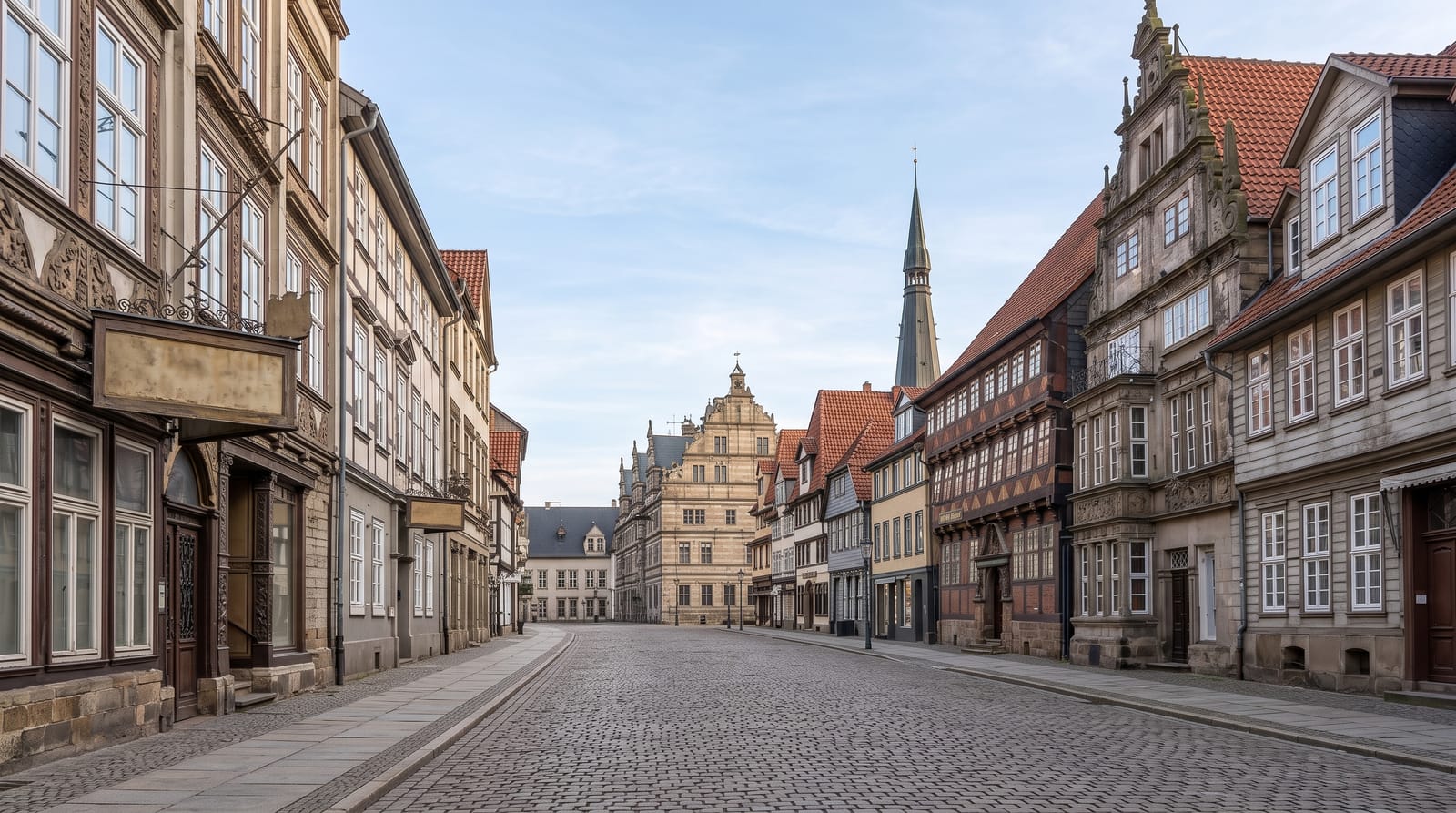
A window in Hameln's church, recorded before it was destroyed, showed a piper and children and carried an inscription about the loss of a hundred and thirty of the town's children on 26 June 1284; a note in the town chronicle repeats the date. The rat-catching element appears only in later versions, and what actually happened, if anything, has never been established, with emigration, illness and other explanations proposed. The Rattenfängerhaus of 1603 and other Weser Renaissance houses carry the ornate stonework of that regional style. Open-air performances of the story run on Sundays in summer, and the town uses rat imagery everywhere.
History
Hamelin began with a monastery founded as early as 851 AD, whose village became a town by the 12th century; the Pied Piper incident is said to have happened in 1284 and may rest on a real event, and in the 15th and 16th centuries the town was a minor member of the Hanseatic League. In June 1634, in the Thirty Years' War, the town was besieged by the Swedes and the imperial general Bönninghausen lost the Battle of Oldendorf. Its greatest prosperity began in 1664, when it became a fortified border town of the Principality of Calenberg, passing in 1705 to the Electorate of Hanover; four forts built between 1760 and 1806 earned it the name "Gibraltar of the North", but in 1806 it surrendered to the French without a fight and its walls and towers were pulled down, and in 1843 the townspeople built the Klütturm from the ruins of Fort George (Wikipedia, Hamelin).
What you'll find
- The Weser Renaissance houses - ornate stone and gable work of about 1600.
- The Rattenfängerhaus - a 1603 building carrying the story's inscription.
- The Sunday performances - open-air enactments of the tale in summer.
- The 1284 record - the earliest documented reference to the lost children.
When to go
May to September, when the open-air play runs on Sunday middays and a musical on Wednesdays. The town is quiet outside the season.
What to expect
The story is commercialised heavily throughout the town. What happened in 1284, if anything, is unknown. Performances are in German.
Nearby
Hann. Münden lies south up the Weser; Hanover is northeast.
Key facts
Source: Wikidata, item Q4062, read on 18 October 2026.
What to pack for Hameln
Chosen from what this place is for. Tap a kit for the full checklist.
- Comfortable walking shoes - Sightseeing means kilometres of pavement and cobbles daily. Find on Amazon
- Modest clothing - Shoulders and knees covered - the single most common requirement. Find on Amazon
- A slim anti-theft daypack - Zips that close properly; keep it in front in crowds and on transit. Find on Amazon
- A scarf or shawl - To cover the head or shoulders on entry; women especially at mosques. Find on Amazon
Some links on this page are Amazon affiliate links - if you buy through them we may earn a small commission at no extra cost to you.
All packing kitsPlan your trip
Where to start if Hameln is going on the list.
Booking links on this page are affiliate links - if you book through them we may earn a small commission at no extra cost to you. It never changes what we write about a place.
Opening times, ticket prices and seasonal closures change - check the official source before you go: official site.