Spandau Citadel
One of the best-preserved Renaissance fortresses in Europe, around a tower older than Berlin's oldest church.
Updated 16 October 2026
AI illustration
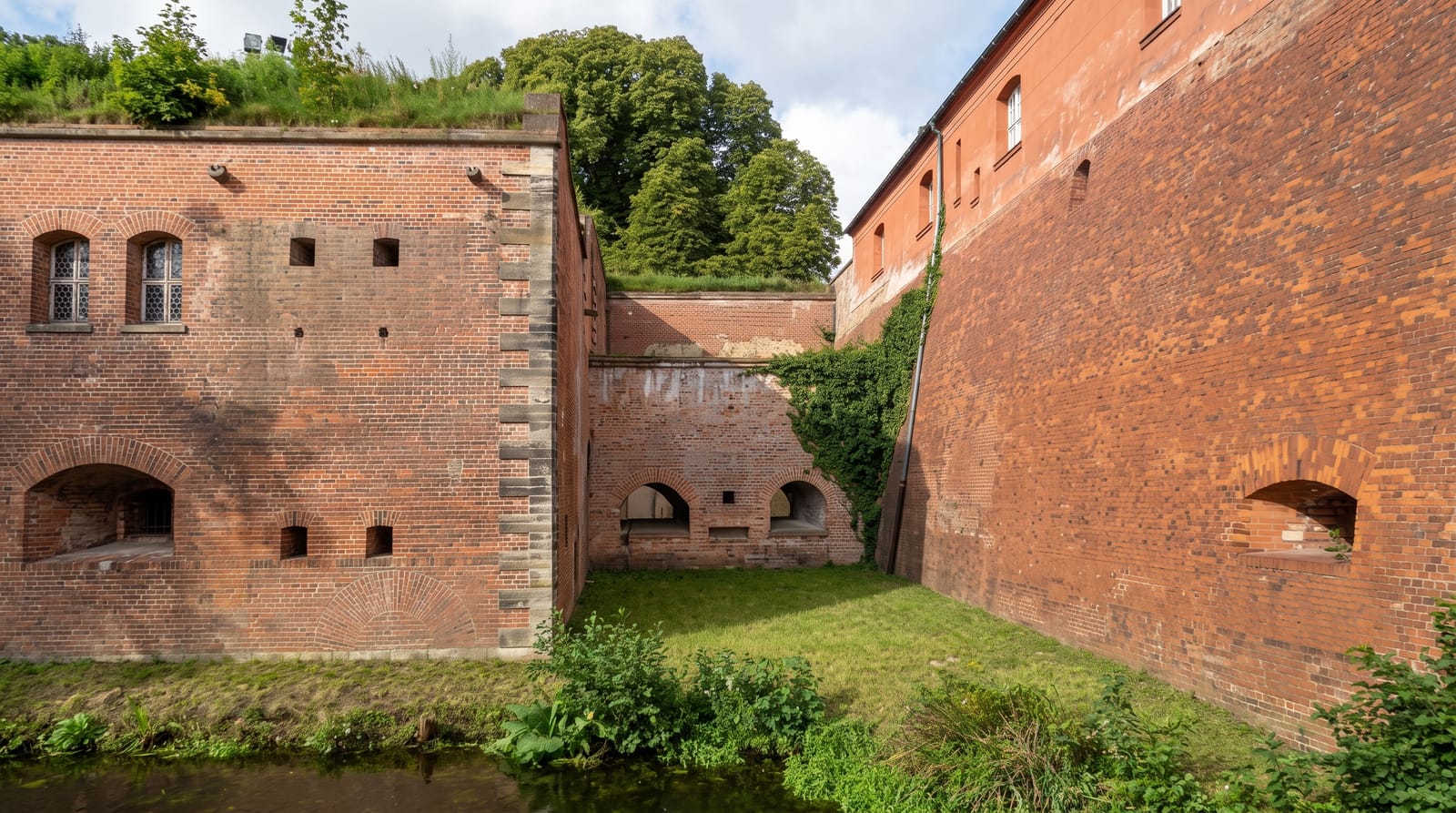
The citadel was built between 1559 and 1594 on an island where the Spree meets the Havel, a square with four arrowhead bastions at the corners, a design imported from Italy and among the best-preserved examples of the type in Europe. Inside stands the Juliusturm, a round keep of about 1200, the oldest secular building in Berlin; between 1874 and 1919 the imperial war treasury in gold coin was stored in it. Bats hibernate in the casemates in large numbers, and the fortress is a protected roost. A museum of political monuments holds statues removed from Berlin's streets at various times, displayed with their histories.
Background
The fortress was raised over an older medieval stronghold, and its plan follows the Italian bastioned layout known as the tracé à l'italienne. Joachim II Hector, Elector of Brandenburg, had hired Christoph Römer by 1560 to build it around the existing castle, the Palas and the Julius Tower. Francesco Chiaramella de Gandino replaced him in 1562, and Rochus Graf zu Lynar took over in 1578. The crenellated top of the Julius Tower is a Romantic design by Karl Friedrich Schinkel from 1838. From 1950 to 1986 the buildings housed the Otto Bartning vocational school. Gravestones going back to 1244 are part of the museum collection, and the inner courtyard has hosted summer open-air concerts since 2005.
Source: Wikipedia, "Spandau Citadel"
What you'll find
- The bastioned square - a Renaissance fortress plan preserved almost intact.
- The Juliusturm - a keep of about 1200, Berlin's oldest secular building.
- The bat casemates - a protected hibernation roost in the vaults.
- The monument museum - removed public statues shown with their histories.
When to go
April to October; the citadel opens year-round and hosts concerts in summer. Casemates close during the bat hibernation season, roughly November to March.
Good to know
Casemates close for months to protect bats. The site is exposed and cold in winter. Concert evenings restrict normal access.
Nearby
Spandau old town lies east; central Berlin is further east.
Key facts
Source: Wikidata, item Q206211, read on 18 October 2026.
What to pack for Spandau Citadel
Chosen from what this place is for. Tap a kit for the full checklist.
- Comfortable walking shoes - Sightseeing means kilometres of pavement and cobbles daily. Find on Amazon
- A slim anti-theft daypack - Zips that close properly; keep it in front in crowds and on transit. Find on Amazon
- A refillable water bottle - Many cities have public fountains; save money and plastic. Find on Amazon
- A light layer + compact umbrella - For museum air-con and a sudden shower. Find on Amazon
Some links on this page are Amazon affiliate links - if you buy through them we may earn a small commission at no extra cost to you.
All packing kitsPlan your trip
Where to start if Spandau Citadel is going on the list.
Booking links on this page are affiliate links - if you book through them we may earn a small commission at no extra cost to you. It never changes what we write about a place.
Opening times, ticket prices and seasonal closures change - check the official source before you go: official site.