Fulda
A baroque cathedral city built around the grave of Boniface, with a small church of 822 beside it.
Updated 4 September 2026
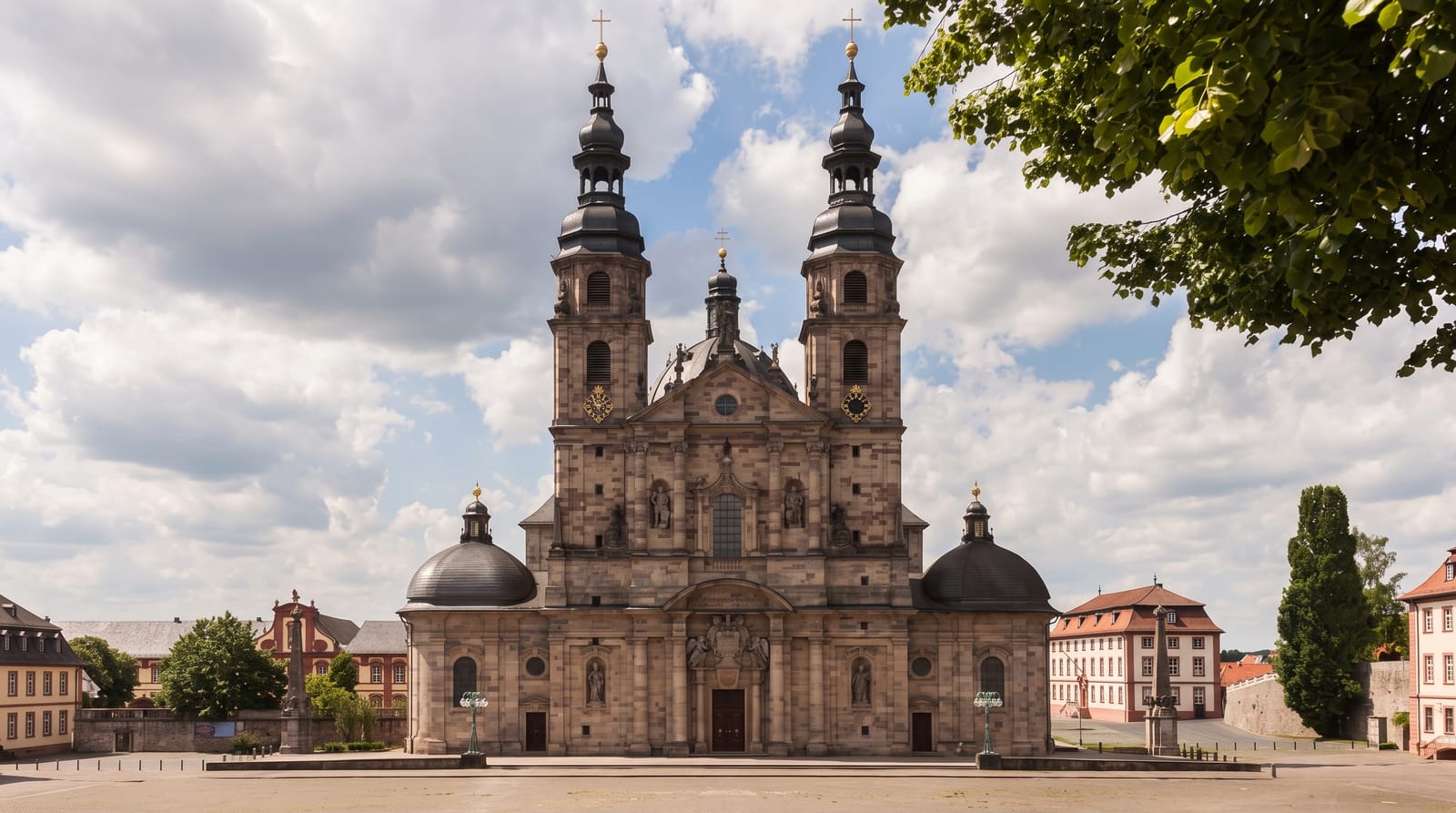
AI illustration
The abbey was founded in 744 by Sturmi at the direction of Boniface, whose body was brought here after his death in 754 and buried in the church; the grave made Fulda a pilgrimage and political centre. The present cathedral, built 1704 to 1712 by Johann Dientzenhofer on the model of St Peter's in Rome, stands over the crypt with the tomb. Beside it, the Michaelskirche of 822 survives, a small round church built as a burial chapel with a Carolingian crypt on a single column. The prince-abbots' baroque palace faces the cathedral across a square, with orangery and gardens behind.
What you'll find
- The Boniface crypt - the tomb beneath the baroque cathedral.
- The Michaelskirche - a round Carolingian church of 822 beside it.
- The prince-abbots' palace - a baroque residence with state rooms.
- The baroque quarter - a planned district around the cathedral square.
When to go
April to October; the cathedral closes during services. Boniface's feast in early June brings processions. Museums close Mondays.
Good to know
The Michaelskirche has short opening hours. The palace interiors are guided in part. The modern city around the baroque quarter is ordinary.
Nearby
The Rhön highlands rise east; Kassel is north.
Key facts
Source: Wikidata, item Q3963, read on 18 October 2026.
What to pack for Fulda
Chosen from what this place is for. Tap a kit for the full checklist.
- Comfortable walking shoes - Sightseeing means kilometres of pavement and cobbles daily. Find on Amazon
- Modest clothing - Shoulders and knees covered - the single most common requirement. Find on Amazon
- A slim anti-theft daypack - Zips that close properly; keep it in front in crowds and on transit. Find on Amazon
- A scarf or shawl - To cover the head or shoulders on entry; women especially at mosques. Find on Amazon
Some links on this page are Amazon affiliate links - if you buy through them we may earn a small commission at no extra cost to you.
All packing kitsPlan your trip
Where to start if Fulda is going on the list.
Booking links on this page are affiliate links - if you book through them we may earn a small commission at no extra cost to you. It never changes what we write about a place.
Opening times, ticket prices and seasonal closures change - check the official source before you go: official site.