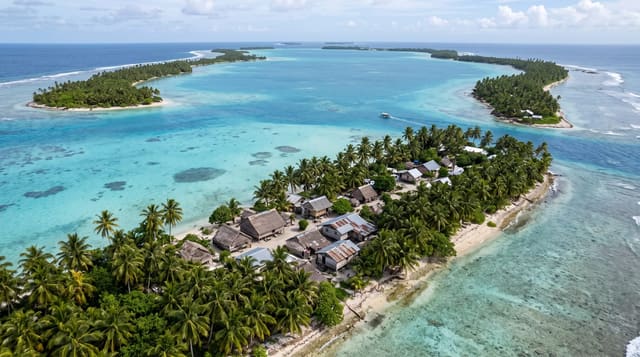
Fatu Hiva
The most remote inhabited Marquesan island, with the Bay of Virgins and no airstrip.
Updated 18 October 2026
UNESCO World Heritage
Fatu Hiva is the southernmost and wettest of the inhabited Marquesas, with no airstrip and two villages, Omoa and Hanavave, joined by a rough road over the ridge. Hanavave sits in the Baie des Vierges, a bay enclosed by basalt pinnacles that missionaries renamed after deciding the original name was indecent. The island keeps a strong tapa-making tradition. It is a named component of the UNESCO listing inscribed in 2024.
History
Fatu Hiva was settled by Polynesians, probably from western Polynesia, and its valleys were home to rival tribes: around the middle of the 19th century the Tiu of Omoa, defeated by the Anainoapa of Hanavave, fled on bamboo rafts to Napuka atoll in the Tuamotus, where their descendants still live. Little is known of the island's culture before the missionaries, but in 1897 the German explorer Karl von den Steinen described nine tribes in six valleys, the American anthropologist Ralph Linton surveyed its remains in 1920-1921, and the island was known for its tattooists and wood carvers. It was the first island of the archipelago that the Spanish navigator Álvaro de Mendaña saw, on 21 July 1595, and in the 1930s Thor Heyerdahl lived here and wrote the book Fatu Hiva (Wikipedia, Fatu-Hiva).
What's there
- The Bay of Virgins - basalt pinnacles enclosing the bay at Hanavave.
- The tapa making - the bark cloth tradition the island keeps.
- The ridge road - the rough crossing between the two villages.
- The absence of an airstrip - an island reached only by sea.
When to go
May to October is the dry season, though Fatu Hiva is the wettest of the group. Boat crossings from Hiva Oa are long and often rough. The Aranui supply ship calls on a schedule.
Before you go
There is no airstrip and the sea crossing takes hours and is frequently rough. Accommodation is a few family pensions. Nono flies here are among the worst in the archipelago.
Nearby
Tahuata is northwest, and Hiva Oa is beyond it.
Key facts
Source: Wikidata, item Q632061, read on 18 October 2026.
What to pack for Fatu Hiva
Chosen from what this place is for. Tap a kit for the full checklist.
- Reef-safe sunscreen - High SPF that will not bleach the coral you are swimming over. Find on Amazon
- Quick-dry towel - A microfibre towel packs small and dries in minutes. Find on Amazon
- Water shoes - Protect your feet on rocky entries, hot sand and sea-urchin spines. Find on Amazon
- Dry bag - Keeps phone, cash and keys safe while you are in the water. Find on Amazon
Some links on this page are Amazon affiliate links - if you buy through them we may earn a small commission at no extra cost to you.
All packing kitsPlan your trip
Where to start if Fatu Hiva is going on the list.
Booking links on this page are affiliate links - if you book through them we may earn a small commission at no extra cost to you. It never changes what we write about a place.
Opening times, ticket prices and seasonal closures change - check the official source before you go: official site.