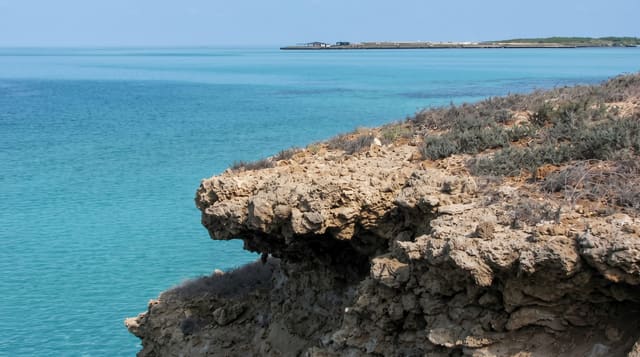
Nuku Hiva
The largest of the Marquesas, of vertical ridges, deep bays and stone tiki sites in the forest, with no reef and no lagoon.
Updated 18 October 2026
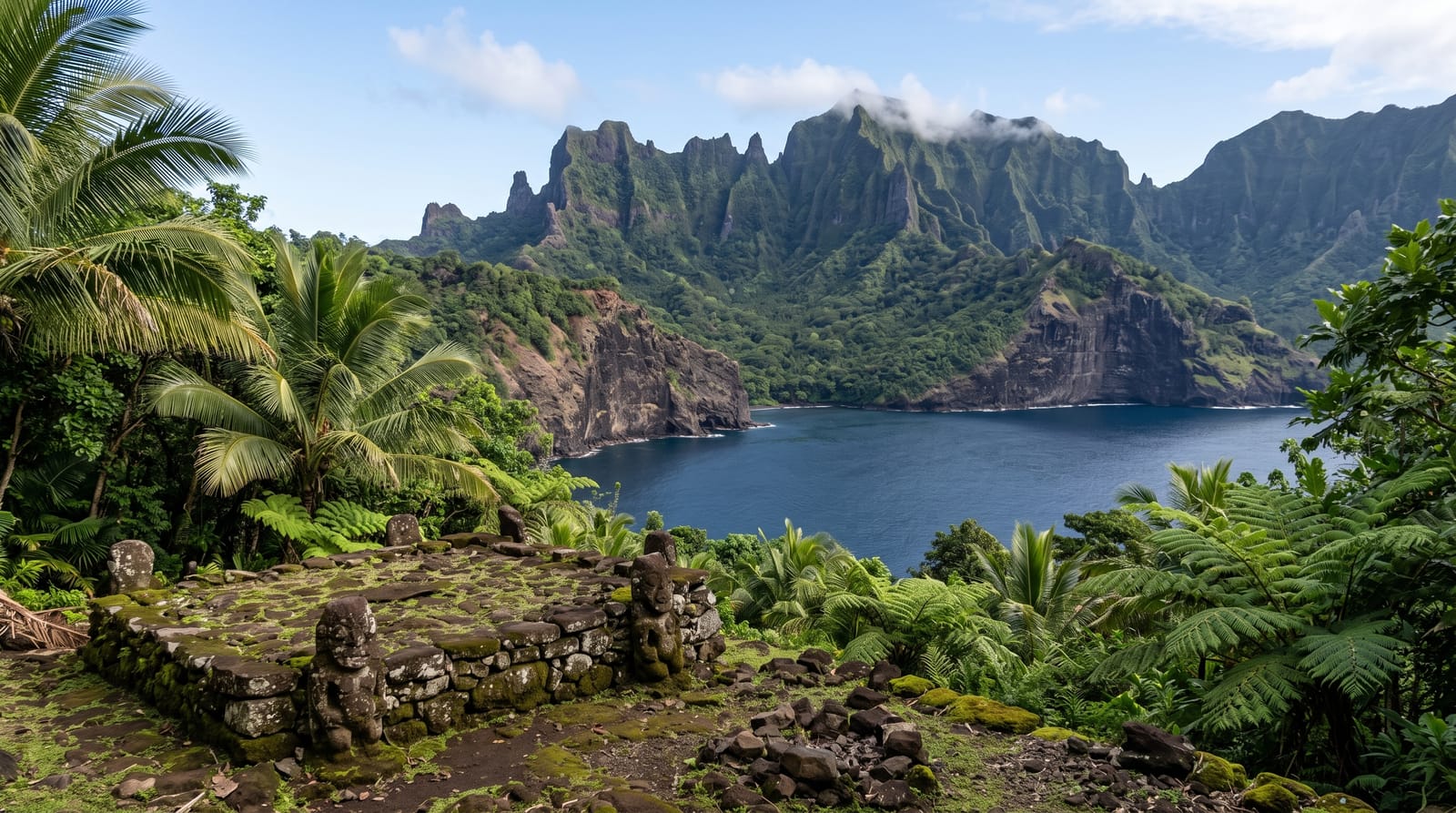
AI illustration
UNESCO World Heritage
The Marquesas are unlike the rest of French Polynesia: no encircling reef, no turquoise lagoon, just volcanic islands dropping straight into deep ocean with surf against black cliffs and valleys cut so steeply that villages sit isolated from one another. Nuku Hiva is the largest, with the administrative centre at Taiohae on a horseshoe bay. In the valleys are me'ae, sacred stone platforms with tiki figures carved in red tuff, some of the largest in Polynesia, at Hikokua and Kamuihei among others. Hakaui valley holds Vaipo, among the highest waterfalls in the Pacific, reached by boat and then a wade up the riverbed. Horses run half-wild across the high plateau.
History
The first people reached Nuku Hiva from western Polynesia around 2,000 years ago, before Tahiti, Hawaii and New Zealand were settled, and in historical times the island was divided between the Te I'i in the west and the Tai Pi in the east; the first European estimates of the Marquesas' population ranged from 50,000 to 100,000, but sandalwood traders and whalers later brought epidemics that killed nine out of ten islanders. On 25 October 1813 the American captain David Porter arrived in the frigate USS Essex, claimed the island for the United States, built a village named Madisonville with Fort Madison and soon became caught up in the tribal wars. Herman Melville based his book Typee on his time in the Taipivai valley, and in 1888 Robert Louis Stevenson made his first landfall of the Casco voyage at Hatihe'u (Wikipedia, Nuku Hiva).
The landscape
- Hikokua and Kamuihei - sacred stone platforms with tiki and banyan trees.
- Vaipo waterfall - a very high fall in Hakaui valley, reached by boat and river walk.
- Taiohae bay - the horseshoe harbour and the cathedral with Marquesan carving.
- The Toovii plateau - high grassland and pine with half-wild horses.
When to go
April to October is drier. The Marquesan arts festival, held every few years and rotating between islands, is the cultural event worth planning a trip around. Flights are limited and expensive.
Before you go
This is expensive and slow to reach, and the islands are for hiking, archaeology and landscape rather than beaches; anyone expecting Bora Bora will be baffled. Roads are steep four-wheel-drive tracks and most visitors hire a driver. Nono flies, biting sandflies, are a genuine problem on some beaches. Accommodation is a handful of pensions and one small hotel.
Nearby
Hiva Oa, where Gauguin is buried, is a short flight south; Tahiti is the hub.
Key facts
Source: Wikidata, item Q21064, read on 18 October 2026.
What to pack for Nuku Hiva
Chosen from what this place is for. Tap a kit for the full checklist.
- Broken-in walking shoes or boots - Grip and ankle support matter more than looks; never hike in brand-new boots. Find on Amazon
- Reef-safe sunscreen - High SPF that will not bleach the coral you are swimming over. Find on Amazon
- Quick-dry clothing - Board shorts or synthetics that shrug off spray and dry fast. Find on Amazon
- Modest clothing - Shoulders and knees covered - the single most common requirement. Find on Amazon
Some links on this page are Amazon affiliate links - if you buy through them we may earn a small commission at no extra cost to you.
All packing kitsPlan your trip
Where to start if Nuku Hiva is going on the list.
Booking links on this page are affiliate links - if you book through them we may earn a small commission at no extra cost to you. It never changes what we write about a place.
Opening times, ticket prices and seasonal closures change - check the official source before you go: official site.