Cacao
Laos on the Comte river - the Hmong village whose Sunday market of pho, embroidery and rainforest produce is French Guiana's favourite outing.
Updated 3 September 2026
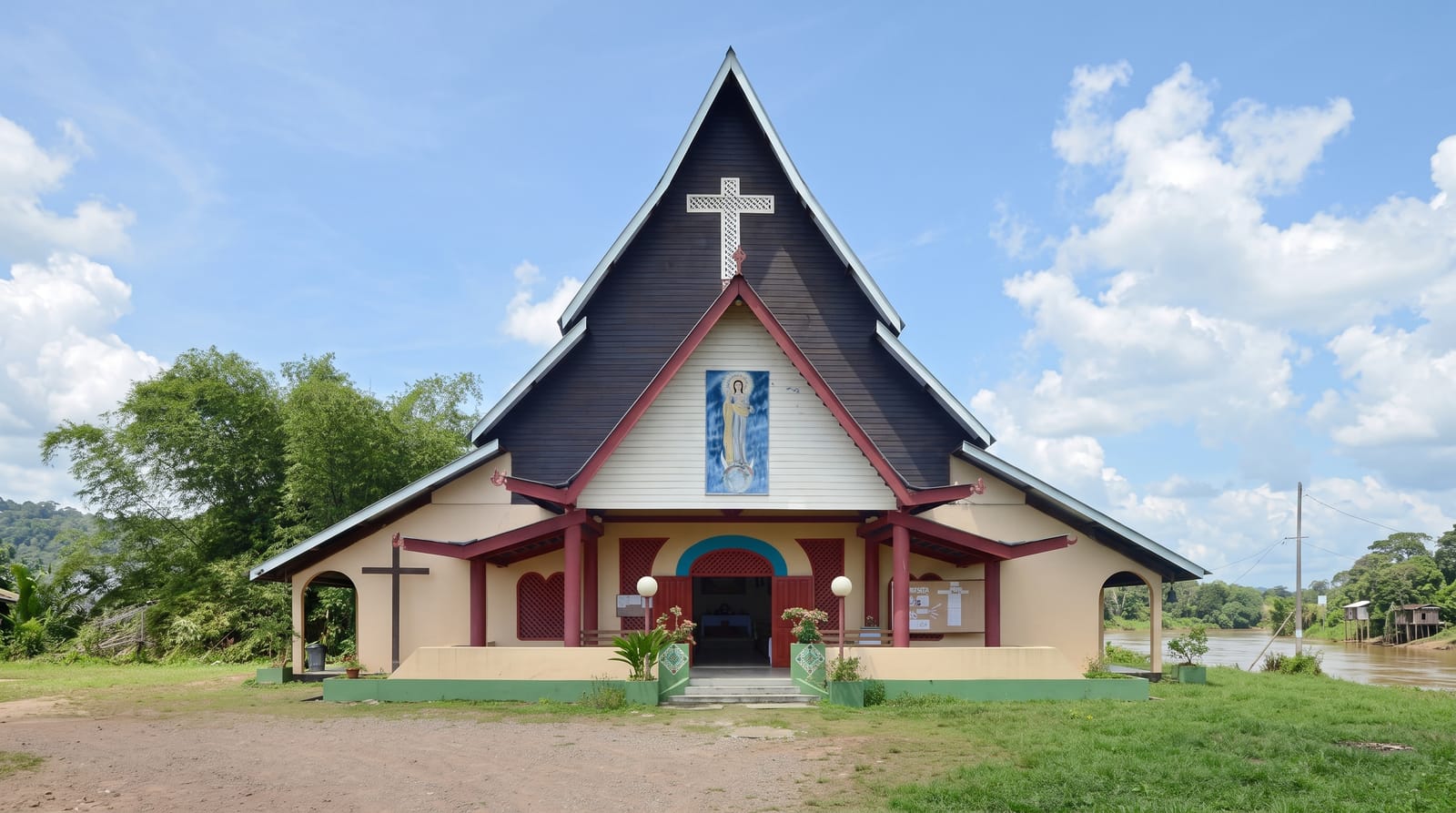
AI illustration
In 1977, Hmong refugee families from Laos were settled on a forested bend of the Comte river - and Cacao became one of South America's least probable villages: stilt houses and vegetable terraces in the rainforest, and a Sunday institution that draws Cayenne over the hills every week. The market is the draw: pho and nem devoured at communal tables, Hmong embroidery whose story-cloths stitch the community's history, and produce - ramboutans, cane, greens - from farms that made the village the department's market garden. An insect museum (this is Guiana; the beetles are architectural) and river walks round out the classic Sunday.
What's there
- The Sunday market - pho, nem and the week's great gathering.
- The story-cloth embroidery - Hmong needlework carrying history.
- The stilt village - Southeast Asia's lines in Amazonian green.
- The insect museum - Guiana's beetles and blue morphos pinned and explained.
When to go
Sunday is the day - the market runs mornings into early afternoon; arrive before noon for the food at full choice. The dry months make the hill road kinder, but Sundays run year round.
Practical notes
On any day but Sunday, Cacao is a quiet farming village - charming but brief; time the visit or repurpose it as a walking base. The market draws crowds by Guianese standards - go early for tables. Photography of people follows the asking rule, embroidery purchases are the best thanks.
Nearby
Roura, the Kaw mountain road and Cayenne.
What to pack for Cacao
Chosen from what this place is for. Tap a kit for the full checklist.
- Strong insect repellent - DEET or picaridin; the jungle is where bites and disease risk are highest. Find on Amazon
- Comfortable walking shoes - Sightseeing means kilometres of pavement and cobbles daily. Find on Amazon
- Long, light, quick-dry clothing - Covers skin from insects and sun without cooking you in the humidity. Find on Amazon
- A slim anti-theft daypack - Zips that close properly; keep it in front in crowds and on transit. Find on Amazon
Some links on this page are Amazon affiliate links - if you buy through them we may earn a small commission at no extra cost to you.
All packing kitsPlan your trip
Where to start if Cacao is going on the list.
Booking links on this page are affiliate links - if you book through them we may earn a small commission at no extra cost to you. It never changes what we write about a place.
Opening times, ticket prices and seasonal closures change - check the official source before you go: official site.