Saint-Nectaire
A Romanesque church of dark volcanic stone above a village whose cheese is ripened on rye straw.
Updated 19 October 2026
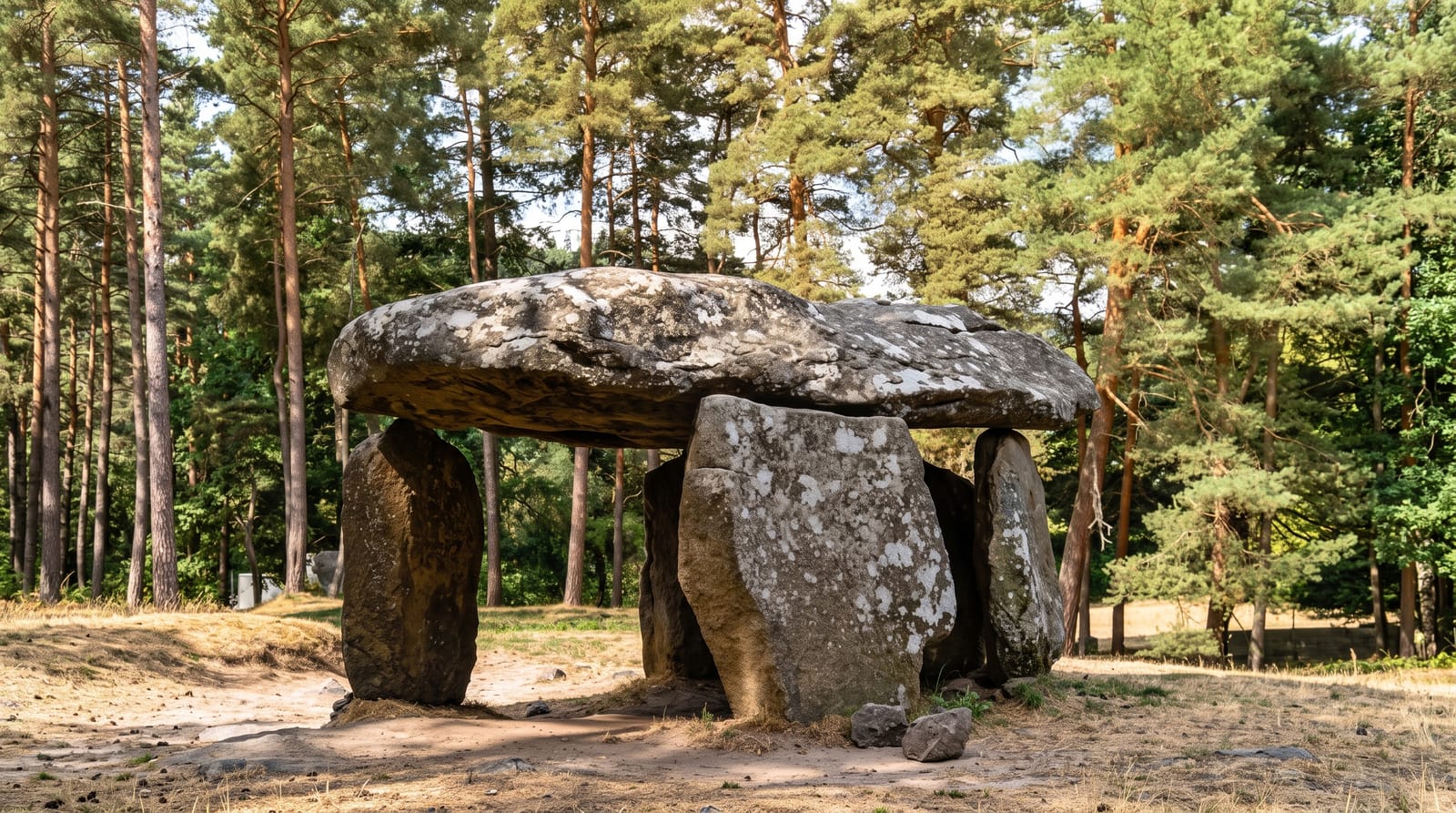
AI illustration
The church of Saint-Nectaire, built in the twelfth century from dark volcanic trachyte, is one of the five major Romanesque churches of Auvergne, and its interior holds one hundred and three carved capitals telling biblical and local stories, plus a gilded bust reliquary and a painted wooden Virgin from the same period. Below, the village gives its name to a semi-soft cows' milk cheese ripened for weeks on rye straw in cool cellars, which gives the rind its mottled grey and its smell of cellar and nuts. Farm producers open for visits and tasting. The village also has petrifying springs where objects are coated in limestone deposit.
History
Saint-Nectaire was an estate of the counts of Auvergne, who ceded it at some date between 1146 and 1178 to the Abbey of La Chaise-Dieu to found a priory and tomb dedicated to Saint Nectarius, remembered as the first evangelist of the region. His legend places a temple of Apollo on Mont Cornadore, turned into the church, whose oldest standing parts are of the eleventh century, and the thermal springs that might explain a healing shrine of Apollo were developed into a spa in the 19th century. The ruined castle near the church gave its name to a noble house of high rank in the 13th century, extinct by the 18th, which produced Madeleine de Saint Nectaire, who married in 1548 and led the Protestants of her lands against the troops of the Catholic League in the 16th-century Wars of Religion (Wikipedia, Saint-Nectaire, Puy-de-Dôme).
Highlights
- The Romanesque church - dark volcanic stone with 103 carved capitals.
- The cheese cellars - wheels ripening on rye straw in cool caves.
- The farm dairies - producers making from their own herds.
- The petrifying springs - objects coated in mineral deposit by dripping water.
When to go
April to October; farm visits are more frequent in summer. The church is open year-round. Cheese is made all year but summer milk from mountain pasture is prized.
Practical notes
The village is split between an upper and lower part and strung along the road, which makes it less charming than expected. Farm visits need checking ahead. Some cheese sold locally is dairy-made rather than farmhouse.
Nearby
Puy de Sancy lies southwest; Orcival is northwest.
Key facts
Source: Wikidata, item Q822303, read on 18 October 2026.
What to pack for Saint-Nectaire
Chosen from what this place is for. Tap a kit for the full checklist.
- Head torch + spare batteries - Hands-free light is essential; caves are truly dark. Find on Amazon
- Comfortable walking shoes - Sightseeing means kilometres of pavement and cobbles daily. Find on Amazon
- Modest clothing - Shoulders and knees covered - the single most common requirement. Find on Amazon
- Swimwear - Needed at most public thermal pools; some traditional baths are nude and single-sex. Find on Amazon
Some links on this page are Amazon affiliate links - if you buy through them we may earn a small commission at no extra cost to you.
All packing kitsPlan your trip
Where to start if Saint-Nectaire is going on the list.
Booking links on this page are affiliate links - if you book through them we may earn a small commission at no extra cost to you. It never changes what we write about a place.
Opening times, ticket prices and seasonal closures change - check the official source before you go: official site.