Purmamarca
A tiny adobe village in the Quebrada de Humahuaca, huddled beneath the Hill of Seven Colours, with an earthen church, an artisan market and dazzling morning light.
Updated 18 October 2026
AI illustration
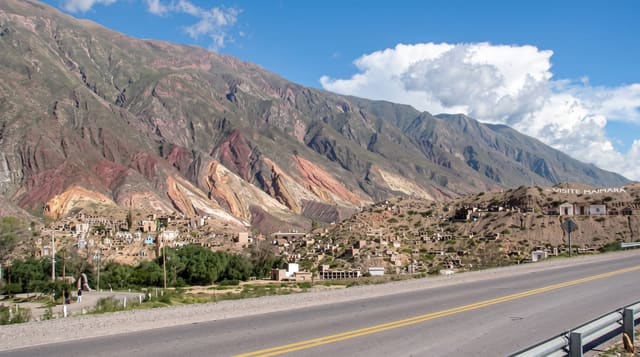
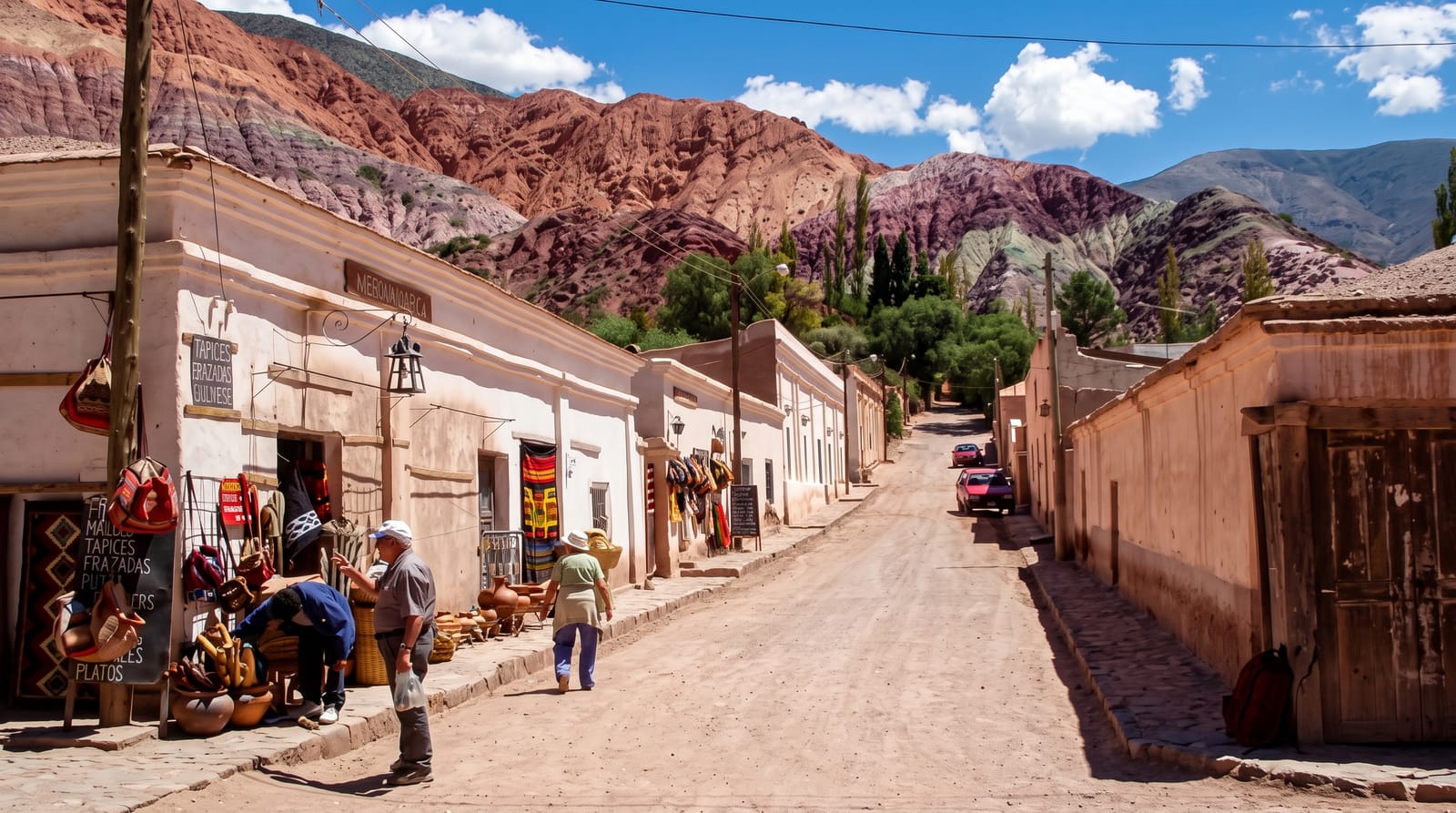
Purmamarca is a small village of low adobe houses and dusty lanes at the mouth of a side valley in the Quebrada de Humahuaca, and it exists in the shadow of one of the most photographed hillsides in Argentina, the Cerro de los Siete Colores. The rock behind the village is banded in ochre, rust, violet, green and cream, the layers tilted and folded by the same forces that raised the Andes, and the colours shift hour by hour, blazing at sunrise and going soft and dusty by afternoon. At the centre of the village a plaza shaded by an ancient algarrobo tree fills daily with an artisan market of woollen goods, and beside it stands the whitewashed church of Santa Rosa de Lima, built of adobe and cardon cactus wood in the seventeenth century. A short unpaved loop, the Paseo de los Colorados, runs behind the village through the coloured rock itself.
History
The name may join the Aymara words purma, desert or untouched land, and marca, town, and the village has existed since the time of the Spanish conquest. Its church of Santa Rosa de Lima was built in 1648, of adobe walls with a roof of cardón cactus wood and a single narrow nave, holds 18th-century paintings of the Cusco School, and was declared a National Historic Monument in 1941; its feast on 30 August is kept with processions, panpipe bands, Andean wind instruments and drums (Wikipedia, Purmamarca).
Highlights
- Cerro de los Siete Colores - the banded hillside that rises directly behind the plaza.
- The adobe church - seventeenth-century Santa Rosa de Lima, built of mud and cactus wood.
- The artisan market - woollen ponchos, blankets and crafts under the old algarrobo tree.
- Paseo de los Colorados - the short loop drive or walk through the coloured rock.
When to go
April to November is the dry season and the reliable choice; the January to March rains can wash out unpaved tracks. Early morning is when the hill burns brightest, so staying the night pays off. The village sits at around 2,200 metres, gentle by regional standards, and nights are cold year-round.
What to expect
Purmamarca is genuinely tiny and can be walked end to end in twenty minutes, so the pleasure is the setting and the light rather than the sights. Midday tour buses crowd the plaza and the market prices reflect it. Accommodation is limited and books out in high season.
Nearby
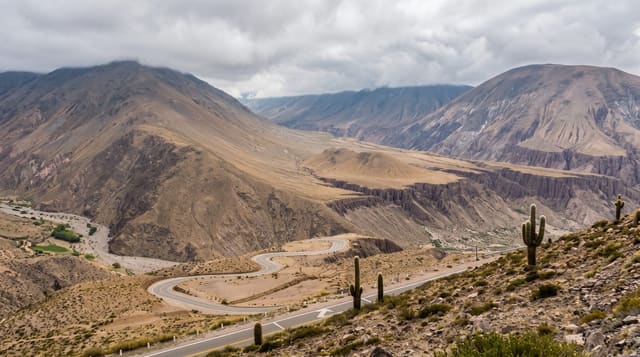
Maimará and Tilcara lie north up the gorge; the Cuesta de Lipán climbs west to Salinas Grandes.
Key facts
Source: Wikidata, item Q1025405, read on 18 October 2026.
What to pack for Purmamarca
Chosen from what this place is for. Tap a kit for the full checklist.
- Loose, light, long clothing - Covering up beats bare skin in the desert - and locals dress this way for a reason. Find on Amazon
- Comfortable walking shoes - Sightseeing means kilometres of pavement and cobbles daily. Find on Amazon
- A wide-brim hat + sunglasses - Shade for your face and eyes where there is none overhead. Find on Amazon
- A slim anti-theft daypack - Zips that close properly; keep it in front in crowds and on transit. Find on Amazon
Some links on this page are Amazon affiliate links - if you buy through them we may earn a small commission at no extra cost to you.
All packing kitsPlan your trip
Where to start if Purmamarca is going on the list.
Booking links on this page are affiliate links - if you book through them we may earn a small commission at no extra cost to you. It never changes what we write about a place.
Opening times, ticket prices and seasonal closures change - check the official source before you go: official site.