Montagne Sainte-Victoire
The limestone ridge Cezanne painted more than sixty times, changing colour through the day.
Updated 19 October 2026
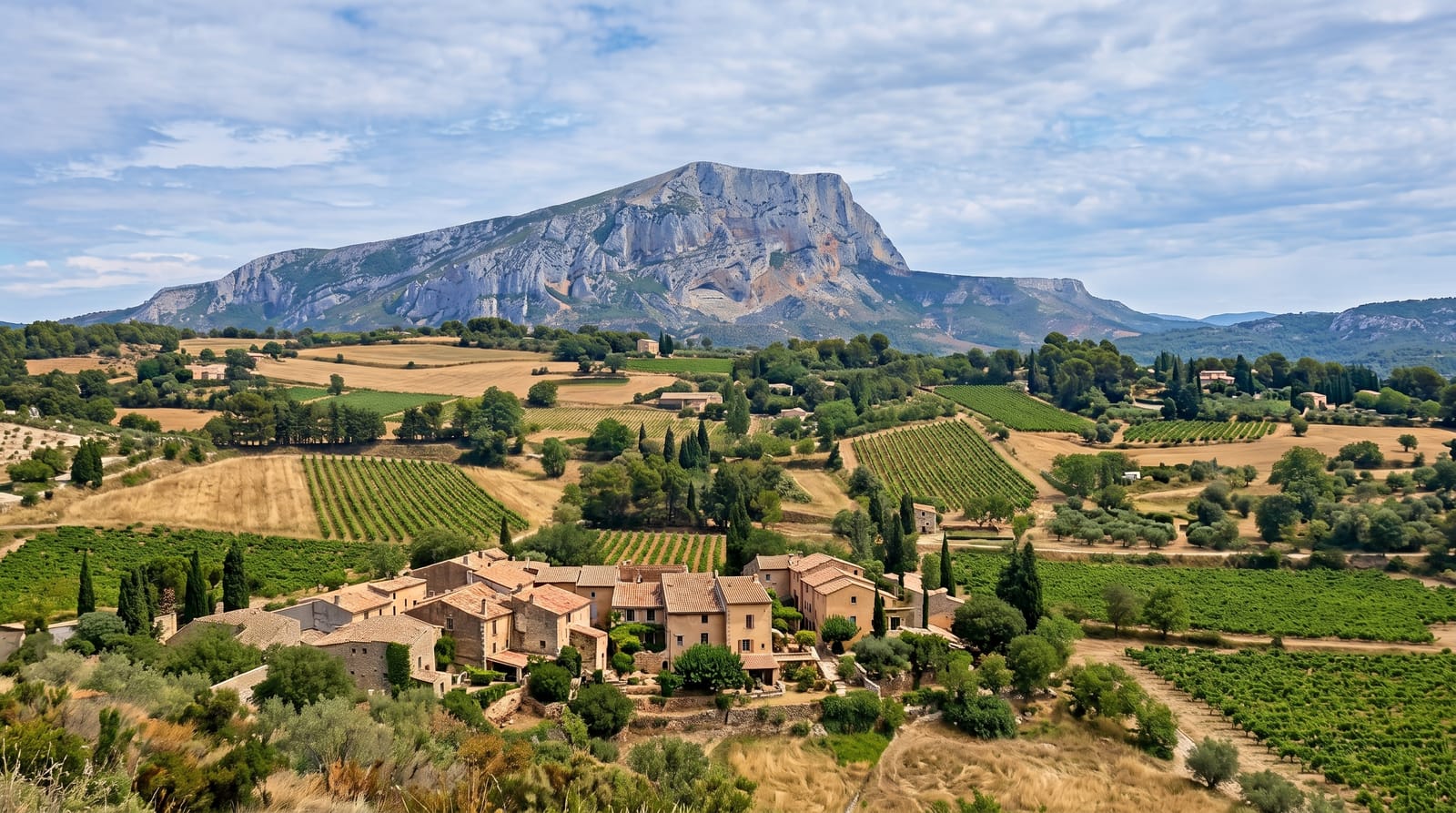
AI illustration
The ridge runs about eighteen kilometres east of Aix, rising to one thousand and eleven metres at the Pic des Mouches, a wall of pale limestone tilted so that its southern face catches sun and reads white, grey, ochre or blue depending on the hour. Cezanne painted it more than sixty times in oil and watercolour, working towards structure rather than likeness, and the mountain became one of the defining subjects of modern painting. Dinosaur eggs have been found in the red clays at its foot, one of the richest such sites in Europe. Picasso bought the chateau at Vauvenargues below and is buried there.
History
First called the mountain of Victory, it was known in the Middle Ages as Sainte-Venture, and a chapel was built on the summit in the 13th century; its present name dates from the 17th century. Paul Cézanne, who could see it from near his house in Aix, painted it again and again. In 1989 a fire ravaged more than 50 square kilometres of its south face, and despite replanting the vegetation remains much thinner than before, so access is now largely restricted in summer; in the open seasons around 700,000 walkers use its paths each year (Wikipedia, Montagne Sainte-Victoire).
What you'll find
- The tilted limestone face - a pale wall changing colour through the day.
- The Croix de Provence - a large cross on the ridge, a common walk target.
- The Cezanne viewpoints - the angles he painted from around Le Tholonet.
- The dinosaur egg beds - fossil-rich red clays at the foot of the mountain.
When to go
April to June and September to October; summer heat is severe on bare limestone. Access is legally restricted or closed on high fire-risk days from June to September, checked daily.
What to expect
Fire closures are strict and enforced, so summer plans can be cancelled at short notice. There is no water and almost no shade on the ridge. The ascent to the cross is steep and rocky.
Nearby
Aix-en-Provence lies west; Vauvenargues sits below the north face.
Key facts
Source: Wikidata, item Q1518970, read on 18 October 2026.
What to pack for Montagne Sainte-Victoire
Chosen from what this place is for. Tap a kit for the full checklist.
- Broken-in walking shoes or boots - Grip and ankle support matter more than looks; never hike in brand-new boots. Find on Amazon
- Layers + a waterproof shell - Mountain weather turns fast; a packable rain jacket saves the day. Find on Amazon
- Daypack with rain cover - 20-30 litres holds water, snacks, layers and a first-aid kit. Find on Amazon
- Offline maps + a power bank - Download the trail before you lose signal; carry backup charge. Find on Amazon
Some links on this page are Amazon affiliate links - if you buy through them we may earn a small commission at no extra cost to you.
All packing kitsPlan your trip
Where to start if Montagne Sainte-Victoire is going on the list.
Booking links on this page are affiliate links - if you book through them we may earn a small commission at no extra cost to you. It never changes what we write about a place.
Opening times, ticket prices and seasonal closures change - check the official source before you go: official site.