Moissac Abbey
A cloister of seventy-six carved capitals from 1100, and a doorway that changed Romanesque sculpture.
Updated 19 October 2026
AI illustration
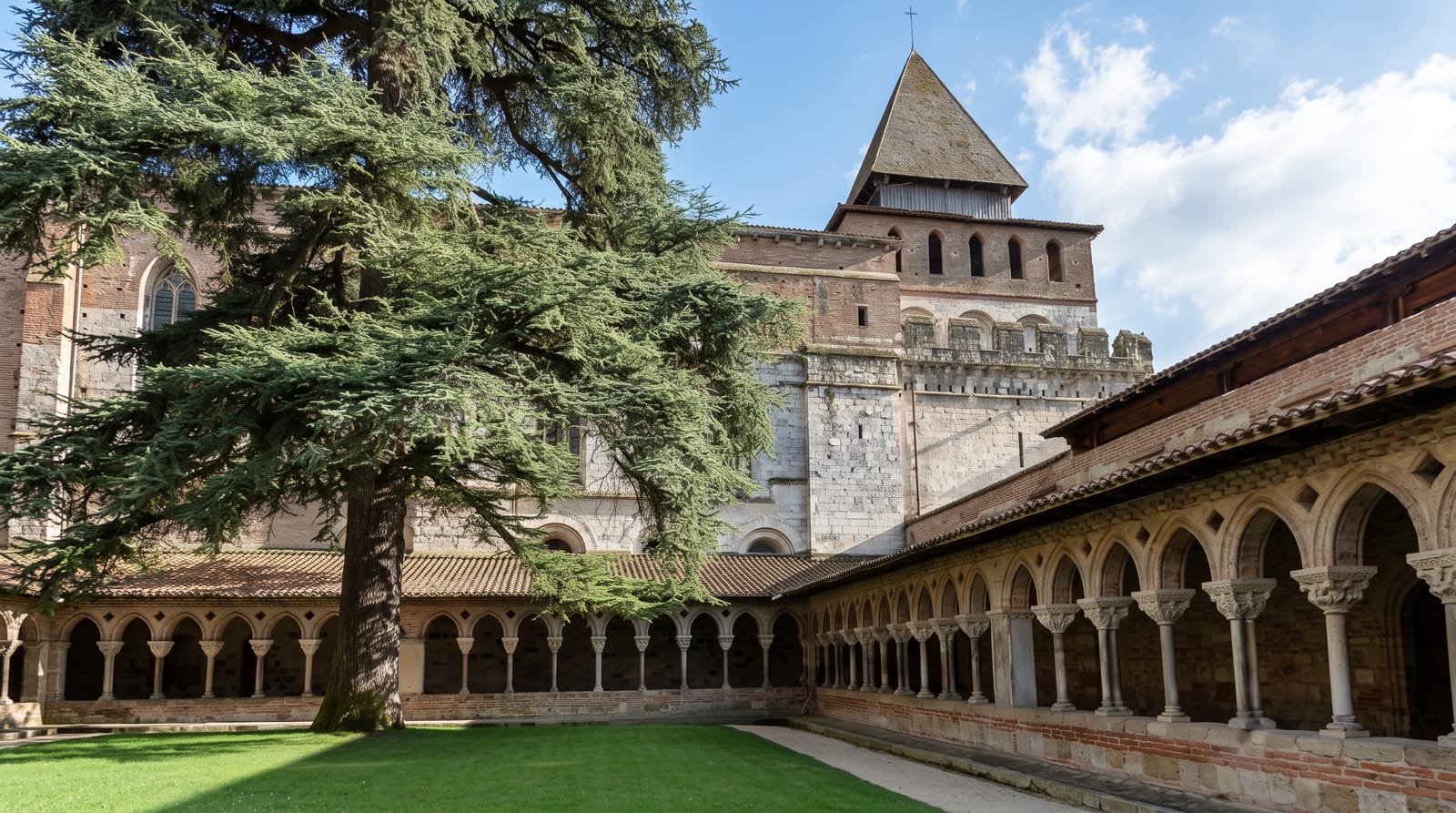
The cloister at Moissac was completed in 1100 and survives whole: seventy-six capitals carved with biblical scenes, saints' lives, animals and foliage, on alternating single and paired columns around a garden, the earliest large narrative cloister of its kind to come down to us. The south porch, added around 1130, carries a tympanum of Christ in Majesty surrounded by the twenty-four elders of the Apocalypse, each turning to look up, with a trumeau of crossed lions below; it is one of the works that defined the Romanesque style. The abbey sits on the Compostela pilgrimage route and is UNESCO listed for that.
History
Legend says Clovis founded the abbey in 506 after a victory over the Visigoths, throwing his javelin from the hill to mark the spot, which landed in a marsh, but records show it was founded by Saint Didier, Bishop of Cahors, in the mid-7th century; it was sacked by the Arabs of al-Andalus around 732, by Norman raiders in the 9th century and by Hungarians in the 10th. After the roof collapsed in 1030 and a fire in 1042, it was reformed under Cluny from 1047, a new church was built in 1063, and Pope Urban II consecrated its high altar in 1097 and ordered the cloister, completed in 1100. In the 12th century its abbot ranked second in the Cluniac order only to the abbot of Cluny, and the abbots Hunaud de Gavarret and Ansquitil had the great doorway and tympanum made; its illuminated manuscripts were taken to Paris by Colbert in the 17th century and are now in the Bibliothèque nationale (Wikipedia, Moissac Abbey).
The main sights
- The cloister - seventy-six carved capitals complete around a garden.
- The south tympanum - Christ and the twenty-four elders in stone.
- The lion trumeau - crossed beasts on the central doorpost.
- The pilgrimage setting - a stage on the road to Compostela.
When to go
April to October; the cloister opens year-round with shorter winter hours. Morning light suits the capitals. It is quiet compared with the better-known Romanesque sites.
Before you go
The abbey church interior is later Gothic and less remarkable than the cloister and porch. A railway was driven close to the buildings in the nineteenth century and nearly destroyed the cloister. The town is small.
Nearby
Montauban lies southeast; the Canal de Garonne passes the town.
Key facts
Source: Wikidata, item Q334208, read on 18 October 2026.
What to pack for Moissac Abbey
Chosen from what this place is for. Tap a kit for the full checklist.
- Comfortable walking shoes - Sightseeing means kilometres of pavement and cobbles daily. Find on Amazon
- Modest clothing - Shoulders and knees covered - the single most common requirement. Find on Amazon
- A slim anti-theft daypack - Zips that close properly; keep it in front in crowds and on transit. Find on Amazon
- A scarf or shawl - To cover the head or shoulders on entry; women especially at mosques. Find on Amazon
Some links on this page are Amazon affiliate links - if you buy through them we may earn a small commission at no extra cost to you.
All packing kitsPlan your trip
Where to start if Moissac Abbey is going on the list.
Booking links on this page are affiliate links - if you book through them we may earn a small commission at no extra cost to you. It never changes what we write about a place.
Opening times, ticket prices and seasonal closures change - check the official source before you go: official site.