Lac du Der-Chantecoq
A reservoir built to protect Paris from floods, now the autumn stopover for tens of thousands of cranes.
Updated 19 October 2026
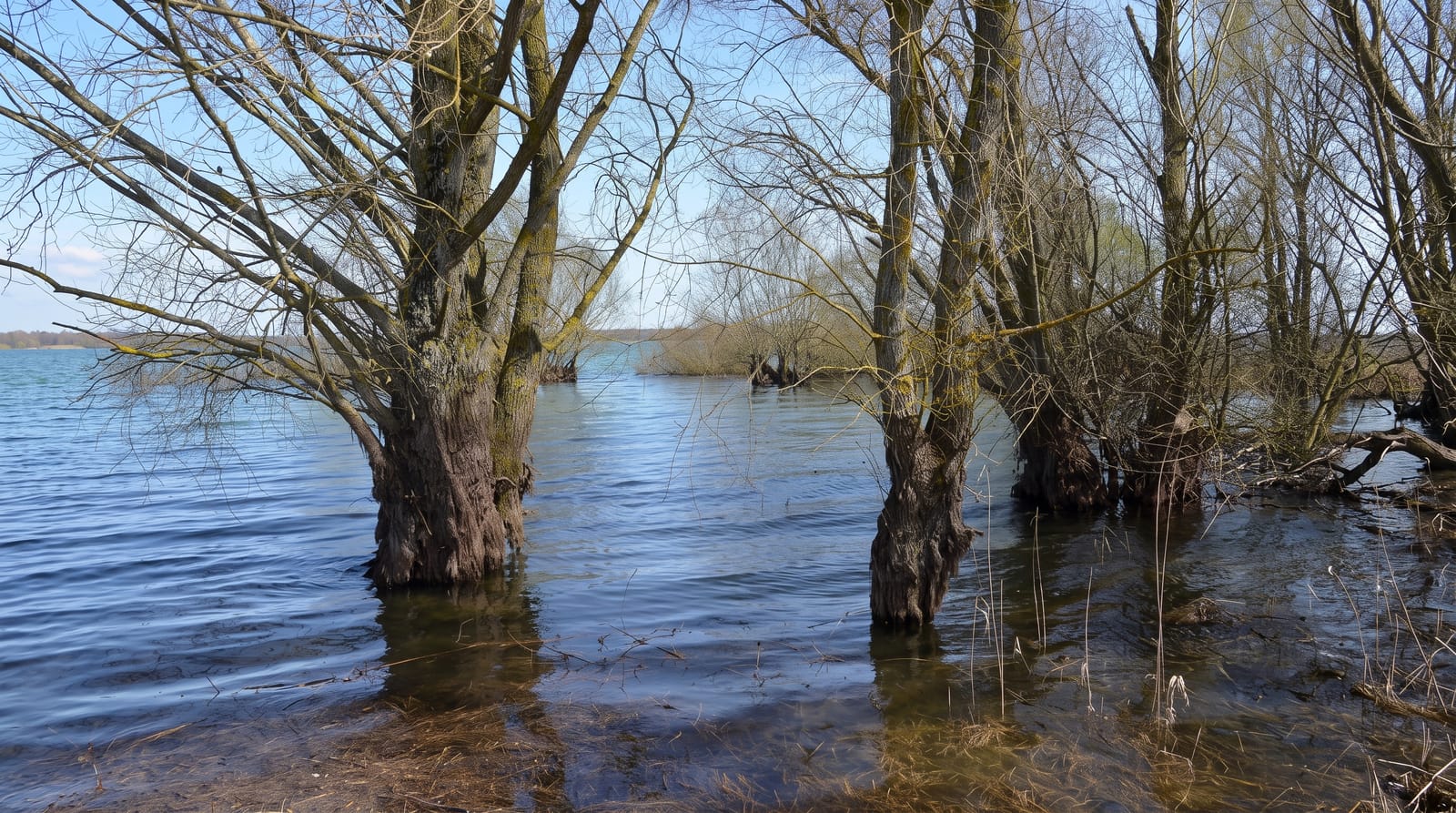
AI illustration
The lake was created in 1974 by damming to regulate the Marne and reduce flood risk downstream in Paris, drowning three villages in the process; some churches were dismantled and rebuilt elsewhere. At around forty-eight square kilometres it is one of the largest artificial lakes in Europe, and it turned into a major bird site almost immediately. Common cranes use it as a staging post on migration between northern Europe and Spain, and counts in late autumn can exceed two hundred thousand birds; they roost on the shallows and fly out at dawn to feed in the fields, which is the spectacle people come for. White-tailed eagles winter here too.
History
The lake was created in 1974 to hold back the waters of the Marne and so prevent the Seine from flooding Paris, and its construction meant the destruction of three villages, Chantecoq, Champaubert-aux-Bois and Nuisement-aux-Bois. Fed by a 12 km canal from the Marne at Saint-Dizier, it covers 48 km² with 350 million m³ of water, the largest artificial lake in France, and it is now used for sailing, fishing and other sports as well as walks and cycling around its shores (Wikipedia, Lake Der-Chantecoq).
What's there
- The crane roost - tens of thousands of birds leaving the water at dawn.
- The dawn and dusk flights - long skeins crossing between lake and fields.
- The observation hides - platforms and the Ferme aux Grues viewing point.
- The half-timbered churches - Champagne timber churches around the shore.
When to go
Late October to December for peak crane numbers, and again in late February on the return passage. Summer is a water sports lake with few birds. Dawn is the time, in cold conditions.
Practical notes
The spectacle is at first light in freezing weather and requires an early start and warm clothes. Numbers vary year to year and with weather in Germany. Water levels are drawn down through the season, which changes where birds roost.
Nearby
Troyes lies southwest; Reims is northwest.
Key facts
Source: Wikidata, item Q1799643, read on 18 October 2026.
What to pack for Lac du Der-Chantecoq
Chosen from what this place is for. Tap a kit for the full checklist.
- Broken-in walking shoes or boots - Grip and ankle support matter more than looks; never hike in brand-new boots. Find on Amazon
- Travel rod + reel - A packable multi-piece rod fits in a case and covers most holiday fishing. Find on Amazon
- Padded shorts - The one thing that makes a full day in the saddle bearable. Find on Amazon
- Layers + a waterproof shell - Mountain weather turns fast; a packable rain jacket saves the day. Find on Amazon
Some links on this page are Amazon affiliate links - if you buy through them we may earn a small commission at no extra cost to you.
All packing kitsPlan your trip
Where to start if Lac du Der-Chantecoq is going on the list.
Booking links on this page are affiliate links - if you book through them we may earn a small commission at no extra cost to you. It never changes what we write about a place.
Opening times, ticket prices and seasonal closures change - check the official source before you go: official site.