Espelette
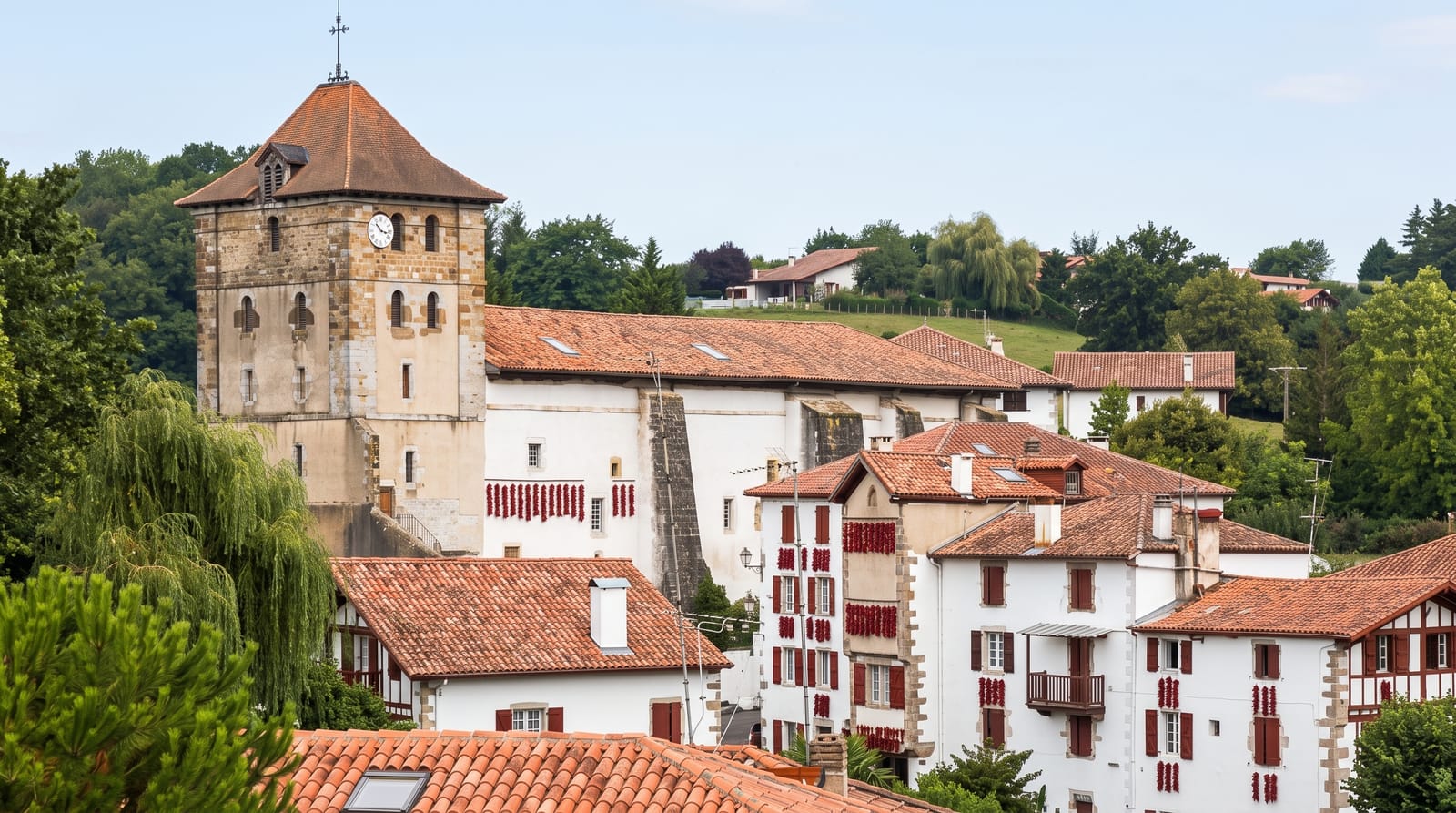
A Basque village whose house fronts are hung with drying red peppers from late summer to autumn.
Updated 4 September 2026
AI illustration
The pepper reached the Basque Country from the Americas in the sixteenth century and was grown here first as a medicine, then as a preservative for ham and finally as the seasoning that defines Basque cooking; the piment d'Espelette received appellation status in 2000, covering ten communes. It is moderately hot, closer to fruity paprika than to fierce chilli. From late summer the peppers are strung and hung on the fronts of the white houses to dry in the sun, which turns the village facades red, and the pepper festival in late October closes the season with a procession and a blessing.
What you'll find
- The hanging strings - red peppers drying across white house fronts.
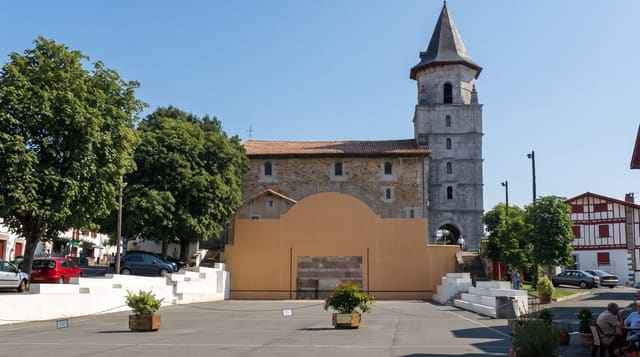
- The Basque village - white houses with red woodwork and a fronton wall.
- The pepper shops - powder, purees and whole dried peppers sold locally.
- The October festival - the end-of-harvest procession and blessing.
When to go
August to October is the point of a visit, when the peppers hang; the festival falls in late October. Outside those months the facades are bare and the village is ordinary.
Good to know
Visitors outside the drying season find plain white houses and shops. The village is tiny and crowded on autumn weekends. Some peppers on display are decorative rather than the crop.
Nearby
Ainhoa lies south; Bayonne is north.
Key facts
Source: Wikidata, item Q236575, read on 18 October 2026.
What to pack for Espelette
Chosen from what this place is for. Tap a kit for the full checklist.
- A reusable bag or container - For market produce and cutting down on packaging. Find on Amazon
- Wet wipes + hand sanitiser - Street food and washbasins do not always go together. Find on Amazon
Some links on this page are Amazon affiliate links - if you buy through them we may earn a small commission at no extra cost to you.
All packing kitsPlan your trip
Where to start if Espelette is going on the list.
Booking links on this page are affiliate links - if you book through them we may earn a small commission at no extra cost to you. It never changes what we write about a place.
Opening times, ticket prices and seasonal closures change - check the official source before you go: official site.