Bayonne
The Basque capital of ham and chocolate, where chocolate first entered France in the sixteenth century.
Updated 19 October 2026
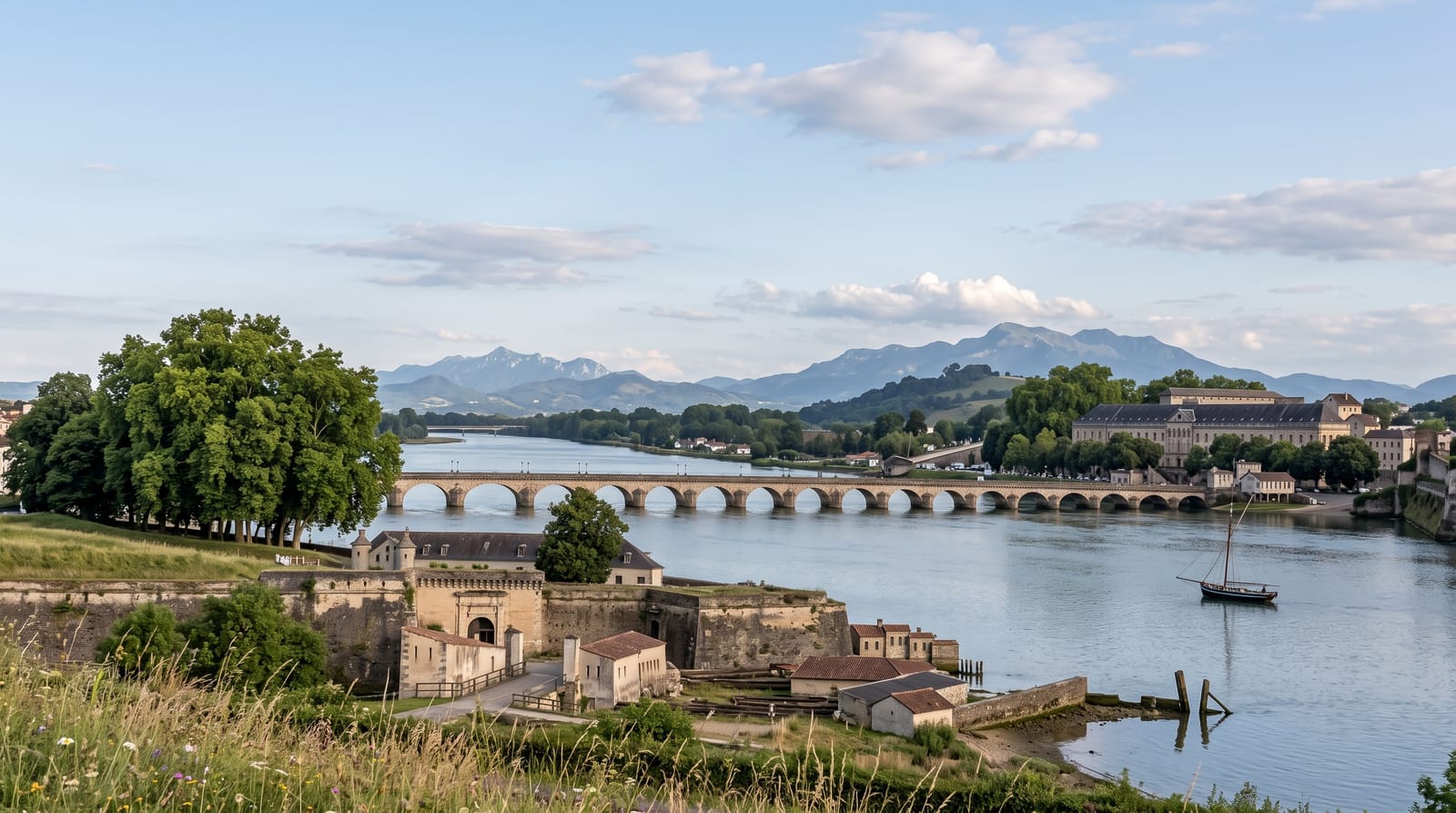
AI illustration
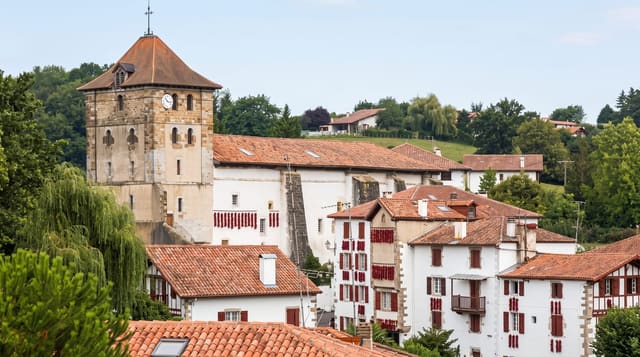
Chocolate reached France through Bayonne: Jewish families expelled from Spain and Portugal settled in the Saint-Esprit quarter across the river in the sixteenth century, bringing the craft with them, and the city became the country's first chocolate-making centre; a row of makers still works along the arcaded Rue Port-Neuf. Bayonne ham, salted and air-dried on the Adour, carries the other name. The old town is tall Basque houses in white with red and green shutters along two rivers, and the Musee Basque covers the culture in depth. The summer fetes in late July fill the city with crowds dressed in white and red.
History
Traces of people from the Middle Palaeolithic have been found around Bayonne, and the hill of the present cathedral quarter, about 14 metres high above the Nive and once surrounded by the Adour marshes, was probably always inhabited, overlooking the meeting of the two rivers, a "Bayonne Sea" that may have been some 1,200 metres wide. Excavations in 1995 along the foundations of the Gothic cathedral found pottery, bowls and amphorae of the late 1st century and coins of the 3rd, and a Roman castrum of the end of the 4th century, Lapurdum, was a fortified place of Novempopulania whose name passed to the province of Labourd, while Baiona named the city, its port and its cathedral (Wikipedia, Bayonne).
What to look for
- The chocolate makers - the arcaded street of France's oldest chocolate trade.
- The Basque museum - a thorough collection on Basque culture.
- The white and red houses - tall Basque facades along the Nive.
- The July fetes - five days of crowds dressed in white and red.
When to go
April to June and September to October; the fetes in late July or early August are the biggest event and fill everything. The Saturday market on the Nive is good.
Before you go
Fete week is loud, packed and not to everyone's taste, with accommodation booked months ahead. Chocolate shops are small and busy. Parking in the old town is essentially impossible.
Nearby
Biarritz lies west; Espelette is south inland.
Key facts
Source: Wikidata, item Q134674, read on 18 October 2026.
What to pack for Bayonne
Chosen from what this place is for. Tap a kit for the full checklist.
- Comfortable walking shoes - Sightseeing means kilometres of pavement and cobbles daily. Find on Amazon
- Modest clothing - Shoulders and knees covered - the single most common requirement. Find on Amazon
- A slim anti-theft daypack - Zips that close properly; keep it in front in crowds and on transit. Find on Amazon
- A scarf or shawl - To cover the head or shoulders on entry; women especially at mosques. Find on Amazon
Some links on this page are Amazon affiliate links - if you buy through them we may earn a small commission at no extra cost to you.
All packing kitsPlan your trip
Where to start if Bayonne is going on the list.
Booking links on this page are affiliate links - if you book through them we may earn a small commission at no extra cost to you. It never changes what we write about a place.
Opening times, ticket prices and seasonal closures change - check the official source before you go: official site.