Ainhoa
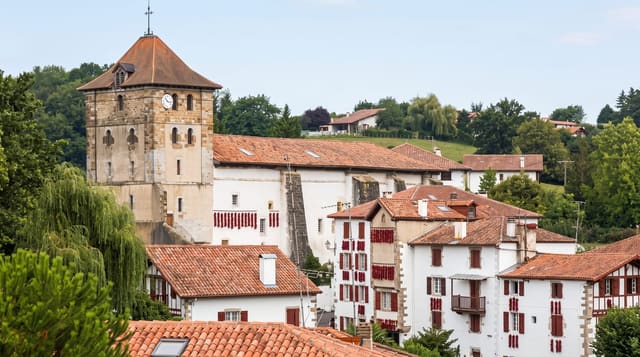
A single-street Basque village of white houses with dated lintels, rebuilt after being razed in 1636.
Updated 21 October 2026
AI illustration
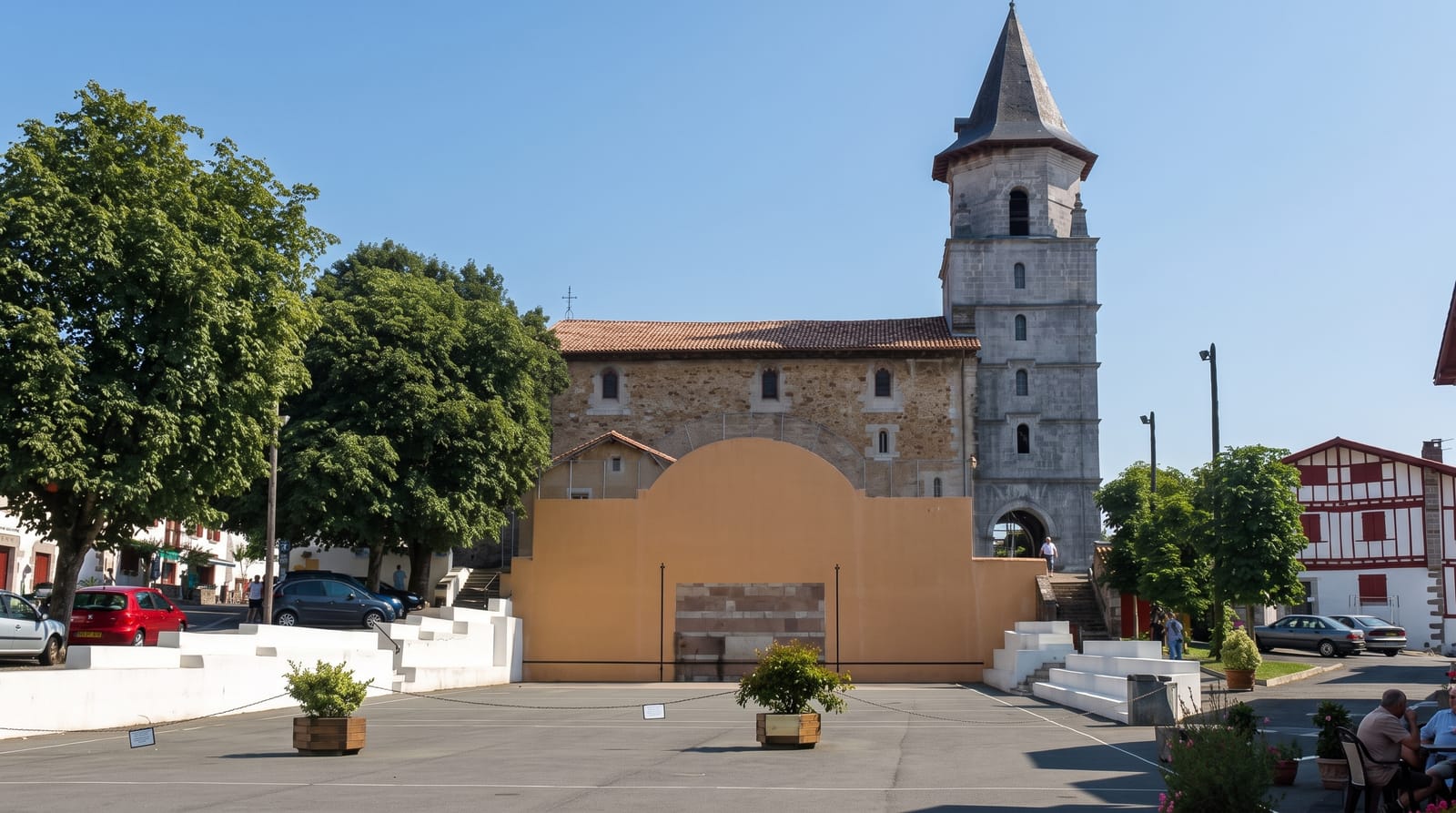
Ainhoa was founded in the thirteenth century as a staging post for pilgrims heading to Compostela over the passes, and it is laid out accordingly: one long street with houses on both sides, whitewashed with red or green timber, most of them rebuilt after Spanish troops razed the village during their invasion of 1636. Many carry a carved lintel with the date and the name of the family who built them, which is a Basque habit and lets you read the street chronologically. The church has the tiered wooden galleries typical of the region, and a fronton for pelota stands beside it. A stone path climbs to a hilltop chapel above.
History
The curacy of Ainhoa was created in the 13th century by the Premonstratensian priory of Urdazubi, across the present border, and on 27 April 1238 King Theobald I of Navarre bought the tolls levied here on pilgrims and traders bound for Santiago de Compostela, the village then lying on the frontier between Navarre and the English-held Duchy of Aquitaine. In 1250 its lord recognised Henry III of England as overlord, and for long periods the village paid taxes to both sides in return for its privileges. Ainhoa was razed with many villages of the Labourd in the Spanish invasion of 1636 and later resettled; of the village before its destruction only the church and the Machitorénéa house survive (Wikipedia, Ainhoa, Pyrénées-Atlantiques).
What you'll find
- The single street - white Basque houses with red and green woodwork.
- The carved lintels - dated stones naming the families who rebuilt after 1636.
- The galleried church - tiered wooden balconies in Basque arrangement.
- The fronton - the pelota wall in the middle of the village.
When to go
April to October; the village is small and seen in an hour. Summer weekends bring visitors from the coast. The hill chapel walk is best in clear weather.
Practical notes
There is little to do beyond walking the street and the chapel path. Facilities are limited to a few restaurants and shops. The Spanish border traffic passes nearby.
Nearby
Espelette lies north; the Spanish border is a few kilometres south.
Key facts
Source: Wikidata, item Q212962, read on 18 October 2026.
What to pack for Ainhoa
Chosen from what this place is for. Tap a kit for the full checklist.
- Comfortable walking shoes - Sightseeing means kilometres of pavement and cobbles daily. Find on Amazon
- Modest clothing - Shoulders and knees covered - the single most common requirement. Find on Amazon
- A slim anti-theft daypack - Zips that close properly; keep it in front in crowds and on transit. Find on Amazon
- A scarf or shawl - To cover the head or shoulders on entry; women especially at mosques. Find on Amazon
Some links on this page are Amazon affiliate links - if you buy through them we may earn a small commission at no extra cost to you.
All packing kitsPlan your trip
Where to start if Ainhoa is going on the list.
Booking links on this page are affiliate links - if you book through them we may earn a small commission at no extra cost to you. It never changes what we write about a place.
Opening times, ticket prices and seasonal closures change - check the official source before you go: official site.