Cotignac
A village against an eighty-metre tufa cliff, with houses and cellars dug into the rock behind it.
Updated 4 September 2026
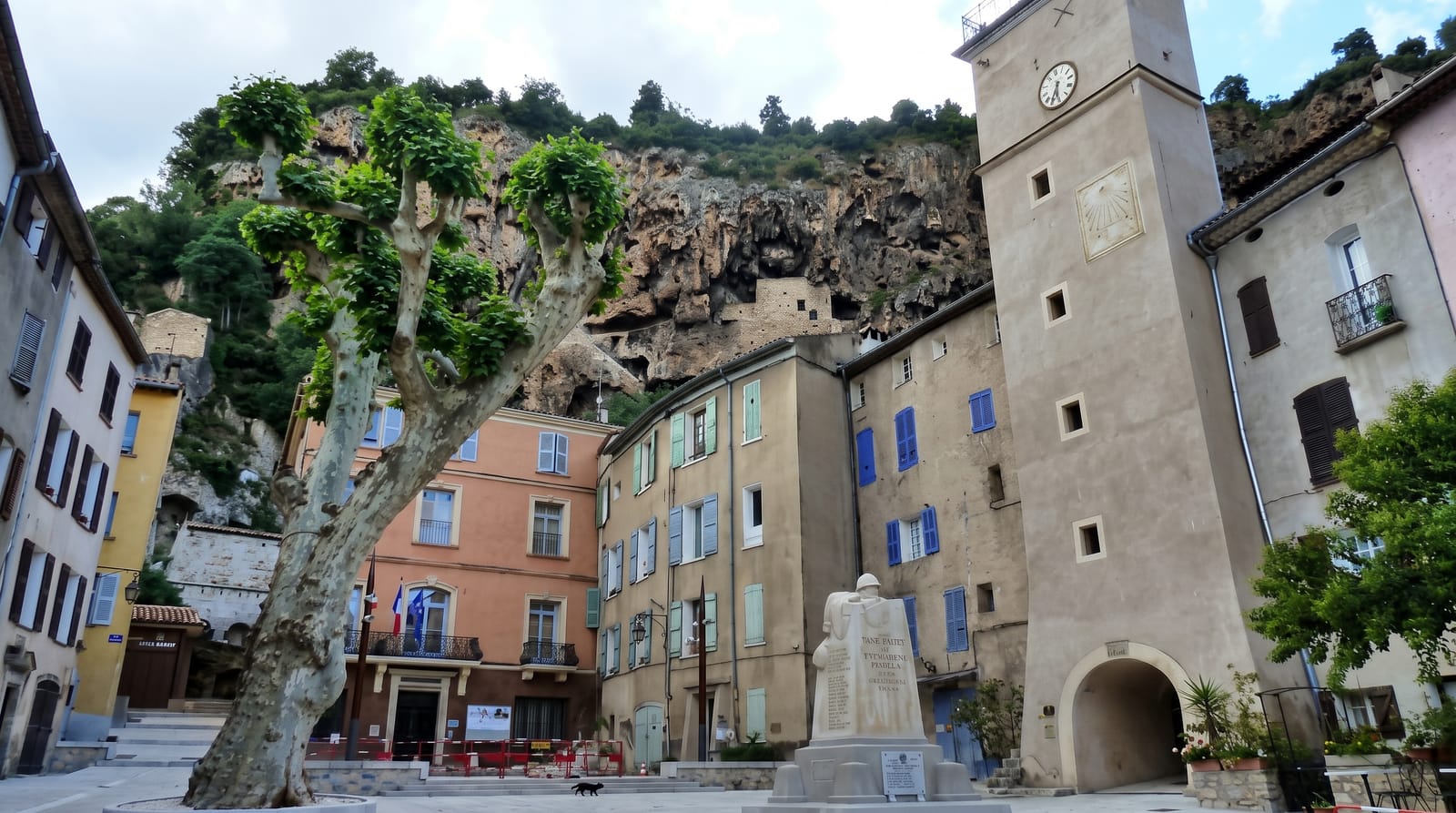
AI illustration
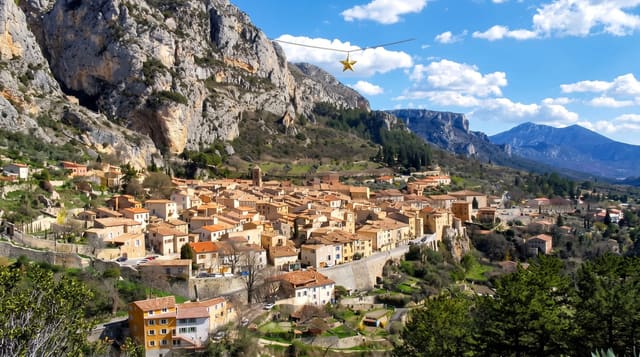
Cotignac stands with its back to a cliff of tufa about eighty metres high and four hundred long, formed by mineral-laden water depositing limestone over a long period. The rock is soft enough to cut, and generations dug into it: dwellings, storerooms, stables and refuges are hollowed out behind the houses, some on several levels reached by stairs in the rock, used as shelter in troubled centuries. Two towers on top are the remains of a castle. The village below has a plane-shaded main square with fountains, and the surrounding country produces wine, olives and honey.
What to look for
- The tufa cliff - an eighty-metre wall of soft deposited limestone.
- The rock dwellings - rooms and stairs cut into the cliff behind the village.
- The two towers - castle remnants on the cliff top.
- The shaded square - plane trees and fountains in the centre.
When to go
April to June and September to October; summer is hot and the Provence Verte fills with holidaymakers. Market day brings the square to life. Winter is quiet with less open.
Good to know
Access to parts of the troglodyte levels is limited and involves steep rock stairs. The village is small and quiet, with modest facilities. Parking is outside the centre.
Nearby
Brignoles lies south; the Verdon gorge is northeast.
Key facts
Source: Wikidata, item Q688450, read on 18 October 2026.
What to pack for Cotignac
Chosen from what this place is for. Tap a kit for the full checklist.
- Comfortable walking shoes - Sightseeing means kilometres of pavement and cobbles daily. Find on Amazon
- A slim anti-theft daypack - Zips that close properly; keep it in front in crowds and on transit. Find on Amazon
- A refillable water bottle - Many cities have public fountains; save money and plastic. Find on Amazon
- A light layer + compact umbrella - For museum air-con and a sudden shower. Find on Amazon
Some links on this page are Amazon affiliate links - if you buy through them we may earn a small commission at no extra cost to you.
All packing kitsPlan your trip
Where to start if Cotignac is going on the list.
Booking links on this page are affiliate links - if you book through them we may earn a small commission at no extra cost to you. It never changes what we write about a place.
Opening times, ticket prices and seasonal closures change - check the official source before you go: official site.