Catacombs of Paris
The bones of around six million people, moved into old quarry tunnels and stacked into walls.
Updated 19 October 2026
AI illustration
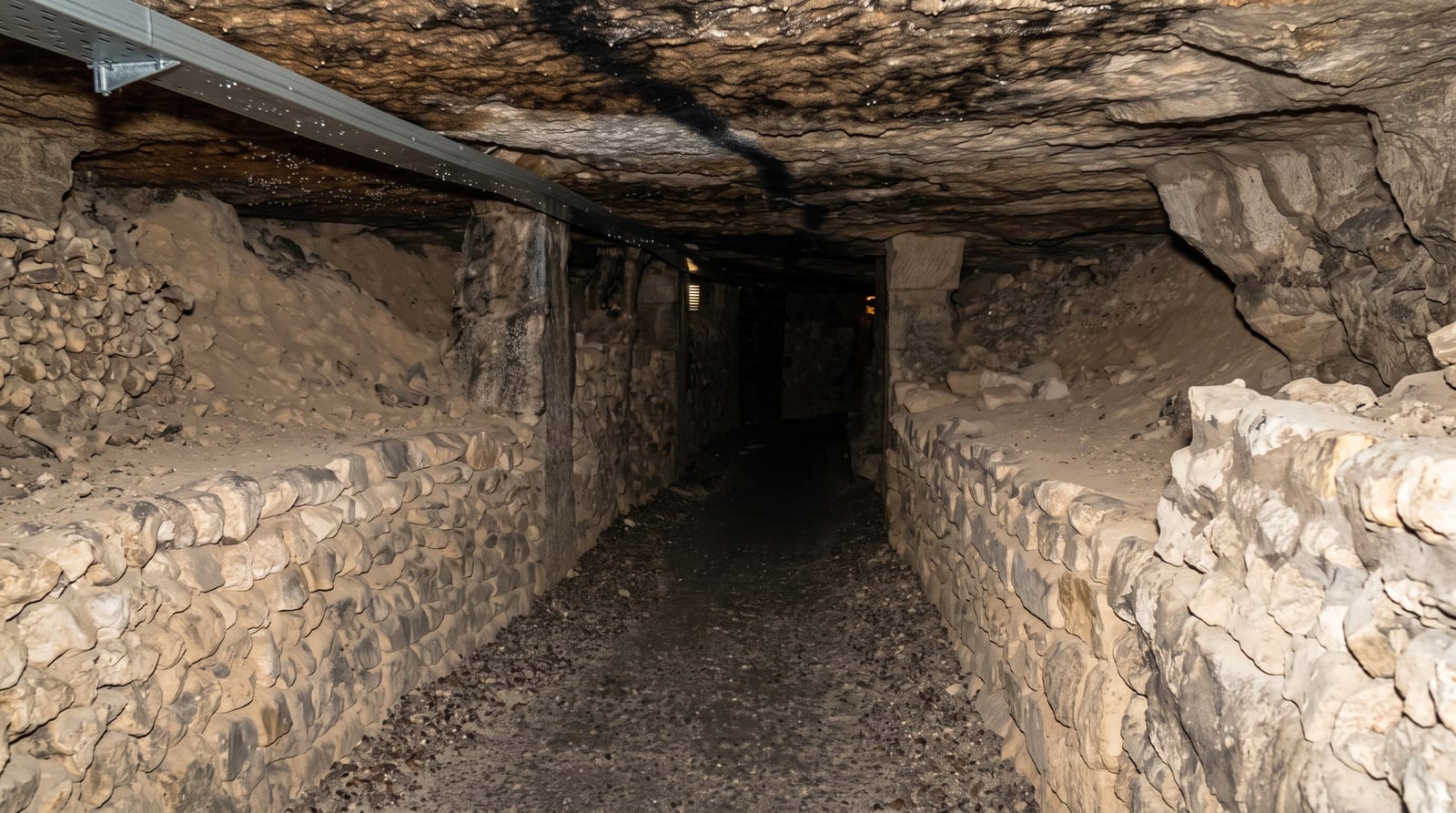
Paris was built partly from limestone quarried beneath it, leaving hundreds of kilometres of tunnel under the southern city. By the 1780s the cemeteries were so overfull that they were a public health emergency, and the decision was taken to empty them into the quarries: bones were moved by night over decades from Les Innocents and other burial grounds, and rather than being tipped in they were arranged, stacked into walls of femurs and skulls in patterns, with plaques recording which cemetery each section came from. Around six million people's remains lie there. A route of about a kilometre and a half is open, twenty metres below the street.
History
Medieval Paris buried its dead in the middle of the city, and its main cemetery, the Saints-Innocents beside Les Halles, was overflowing by the end of the 12th century: the long dead were dug up and their bones packed into charnel galleries, and by the late 18th century the burial ground was a mound two metres high. Much of the Left Bank stood on limestone quarries dug haphazardly since the 12th century and often forgotten, and after a series of cellar walls collapsed around the Innocents in 1774, the decision to close the city's cemeteries was carried out by moving the remains into these old workings: from 1788 covered wagons carried bones by night to a shaft near the Rue de la Tombe-Issoire, south of the Barrière d'Enfer. The ossuary, holding the remains of more than six million people, was largely forgotten until it became a novelty venue for concerts and private events in the early 19th century, and it was later opened to the public with new entrances around Place Denfert-Rochereau (Wikipedia, Catacombs of Paris).
The main sights
- The bone walls - femurs and skulls stacked into patterned facings.
- The cemetery plaques - markers recording where each section came from.
- The quarry tunnels - the limestone workings the city was built from.
- The inscriptions - carved verses and warnings along the route.
When to go
Year-round; the temperature underground stays around fourteen degrees whatever the season. Booking a timed ticket online is close to essential, as walk-up queues can run for hours.
Good to know
Numbers underground are capped, so unbooked queues are long. The route involves a hundred and thirty steps down and a hundred and twelve up, and is unsuitable for limited mobility or claustrophobia. Off-route tunnels are illegal to enter and policed.
Nearby
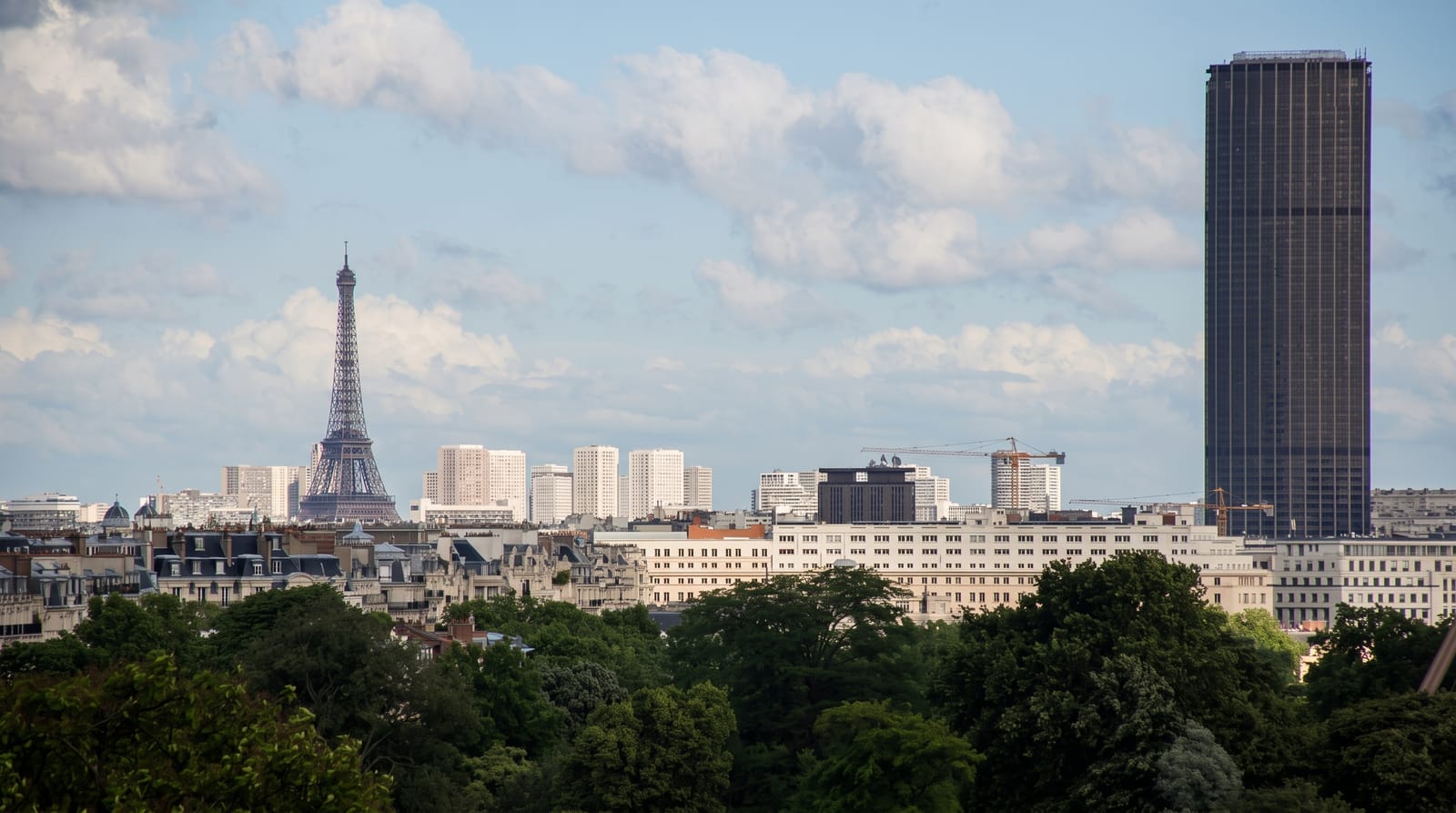
Montparnasse lies north; the Latin Quarter is northeast.
Key facts
Source: Wikidata, item Q28924, read on 18 October 2026.
What to pack for Catacombs of Paris
Chosen from what this place is for. Tap a kit for the full checklist.
- Head torch + spare batteries - Hands-free light is essential; caves are truly dark. Find on Amazon
- Comfortable walking shoes - Sightseeing means kilometres of pavement and cobbles daily. Find on Amazon
- Grippy closed shoes - Cave floors are wet, muddy and slick with formations. Find on Amazon
- A slim anti-theft daypack - Zips that close properly; keep it in front in crowds and on transit. Find on Amazon
Some links on this page are Amazon affiliate links - if you buy through them we may earn a small commission at no extra cost to you.
All packing kitsPlan your trip
Where to start if Catacombs of Paris is going on the list.
Booking links on this page are affiliate links - if you book through them we may earn a small commission at no extra cost to you. It never changes what we write about a place.
Opening times, ticket prices and seasonal closures change - check the official source before you go: official site.