Sri Siva Subramaniya Temple
A vividly painted South Indian temple in Nadi - carved gopuram towers, Dravidian ceiling frescoes and a reminder of Fiji's Indo-Fijian heritage.
Updated 19 October 2026
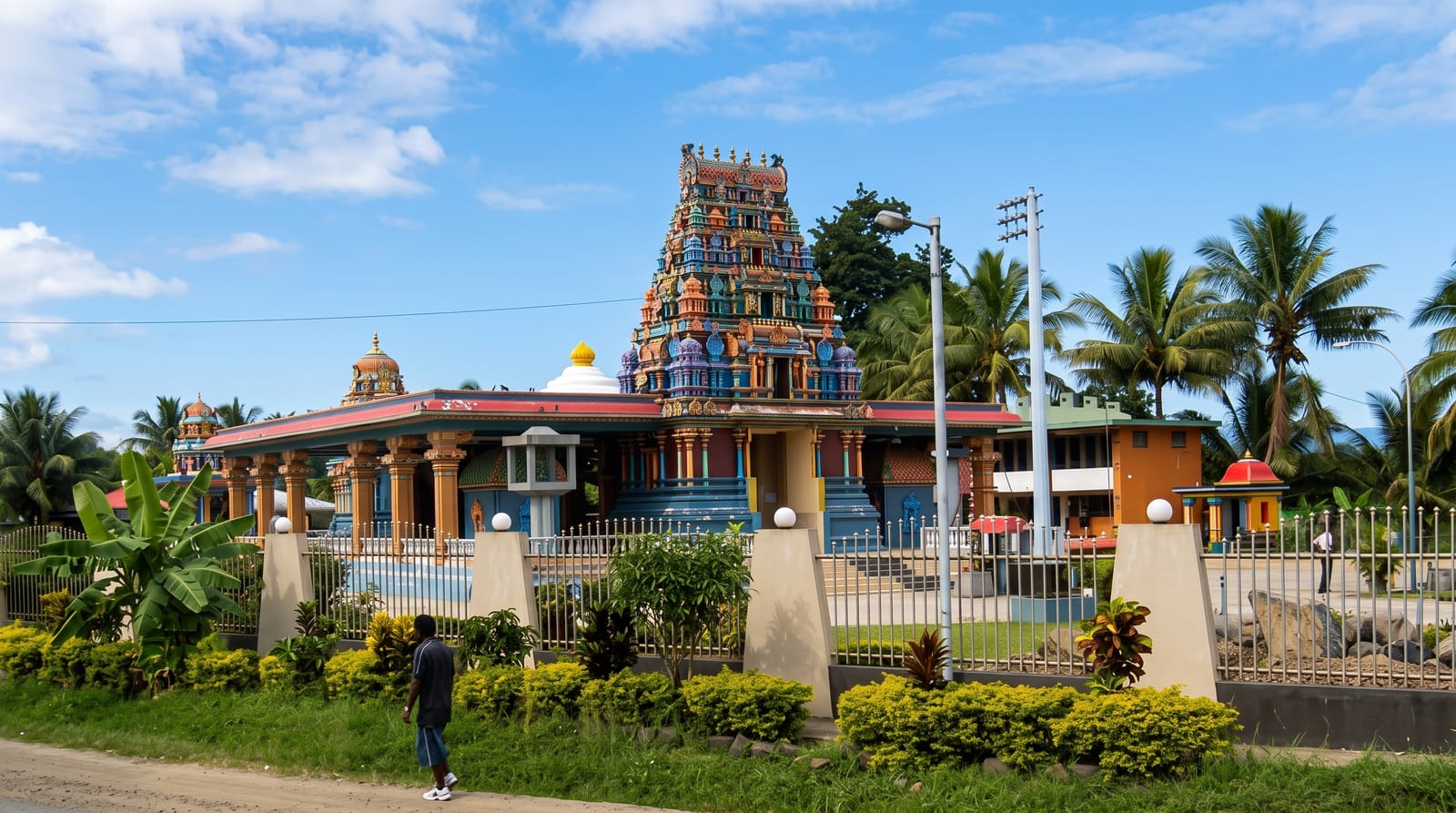
AI illustration
At the end of Nadi's main street stands one of the largest Hindu temples in the southern hemisphere, and easily the most colourful building in Fiji: a Dravidian-style complex with towering gopuram gateways carved into tiers of painted deities in sky blue, crimson and gold. Built in the 1990s by craftsmen brought from India, who also painted the ceiling frescoes, it serves the Indo-Fijian community descended from indentured labourers brought to work the sugar plantations from the 1870s - a history that shaped modern Fiji as much as any other. It is a working temple, welcoming visitors who observe its rules.
History
The original temple stood on the site for a long time, and it was there that the Then India Sanmarga Ikya Sangam, the TISI Sangam, was founded in 1926. At the Sangam's golden jubilee in 1976 the foundation was laid for a new and larger national temple; a new lease of the Crown land was obtained in 1983, building began with the Bhoomi Pooja in January 1984, the piling was finished in 1986, and after a pause of some five years a new committee under Narayan Reddy completed the temple in the Dravidian style and by the principles of Vastu, its consecration held on 15 July 1994. It is the largest Hindu temple in the Southern Hemisphere, and for the Sangam's centenary in 2026 artisans from Tamil Nadu came to repaint and restore its carvings (Wikipedia, Sri Siva Subramaniya Temple).
The main sights
- The gopuram towers - tiers of brightly painted carved deities.
- The ceiling frescoes - painted by artisans brought from India.
- The main shrine - dedicated to Murugan, with daily rituals.
- Nadi's market - the produce and spice market a short walk up the street.
When to go
The drier months from May to October are the most pleasant for wandering Nadi. Thaipusam and other festivals fill the temple with ceremony and colour. It sits minutes from the international airport, which makes it the classic first or last stop of a Fiji trip.
Before you go
This is an active place of worship with firm rules: shoes off, shoulders and knees covered, no photography inside the inner areas, no leather items, and no entry to certain sections for non-Hindus. Sarongs are available at the entrance. Nadi town itself is functional rather than beautiful; most visitors treat it as a transit stop and the temple as its one genuine sight.
Nearby
Nadi market, the Sabeto hot springs and mud pools, and the Denarau resort strip.
Key facts
Source: Wikidata, item Q853256, read on 18 October 2026.
What to pack for Sri Siva Subramaniya Temple
Chosen from what this place is for. Tap a kit for the full checklist.
- Comfortable walking shoes - Sightseeing means kilometres of pavement and cobbles daily. Find on Amazon
- Modest clothing - Shoulders and knees covered - the single most common requirement. Find on Amazon
- Swimwear - Needed at most public thermal pools; some traditional baths are nude and single-sex. Find on Amazon
- A slim anti-theft daypack - Zips that close properly; keep it in front in crowds and on transit. Find on Amazon
Some links on this page are Amazon affiliate links - if you buy through them we may earn a small commission at no extra cost to you.
All packing kitsPlan your trip
Where to start if Sri Siva Subramaniya Temple is going on the list.
Booking links on this page are affiliate links - if you book through them we may earn a small commission at no extra cost to you. It never changes what we write about a place.
Opening times, ticket prices and seasonal closures change - check the official source before you go: official site.