The Rock-Hewn Churches of Lalibela
A holy wonder carved from stone - eleven medieval churches hewn entirely downward out of the solid rock, a living centre of Ethiopian Orthodox pilgrimage sometimes called the New Jerusalem, a UNESCO site.
Updated 18 October 2026
AI illustration
UNESCO World Heritage
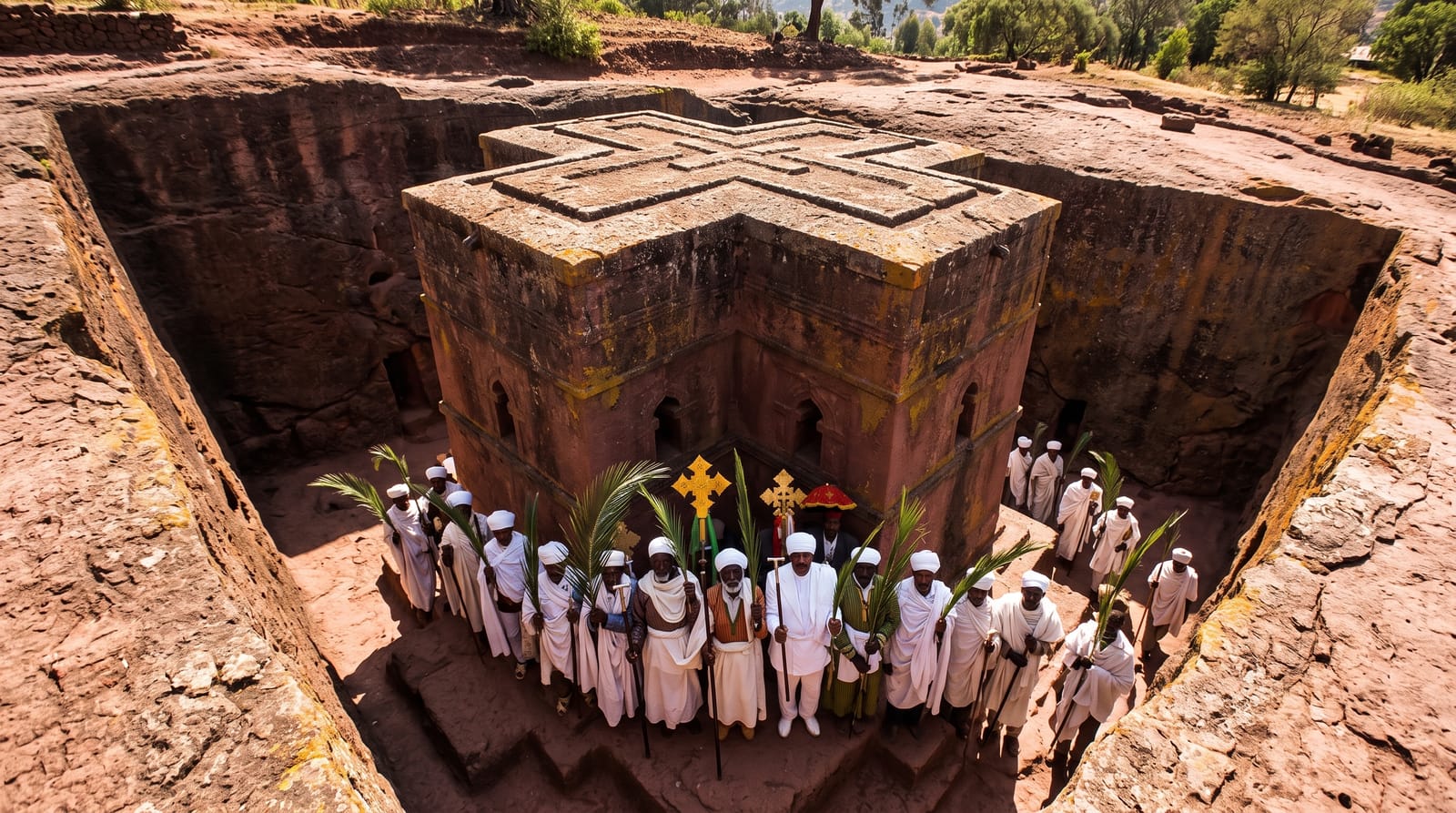
Lalibela, high in the northern Ethiopian highlands, is one of the most extraordinary and sacred sites in Africa, a complex of eleven medieval churches carved, in the twelfth and thirteenth centuries, not built up but hewn downward entirely out of the solid volcanic rock. A UNESCO wonder and a living, active centre of Ethiopian Orthodox Christianity, its monolithic churches, linked by tunnels and trenches, most famously the cross-shaped Bete Giyorgis carved into a deep pit, remain a place of profound pilgrimage, sometimes called the New Jerusalem.
History
According to local tradition the town, then called Roha, was founded by the Agaw Zagwe family in 1137, and its eleven churches are said to have been commissioned by King Gebre Meskel Lalibela (about 1181-1221), who, the story goes, was shown Jerusalem by Christ and told to build a second one in Ethiopia; more likely the churches reached their present form over several phases of carving and alteration of earlier structures. They remain in use by the Ethiopian Orthodox Church and a major place of pilgrimage, and the site was inscribed on the World Heritage List in 1978 (Wikipedia, Rock-Hewn Churches, Lalibela).
What's there
- Bete Giyorgis - the iconic cross-shaped church in a deep pit.
- The rock-hewn churches - the eleven monolithic churches and tunnels.
- The pilgrims and priests - the living Orthodox worship and processions.
- The Christmas and Timkat festivals - the great pilgrimage celebrations.
When to go
October to March, the dry season, for the best weather in the highlands; the great festivals of Ethiopian Christmas in January and Timkat draw huge crowds of white-robed pilgrims and are extraordinary, if crowded, times to visit.
Good to know
It is remote, high in the highlands, best reached by a short flight rather than the long road. As living, sacred churches, dress modestly, remove shoes at each church, and behave with respect toward the worshippers and priests. Some churches are covered by protective shelters. The churches themselves are astonishing.
Nearby
The Simien Mountains, Gondar and the northern historic circuit are within reach.
Key facts
Source: Wikidata, item Q642979, read on 18 October 2026.
What to pack for The Rock-Hewn Churches of Lalibela
Chosen from what this place is for. Tap a kit for the full checklist.
- Comfortable walking shoes - Sightseeing means kilometres of pavement and cobbles daily. Find on Amazon
- Modest clothing - Shoulders and knees covered - the single most common requirement. Find on Amazon
- A slim anti-theft daypack - Zips that close properly; keep it in front in crowds and on transit. Find on Amazon
- A scarf or shawl - To cover the head or shoulders on entry; women especially at mosques. Find on Amazon
Some links on this page are Amazon affiliate links - if you buy through them we may earn a small commission at no extra cost to you.
All packing kitsPlan your trip
Where to start if The Rock-Hewn Churches of Lalibela is going on the list.
Booking links on this page are affiliate links - if you book through them we may earn a small commission at no extra cost to you. It never changes what we write about a place.
Opening times, ticket prices and seasonal closures change - check the official source before you go: official site.