Tartu Old Observatory
The observatory where Struve began measuring the shape of the Earth - the anchor point of a chain of survey stations that is now a World Heritage Site.
Updated 31 October 2026
UNESCO World Heritage
Between 1816 and 1855 Friedrich Georg Wilhelm Struve measured a chain of triangulation points running from the Arctic coast of Norway to the Black Sea - over 2,800 kilometres - to work out the exact size and shape of the Earth. The chain is inscribed as the Struve Geodetic Arc, a World Heritage Site spread across ten countries, and its first point and scientific home is this small observatory on Toomemägi in Tartu.
History
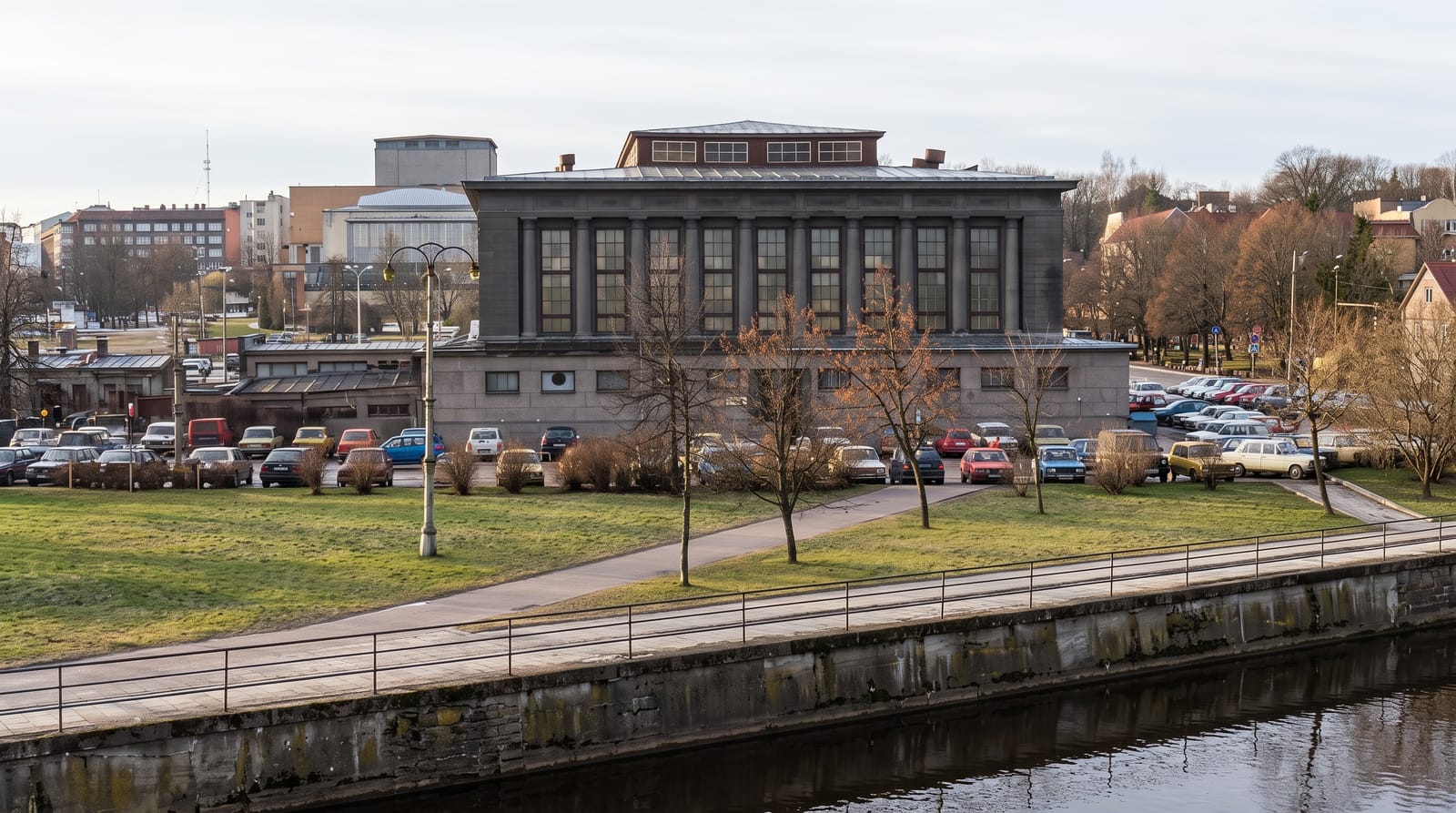
Construction began in 1808 and finished in 1810, though fitting the instruments took longer; the last was the Fraunhofer Great Dorpat Refractor of 1824, then the largest refracting telescope in the world. Friedrich Georg Wilhelm von Struve worked here from 1813 and became its director in 1820, studied double stars, was the first to measure the distance to a star, Vega, and began the Struve Geodetic Arc, whose first point this is, before leaving in 1839 to head the new Pulkovo Observatory; later Ernst Öpik worked here, estimating the distance of the Andromeda Galaxy. In 1946 the observatory passed to the Estonian Academy of Sciences, most of its work moved to Tõravere in 1964, and the building returned to the University of Tartu in 1996 and, reconstructed in 2009-2010, is now a museum (Wikipedia, University of Tartu Old Observatory).
Highlights
- The building - a neat neoclassical observatory from 1810, with its dome and observation slit.
- The instruments - the equipment of the era, including the Fraunhofer refractor, in its day the largest achromatic telescope in the world.
- The survey story - how the arc was measured with rods, angles and enormous patience.
- The Struve point - marked inside the building, with a terrace looking over the old town below.
When to go
Any season, since it is a compact indoor museum. It combines naturally with Toomemägi: the cathedral ruins, the angel's bridge and the university museum are all on the same hill.
Things to know
This is a small, quiet museum about measurement, and its appeal depends on caring about the story. For anyone interested in the history of science it is one of the most significant buildings in the Baltics; for anyone else it is a pleasant half hour.
Labelling is good in English, but the exhibition is instruments and documents rather than interactive displays.
Nearby
Tartu old town is directly below the hill. The university's main building and the Estonian National Museum round out the same day.
Key facts
Source: Wikidata, item Q2346055, read on 18 October 2026.
Opening times, ticket prices and seasonal closures change - check the official source before you go: official site.
Plan your trip
Where to start if Tartu Old Observatory is going on the list.
Booking links on this page are affiliate links - if you book through them we may earn a small commission at no extra cost to you. It never changes what we write about a place.
What to pack for Tartu Old Observatory
Chosen from what this place is for. Tap a kit for the full checklist.
- Spare batteries + cards - Cold and long shoots drain power; never run out at the good light. Find on Amazon
- Warm base layers - Merino or synthetic against the skin - never cotton, which chills when damp. Find on Amazon
- Comfortable walking shoes - Sightseeing means kilometres of pavement and cobbles daily. Find on Amazon
- Modest clothing - Shoulders and knees covered - the single most common requirement. Find on Amazon
Some links on this page are Amazon affiliate links - if you buy through them we may earn a small commission at no extra cost to you.
All packing kits