Rotermann Quarter
Nineteenth-century limestone warehouses with sharp modern additions bolted on top - Tallinn's architectural showpiece and a dense block of places to eat.
Updated 1 September 2026
Illustration
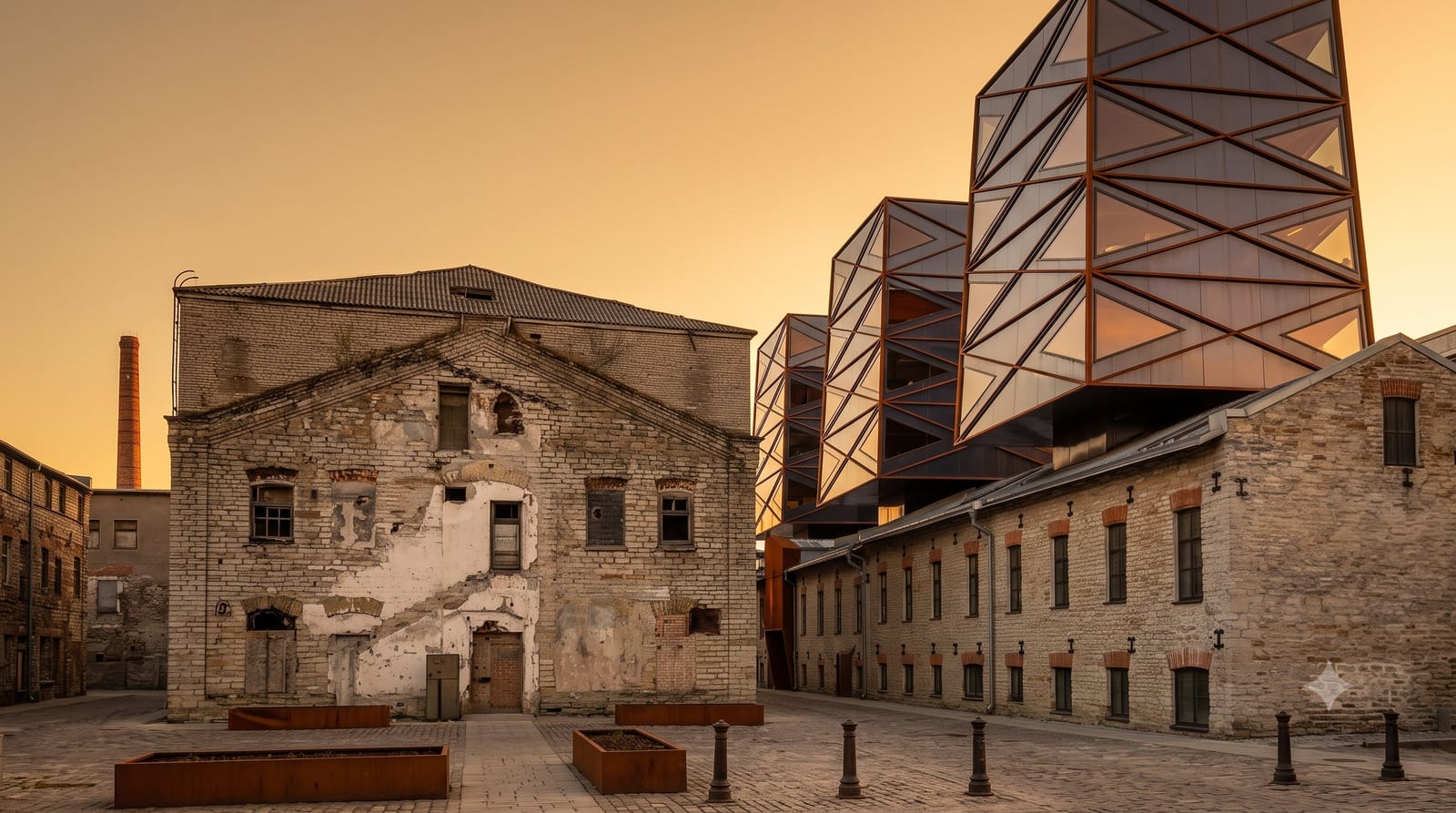
The Rotermann family ran a mill, a distillery and a factory complex here from the 1820s, and by the 1990s the whole block was derelict. The redevelopment that followed did not restore it to a period look: instead, new floors in corten steel, glass and dark timber were added directly onto the old limestone shells, and the joints between old and new are left visible.
What you actually see
- The lanes - narrow passages between heavy stone warehouses.
- The added volumes - unmistakably modern forms stacked on the old buildings, of which the salt storage with its angular steel top is the most photographed.
- The ground floors - almost entirely food and shops, with a supermarket, bakeries and a cluster of restaurants and cafés.
- The courtyards - outdoor seating through the summer, in a quarter whose architecture has collected a shelf of prizes.
When to go
Weekday lunchtimes are liveliest, when the quarter serves the surrounding offices. Summer evenings bring out the courtyard seating, and the walk carries on to the port and the sea. It is a working commercial block, so it is open year-round.
Honest expectations
This is a modern development, not a historic quarter. Visitors looking for old Tallinn will find the old town two minutes away and should go there instead; Rotermann is worth it specifically for contemporary architecture and food.
It sits on the route between the cruise port and the old town, so the middle of the day in summer is crowded.
Nearby
The old town's Viru gate is a five-minute walk. The passenger port and the sea are the same distance in the other direction.
What to pack for Rotermann Quarter
Chosen from what this place is for. Tap a kit for the full checklist.
Plan your trip
Where to start if Rotermann Quarter is going on the list.
Booking links on this page are affiliate links - if you book through them we may earn a small commission at no extra cost to you. It never changes what we write about a place.
Opening times, ticket prices and seasonal closures change - check the official source before you go: official site.