San Andres Archaeological Site
A Maya ceremonial centre in the Zapotitan valley, with an acropolis, plazas and a colonial indigo works beside it.
Updated 1 September 2026
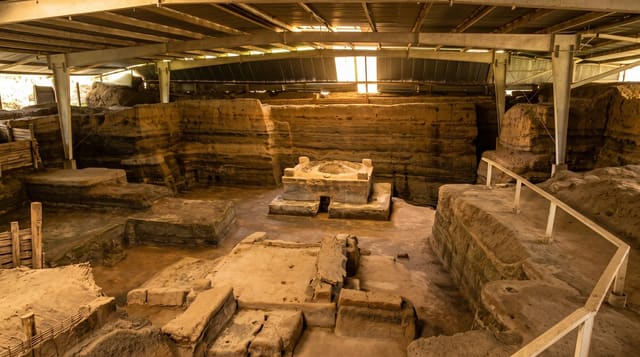
San Andres was the principal centre of the Zapotitan valley between around 600 and 900 AD, governing the surrounding settlements including Joya de Ceren, and it was built on top of the thick ash layer left by the Ilopango eruption. The visible remains are the acropolis with its stepped platforms and pyramids around a raised plaza, and a large open plaza to the north, consolidated and grassed. The site was buried again by ash from the Loma Caldera eruption. Beside the ruins are the excavated remains of a seventeenth-century indigo processing works, obraje, from the colonial hacienda that later occupied the land, which is unusual to find alongside a pre-Columbian site.
The main sights
- The acropolis - the raised platform complex with its pyramids.
- The north plaza - the large open ceremonial space.
- The indigo works - the seventeenth-century obraje beside the ruins.
- The site museum - the display on the valley and its eruptions.
When to go
November to April in the dry season. Mornings are cooler; the site is open with little shade. It closes on Mondays. It combines naturally with Joya de Ceren a short distance away.
Before you go
The structures are consolidated and partly reconstructed. Interpretation is limited and mostly in Spanish. There is almost no shade on the plazas. The site takes under two hours.
Nearby
Joya de Ceren lies close; Santa Ana is northwest.
What to pack for San Andres Archaeological Site
Chosen from what this place is for. Tap a kit for the full checklist.
- Comfortable walking shoes - Sightseeing means kilometres of pavement and cobbles daily. Find on Amazon
- A slim anti-theft daypack - Zips that close properly; keep it in front in crowds and on transit. Find on Amazon
- A refillable water bottle - Many cities have public fountains; save money and plastic. Find on Amazon
- A light layer + compact umbrella - For museum air-con and a sudden shower. Find on Amazon
Some links on this page are Amazon affiliate links - if you buy through them we may earn a small commission at no extra cost to you.
All packing kitsPlan your trip
Where to start if San Andres Archaeological Site is going on the list.
Booking links on this page are affiliate links - if you book through them we may earn a small commission at no extra cost to you. It never changes what we write about a place.
Opening times, ticket prices and seasonal closures change - check the official source before you go: official site.