Joya de Cerén
The Pompeii of the Americas - a UNESCO archaeological site preserving an ancient Maya farming village buried and frozen in time by a volcanic eruption, offering a rare, intimate glimpse into the everyday life of ordinary people.
Updated 1 September 2026
AI illustration
UNESCO World Heritage
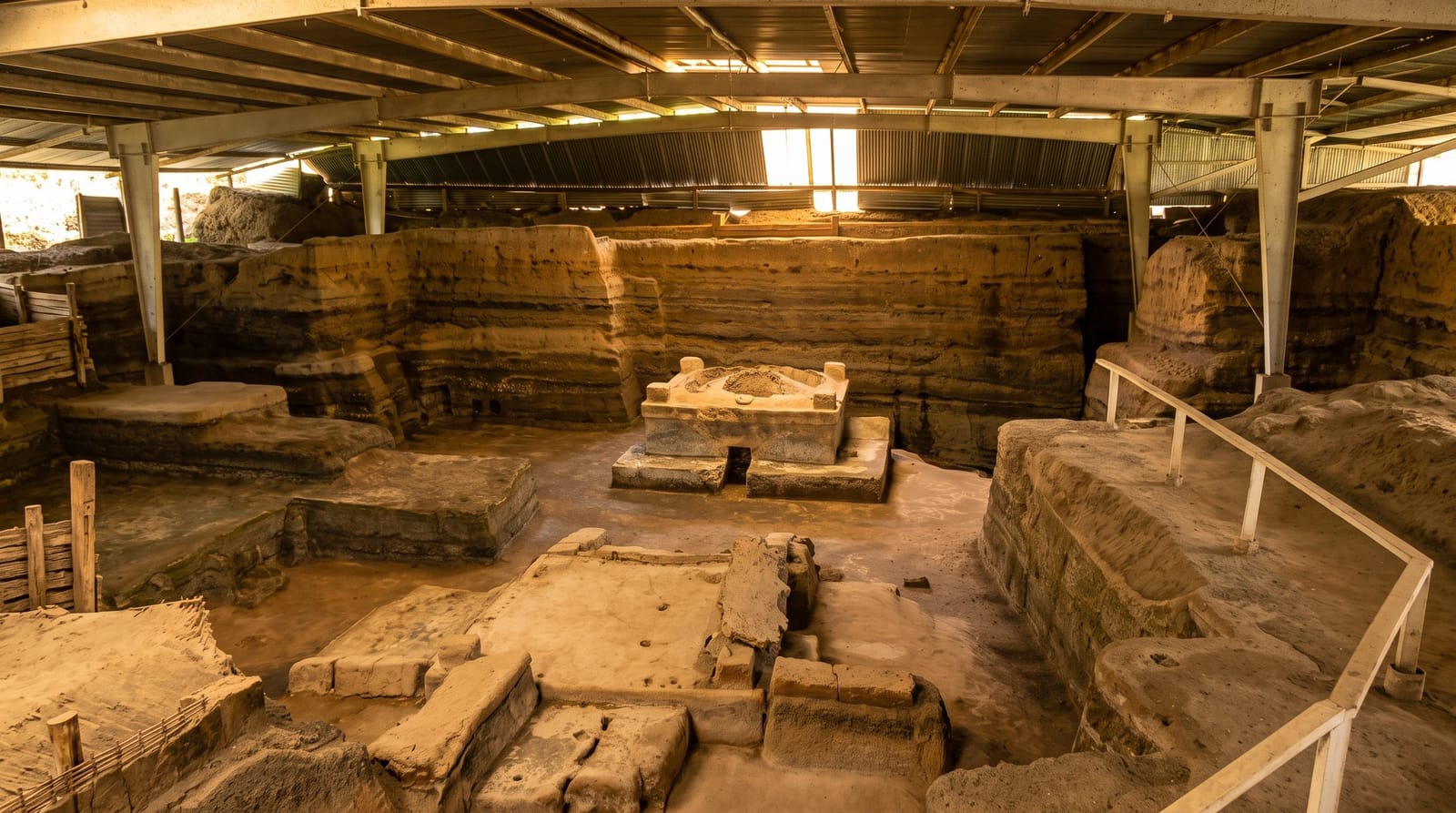
Joya de Cerén, a UNESCO World Heritage Site northwest of the capital, is one of the most remarkable and unusual archaeological sites in the Americas, often called the Pompeii of the Americas. Around 600 CE, a nearby volcanic eruption buried this small Maya farming village under layers of ash so quickly that it was preserved in extraordinary detail. Unlike the great pyramids and palaces of other Maya sites, Joya de Cerén reveals the everyday life of ordinary people: their humble mud-and-thatch houses, kitchens, workshops, storehouses and gardens, complete with the tools, pots and even food left exactly as they were, a uniquely intimate window into the ancient past.
Highlights
- The buried village - the preserved Maya houses and structures.
- The everyday details - the kitchens, workshops and storehouses.
- The gardens and fields - the preserved crops and gardens.
- The site museum - the artefacts and story of the village.
When to go
November to April, the dry season, for the most comfortable visit, as the exposed site is hot; the structures are sheltered under protective roofs. A visit to the site museum and, ideally, a guide greatly enrich the experience by explaining the significance of what can look, at first glance, like modest remains.
Before you go
Joya de Cerén lacks the monumental grandeur of the great Maya cities, being a small farming village of humble structures now sheltered under protective canopies, so its appeal is entirely in its extraordinary preservation and the rare, intimate glimpse it gives of ordinary ancient life rather than dramatic architecture; a guide is essential to appreciate it. For those fascinated by archaeology and everyday history, though, this uniquely preserved village is genuinely remarkable and significant.
Nearby
The San Andrés ruins, the capital San Salvador and the western highlands are close.
Key facts
Source: Wikidata, item Q27985, read on 18 October 2026.
What to pack for Joya de Cerén
Chosen from what this place is for. Tap a kit for the full checklist.
- Comfortable walking shoes - Sightseeing means kilometres of pavement and cobbles daily. Find on Amazon
- A slim anti-theft daypack - Zips that close properly; keep it in front in crowds and on transit. Find on Amazon
- A refillable water bottle - Many cities have public fountains; save money and plastic. Find on Amazon
- A light layer + compact umbrella - For museum air-con and a sudden shower. Find on Amazon
Some links on this page are Amazon affiliate links - if you buy through them we may earn a small commission at no extra cost to you.
All packing kitsPlan your trip
Where to start if Joya de Cerén is going on the list.
Booking links on this page are affiliate links - if you book through them we may earn a small commission at no extra cost to you. It never changes what we write about a place.
Opening times, ticket prices and seasonal closures change - check the official source before you go: official site.


