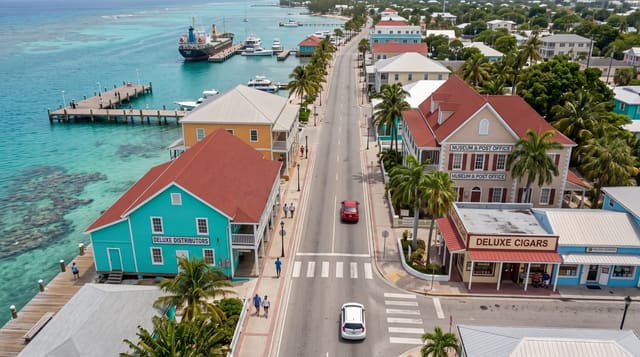
Guayaquil
Ecuador's biggest city and main port, with a long riverfront promenade, a painted hill of stairways and a park full of wild iguanas.
Updated 19 October 2026
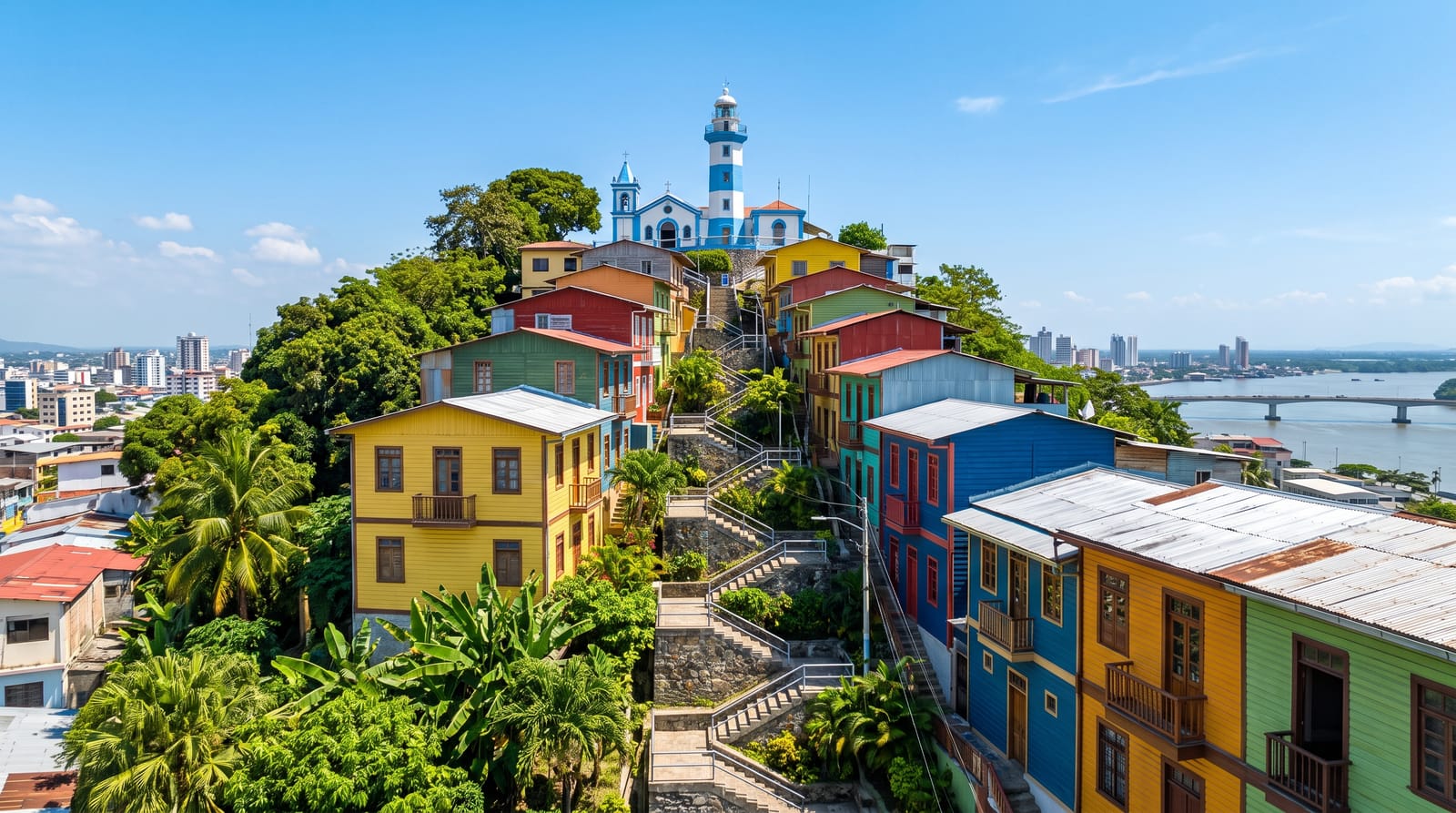
AI illustration
Guayaquil is a hot, humid, energetic port on the Guayas river, and for years travellers passed straight through it on the way to the Galápagos, which is now less true than it was. The Malecón 2000, a long landscaped promenade along the river with gardens, museums and a viewpoint tower, changed how the city sees its waterfront, and it runs to the foot of Las Peñas, the oldest quarter, where a stairway of four hundred and forty-four numbered steps climbs a hill lined with brightly painted wooden houses, small bars and galleries to a lighthouse and chapel at the top with the whole city below. The other unmissable oddity is Parque Seminario in the centre, where dozens of large land iguanas live wild in the trees and on the paths, ambling among the benches while pigeons get out of their way.
History
After several failed attempts, Guayaquil was founded by the Spanish conqueror Francisco de Orellana on the site of a native village and named the Most Noble and Most Loyal City of Santiago de Guayaquil. English and French pirates attacked and looted it on 20 April 1687, and in 1709 the English captains Woodes Rogers and William Dampier looted it and demanded a ransom, leaving suddenly without it when yellow fever broke out. In colonial times it was the chief Spanish shipyard on the Pacific and a stop on the trade between Asia and Latin America carried by the Manila galleons. In the late 18th century most of the region's slaves lived in Guayaquil, many working under the jornal system, which gave them considerable independence in return for a daily fee to their owners, and in 1794 María Chiquinquirá won her freedom in court. On 9 October 1820 a group of civilians and soldiers took the city almost without bloodshed and declared it independent of Spain as the Free Province of Guayaquil, and on 26 July 1822 José de San Martín and Simón Bolívar met here to plan the completion of South American independence (Wikipedia, Guayaquil).
What you'll find
- Las Peñas - the painted hillside quarter and its four hundred and forty-four steps.
- Malecón 2000 - the landscaped riverfront promenade and its viewpoint tower.
- The iguana park - Parque Seminario, where wild land iguanas roam the paths.
- The Cerro Santa Ana lighthouse - the chapel and beacon at the top of the stairway.
When to go
June to December is the drier, slightly cooler season; the first months of the year are hot, humid and wet. Evening is the time for the Malecón and Las Peñas, when the heat drops and the lights come on. The city fills for its founding celebrations in July and October.
Practical notes
It is hot and humid almost all the time, which limits daytime walking. The tourist areas of the Malecón and Las Peñas are policed and fine, but the surrounding centre requires ordinary big-city caution, particularly after dark and away from the lit quarters. Most visitors give it a night on the way to or from the Galápagos, which is about right.
Nearby
The Galápagos flights leave from here; the coastal route and Montañita run northwest.
Key facts
Source: Wikidata, item Q43509, read on 18 October 2026.
What to pack for Guayaquil
Chosen from what this place is for. Tap a kit for the full checklist.
- Strong insect repellent - DEET or picaridin; the jungle is where bites and disease risk are highest. Find on Amazon
- Comfortable walking shoes - Sightseeing means kilometres of pavement and cobbles daily. Find on Amazon
- Long, light, quick-dry clothing - Covers skin from insects and sun without cooking you in the humidity. Find on Amazon
- A slim anti-theft daypack - Zips that close properly; keep it in front in crowds and on transit. Find on Amazon
Some links on this page are Amazon affiliate links - if you buy through them we may earn a small commission at no extra cost to you.
All packing kitsPlan your trip
Where to start if Guayaquil is going on the list.
Booking links on this page are affiliate links - if you book through them we may earn a small commission at no extra cost to you. It never changes what we write about a place.
Opening times, ticket prices and seasonal closures change - check the official source before you go: official site.