La Isabela
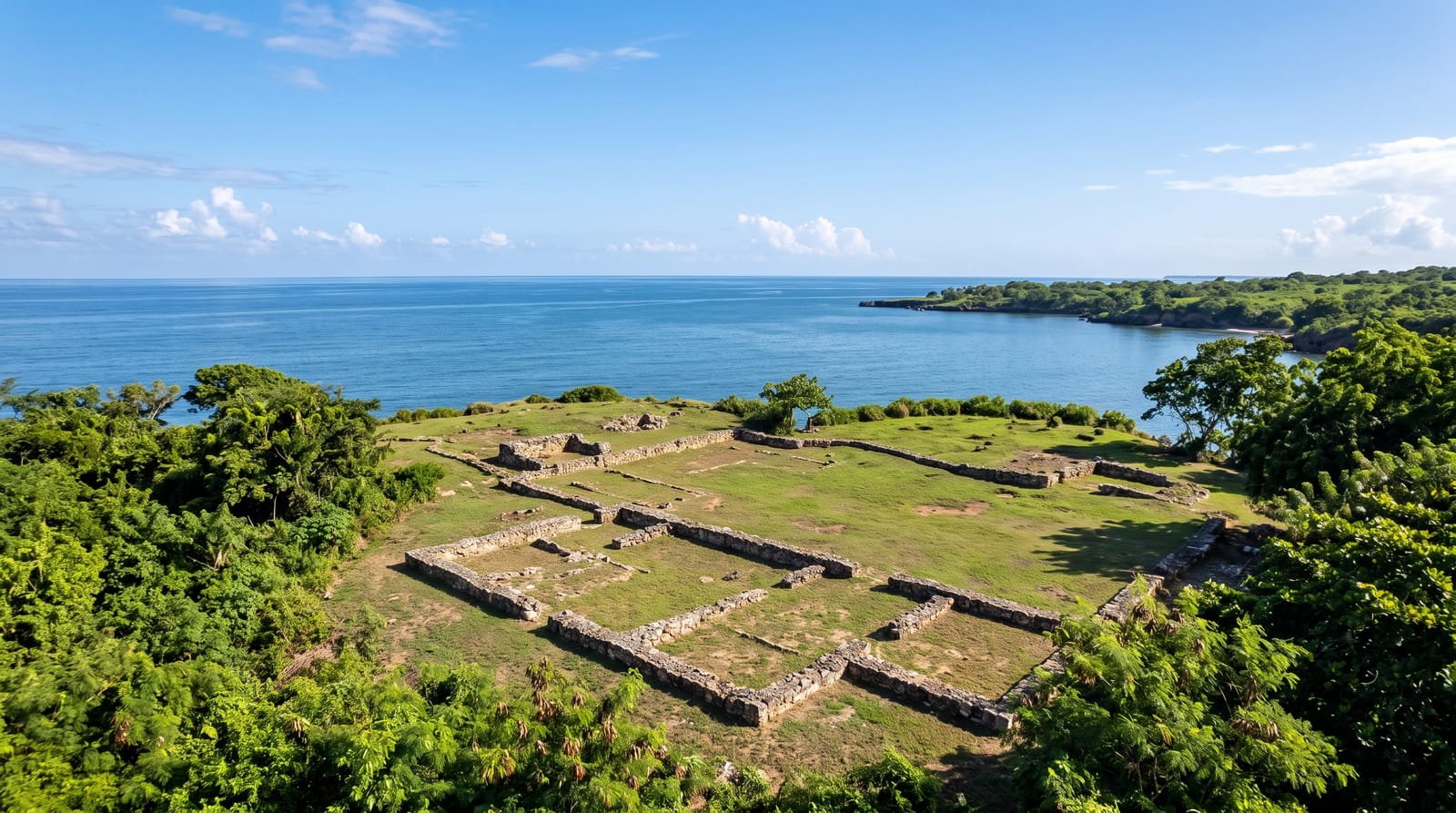
The outlines of the first planned European town in the Americas, founded in 1494 and abandoned within five years.
Updated 19 October 2026
AI illustration
Columbus founded La Isabela on his second voyage in 1494, on a low headland above a bay on the north coast, and it was the first attempt at a permanent planned European settlement in the Americas. It failed quickly: disease, hunger, poor anchorage and conflict emptied it within five years and the survivors moved to the south coast to found Santo Domingo. What survives is a park of low stone foundations, the outline of a storehouse and a church, and a cemetery where both European and indigenous burials have been excavated. A small museum sets out what archaeology has established, and the site sits above a quiet bay with almost nobody else there.
History
Columbus founded La Isabela on his second voyage, between late December 1493 and early January 1494, naming it after Queen Isabella I; La Navidad, the settlement he had left to the west a year earlier, had been destroyed by the Taíno before he returned. He came with seventeen ships and more than a thousand men, sailors, soldiers, carpenters, stonemasons, priests and nobles, who built houses, storerooms, a church and a large house for Columbus over more than two hectares; the first Mass was said on 6 January 1494, and the town had some 200 thatched huts, a plaza and Columbus's stone house and arsenal. The settlers brought pigs, horses, wheat and sugarcane, and with them rats and microbes that caused the first epidemic in the Americas, and the town was hit by two of the earliest hurricanes Europeans recorded, in 1494 and in June 1495, when several ships sank in the bay. Hunger and disease led to mutiny, and La Isabela was abandoned by 1500; it is now a national historic park (Wikipedia, La Isabela).
Highlights
- The building outlines - foundations of the storehouse, church and houses.
- The cemetery - excavated burials from the settlement's short life.
- The museum - the archaeological account of why it failed.
- The bay - the anchorage that proved too poor to keep the town alive.
When to go
November to April is drier and the coastal road easier. Mornings are cooler for walking the open site. It is quiet almost all year, which is part of the appeal.
Good to know
The site is a set of low foundations and takes an hour; without the museum first it means very little. In the 1950s an official of the Trujillo government, told to clean the site up before a visit by dignitaries, had much of the ruins bulldozed into the sea, which locals will tell you about. Signage is limited and mostly in Spanish. It is a long drive from the resort coast for a modest site.
Nearby
Luperón is nearby; Puerto Plata is an hour and a half east.
What to pack for La Isabela
Chosen from what this place is for. Tap a kit for the full checklist.
- Comfortable walking shoes - Sightseeing means kilometres of pavement and cobbles daily. Find on Amazon
- Shelter suited to the place - Tent, tarp or hut booking - match it to the terrain and rules. Find on Amazon
- A slim anti-theft daypack - Zips that close properly; keep it in front in crowds and on transit. Find on Amazon
- A warm sleeping bag + mat - Rated a little colder than you expect the nights to be. Find on Amazon
Some links on this page are Amazon affiliate links - if you buy through them we may earn a small commission at no extra cost to you.
All packing kitsPlan your trip
Where to start if La Isabela is going on the list.
Booking links on this page are affiliate links - if you book through them we may earn a small commission at no extra cost to you. It never changes what we write about a place.
Opening times, ticket prices and seasonal closures change - check the official source before you go: official site.