Stevns Klint
A white chalk cliff on Zealand holding the fossil record of the asteroid that killed the dinosaurs - a UNESCO geological site.
Updated 16 October 2026
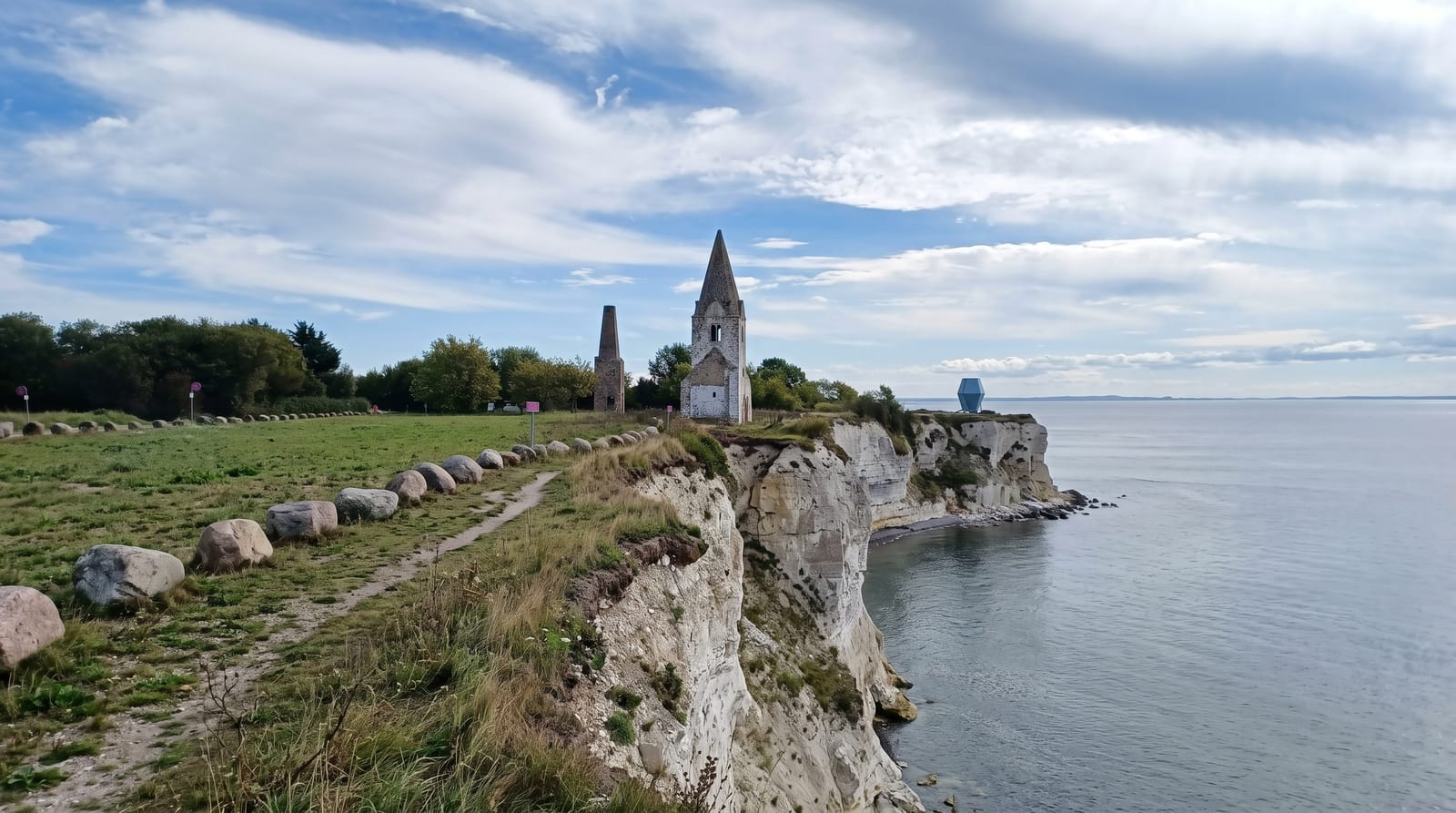
AI illustration
UNESCO World Heritage
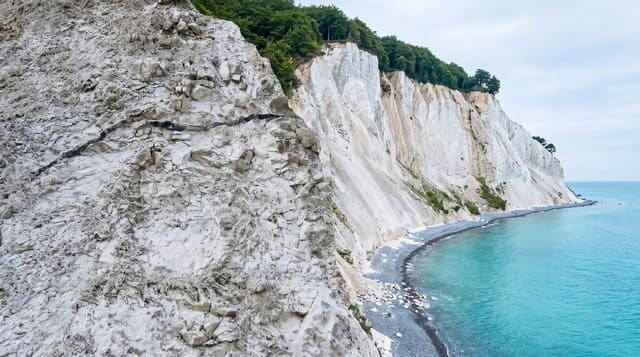
Stevns Klint is a white chalk and limestone cliff on the coast of Zealand, and within its layers lies a thin dark line of clay, the fossil trace of the asteroid impact that wiped out the dinosaurs some sixty-six million years ago. That globally important geological record earned it UNESCO status, alongside a cliff-edge medieval church.
Background
The cliff runs for 17 km along the coast some 6 km southeast of Store Heddinge and reaches up to 40 metres in height. The exposed rock comes from the uppermost Maastrichtian, 72 to 66 million years ago, called the Tor Formation, and from the lowermost Danian, 66 to 62 million years ago, represented by the Rødvig and Stevns Klint formations. The fish clay between them is mostly five to ten centimeters thick. Researchers have identified more than 830 macrofauna species here. Højerup Old Church on the cliff top dates from 1200; a landslide in 1928 carried its chancel down to the shore, and a new church, finished in 1913, stands 300 metres back from the edge.
Source: Wikipedia, "Stevns Klint"
The landscape
- The fish clay layer - the thin dark line marking the dinosaur extinction event.
- The chalk cliffs - the white coastal faces above the sea.
- The old church - the medieval church perched on the crumbling cliff edge.
- The visitor centre - the museum explaining the extinction and geology.
When to go
The warm months for the cliff-top walks and the beach; a clear day suits the white chalk. The visitor centre is a good year-round anchor.
What to expect
The famous extinction layer is a thin, subtle line, so the visitor centre's context makes it come alive rather than a dramatic sight in itself. The cliffs erode, so parts of the old church have already fallen, and edges are dangerous. It is a specialised geological visit.
Nearby
Mons Klint lies across the water; Copenhagen is about an hour away.
Key facts
Source: Wikidata, item Q1614152, read on 18 October 2026.
What to pack for Stevns Klint
Chosen from what this place is for. Tap a kit for the full checklist.
- Broken-in walking shoes or boots - Grip and ankle support matter more than looks; never hike in brand-new boots. Find on Amazon
- Spare batteries + cards - Cold and long shoots drain power; never run out at the good light. Find on Amazon
- Layers + a waterproof shell - Mountain weather turns fast; a packable rain jacket saves the day. Find on Amazon
- A compact tripod - Essential for night skies, aurora, waterfalls and low light. Find on Amazon
Some links on this page are Amazon affiliate links - if you buy through them we may earn a small commission at no extra cost to you.
All packing kitsPlan your trip
Where to start if Stevns Klint is going on the list.
Booking links on this page are affiliate links - if you book through them we may earn a small commission at no extra cost to you. It never changes what we write about a place.
Opening times, ticket prices and seasonal closures change - check the official source before you go: official site.