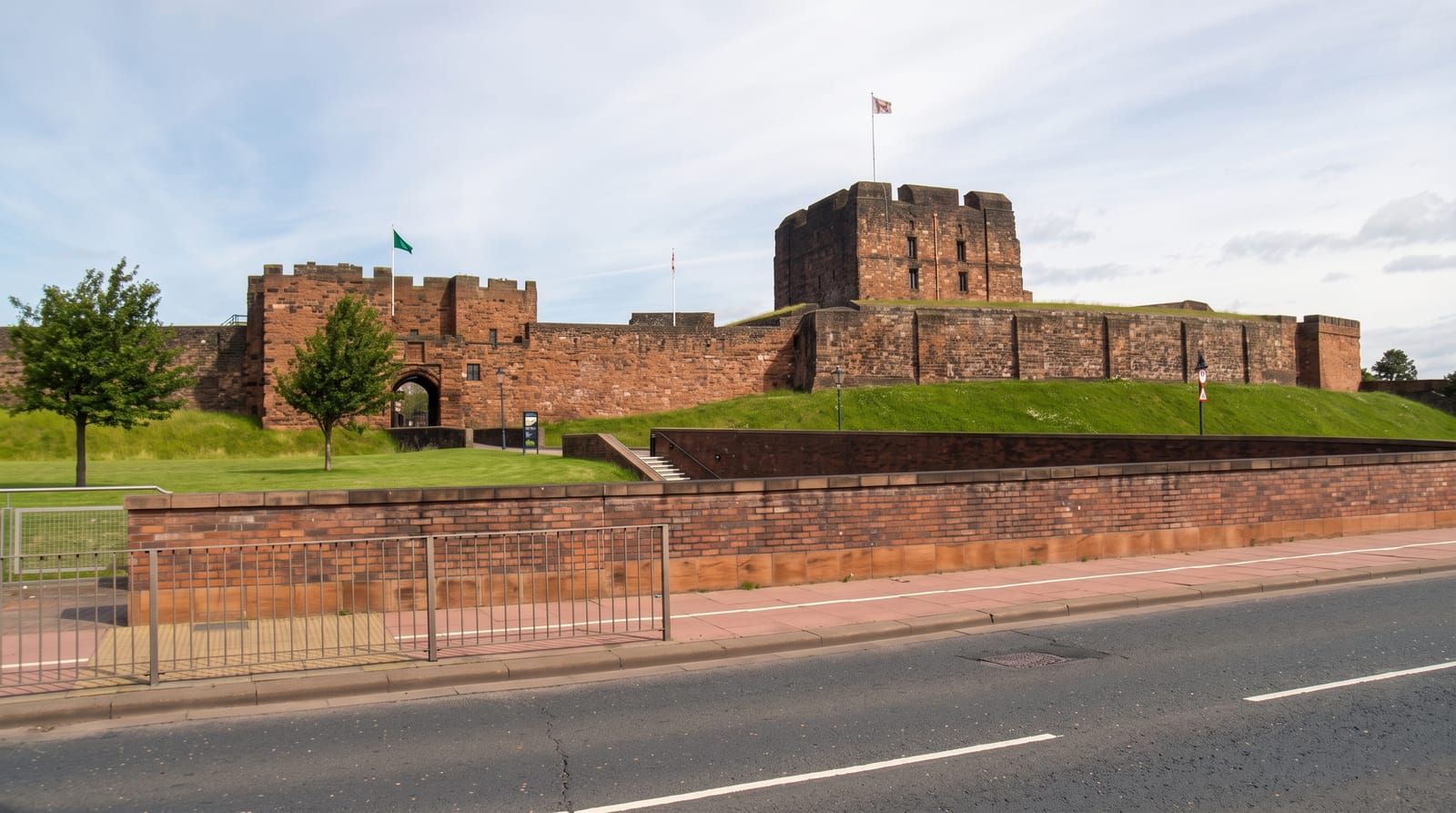
Nyborg Castle
A royal castle on Funen where the Danish parliament met for two centuries, with the country's first constitution signed in 1282.
Updated 19 October 2026
Nyborg was built in the twelfth century at the crossing point between Funen and Zealand and became the political centre of medieval Denmark: from 1282 the Danehof, the assembly of the realm, met here regularly, and it was at Nyborg that Erik Klipping signed the charter of 1282 that is generally treated as the first Danish constitutional document, limiting royal power. The surviving building is the great hall block and a tower, much altered, standing within the remains of ramparts, and the town around it keeps a rare grid layout from the same period. A long restoration and rebuilding project has been reshaping the castle and its presentation. The town also holds a substantial run of seventeenth-century fortification earthworks.
History
Founded around 1170, the moated castle was at first square, with corner towers joined by a curtain wall; a residential palatium was built against the west wall in the mid-13th century and a strong tower on the east wall. Here King Eric V signed Denmark's first constitution in 1282, and until 1413 the palatium was the main meeting place of the Danehof, the medieval parliament. Christian III, who often stayed here, added a banqueting hall and a tower in the 1540s, and in 1607 the Italian architect Domenicus Badiaz gave the main tower a spire like that of Copenhagen's Blåtårn. The castle was badly damaged in the Dano-Swedish War of 1657-58, most of its buildings were later torn down and their stone used from 1722 for Odense Palace, and what remained stored grain or gunpowder. Mogens Clemmensen restored it in 1917-1923, after which it became a museum (Wikipedia, Nyborg Slot).
What to look for
- The medieval hall block - the surviving core of the royal castle.
- The Danehof story - where the assembly of the realm met from 1282.
- The 1282 charter - the document limiting royal power, signed here.
- The town grid and ramparts - a medieval plan with later fortifications.
When to go
April to October; winter opening is reduced. Two hours. The restoration project has affected access in recent years, so check what is open before travelling. Medieval events run in summer.
What to expect
Much of the castle is gone and the surviving block has been heavily altered, so the historical importance outweighs what there is to see. Building works have closed parts of the site for extended periods. Interpretation is better than the fabric. Winter hours are short.
Nearby
The Great Belt Bridge is east; Odense lies west across Funen.
Key facts
Source: Wikidata, item Q491297, read on 18 October 2026.
What to pack for Nyborg Castle
Chosen from what this place is for. Tap a kit for the full checklist.
- Comfortable walking shoes - Sightseeing means kilometres of pavement and cobbles daily. Find on Amazon
- A slim anti-theft daypack - Zips that close properly; keep it in front in crowds and on transit. Find on Amazon
- A refillable water bottle - Many cities have public fountains; save money and plastic. Find on Amazon
- A light layer + compact umbrella - For museum air-con and a sudden shower. Find on Amazon
Some links on this page are Amazon affiliate links - if you buy through them we may earn a small commission at no extra cost to you.
All packing kitsPlan your trip
Where to start if Nyborg Castle is going on the list.
Booking links on this page are affiliate links - if you book through them we may earn a small commission at no extra cost to you. It never changes what we write about a place.
Opening times, ticket prices and seasonal closures change - check the official source before you go: official site.