Carlisle Castle
A border fortress held for nine hundred years, with medieval prisoners' carvings cut into the stone of a keep chamber.
Updated 12 October 2026
AI illustration
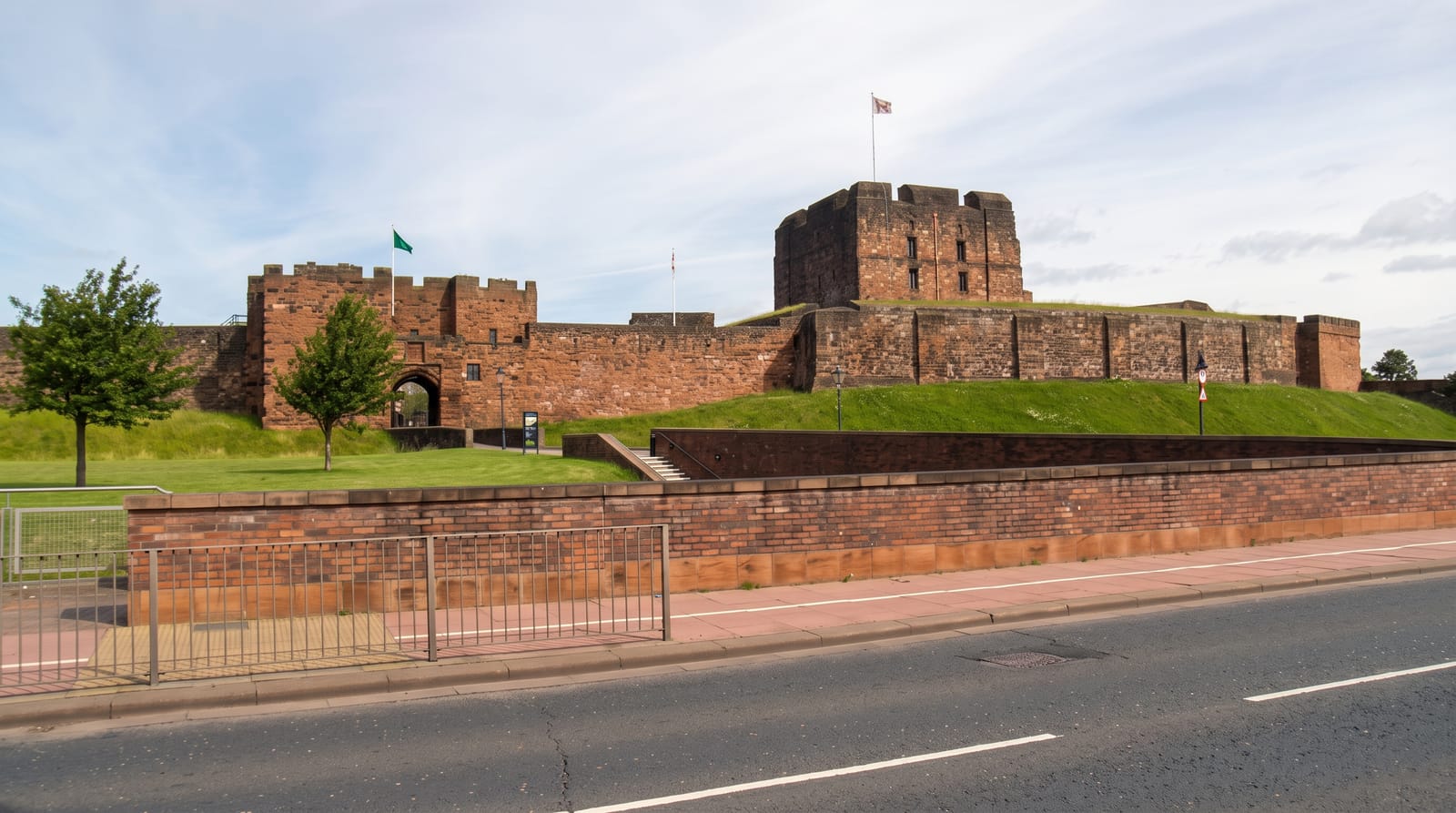
William II built the first castle here in 1092 on the site of a Roman fort at the western end of Hadrian's Wall, and the position on the disputed border meant it was besieged, taken and retaken more often than any other castle in Britain. Mary, Queen of Scots was held here in 1568. In a chamber of the keep, prisoners cut around two hundred carvings into the soft red sandstone: faces, beasts, heraldic devices and grotesques, made over centuries and now the best surviving set of medieval prisoner carving in England. A well in the keep and the licking stones, where prisoners are said to have taken moisture from the wall, are shown on the route. Cumbria's Museum of Military Life occupies part of the site, and the outer works were adapted for artillery in the sixteenth century.
The main sights
- The prisoners' carvings - around two hundred cut into the keep's sandstone.
- The Norman keep - the core of a castle begun in 1092 on a Roman site.
- The artillery works - sixteenth-century adaptations for guns.
- The regimental museum - the county collection inside the walls.
When to go
April to October for full opening; winter hours are shorter and some areas close. The carvings are in a dim chamber and are easier to read with a torch, which staff sometimes provide.
Things to know
Much of the castle is a working military site and museum rather than a picturesque ruin, and the outer areas are plain. The carvings are faint and take patience to find. Access involves spiral stairs.
Nearby
Carlisle Cathedral is a short walk; Hadrian's Wall runs east from the city.
Key facts
Source: Wikidata, item Q614836, read on 18 October 2026.
What to pack for Carlisle Castle
Chosen from what this place is for. Tap a kit for the full checklist.
- Comfortable walking shoes - Sightseeing means kilometres of pavement and cobbles daily. Find on Amazon
- Modest clothing - Shoulders and knees covered - the single most common requirement. Find on Amazon
- A slim anti-theft daypack - Zips that close properly; keep it in front in crowds and on transit. Find on Amazon
- A scarf or shawl - To cover the head or shoulders on entry; women especially at mosques. Find on Amazon
Some links on this page are Amazon affiliate links - if you buy through them we may earn a small commission at no extra cost to you.
All packing kitsPlan your trip
Where to start if Carlisle Castle is going on the list.
Booking links on this page are affiliate links - if you book through them we may earn a small commission at no extra cost to you. It never changes what we write about a place.
Opening times, ticket prices and seasonal closures change - check the official source before you go: official site.